
Shopify SEO: Rank Your Store in Google and AI Search 2026


Shopify SEO is where a lot of Australian store owners quietly lose ground, because Shopify handles just enough of the basics to make you think the job is done. The platform sets your canonical tags, builds a sitemap and serves a mobile theme out of the box, so your store looks technically healthy while your best products sit on page three. The harder truth is that ranking a Shopify store now means being found in two places at once. You need Google's results and the AI answers that shoppers increasingly trust before they ever click. We have spent years ranking online stores across both, and the stores that win treat Shopify's automation as a floor to build on, not a finish line. This guide covers the Shopify-specific work that actually moves revenue, from the platform's duplicate-URL quirks to getting your products cited in AI search.
A Quick Guide to Shopify SEO
Shopify SEO is the process of optimising your Shopify store so its product pages, collection pages and content rank in Google and get surfaced in AI search platforms like Google AI Overviews, ChatGPT and Perplexity. Shopify automates part of the technical groundwork, including SSL, a generated sitemap and canonical tags. The revenue-driving work is still yours: keyword targeting, on-page optimisation, site structure, page speed, structured data and AI-search readiness. Done well, it compounds, because a ranked product page keeps earning traffic and sales long after the work is finished.
See What Revenue-First eCommerce SEO Looks Like
Shopify gives you the storefront, but ranking it across Google and AI search takes a revenue-focused strategy, not a checklist. We have taken Australian eCommerce brands from stuck in a saturated market to first in their category across both Google and AI platforms. See how our eCommerce SEO service turns Shopify visibility into revenue.
Explore Our eCommerce SEODoes Shopify Do SEO for You? What Is Automatic and What Is Not
Shopify has a genuine head start on technical SEO, which is why the "is Shopify good for SEO?" debate never really settles. The platform manages a meaningful slice of the plumbing that store owners on other systems have to configure by hand. What it does not do is the strategic and editorial work that decides whether you actually rank, and that gap is where most Shopify stores stall.
Here is the split we walk every new Shopify client through.
| Handled automatically by Shopify | Left for you to optimise |
|---|---|
| SSL/HTTPS across the store | Keyword research and page targeting |
Auto-generated sitemap.xml | Title tag and meta description wording |
A default robots.txt | URL handles and slug clean-up |
| Canonical tags on products and collections | Unique product and collection descriptions |
| Mobile-responsive themes | Image alt text and file naming |
| Editable meta title and description fields | Internal linking between products and content |
| 301 redirects when you change a URL | Page speed and app management |
| Basic theme-level structured data | Advanced schema through metafields |
The pattern is consistent: Shopify gives you the fields and the defaults, and you supply the intent, the content and the depth. Treat the automatic column as table stakes every competitor also gets for free, then compete on the manual column.
Shopify Technical SEO: The Platform Quirks That Actually Matter
Most Shopify SEO advice repeats generic technical tips that apply to any website. The issues that genuinely trip up Shopify stores are specific to how the platform builds URLs and renders pages, and they rarely get covered in depth. This is the section we spend the most time on during a technical SEO audit of a Shopify store.
Duplicate URLs From Collections and Products
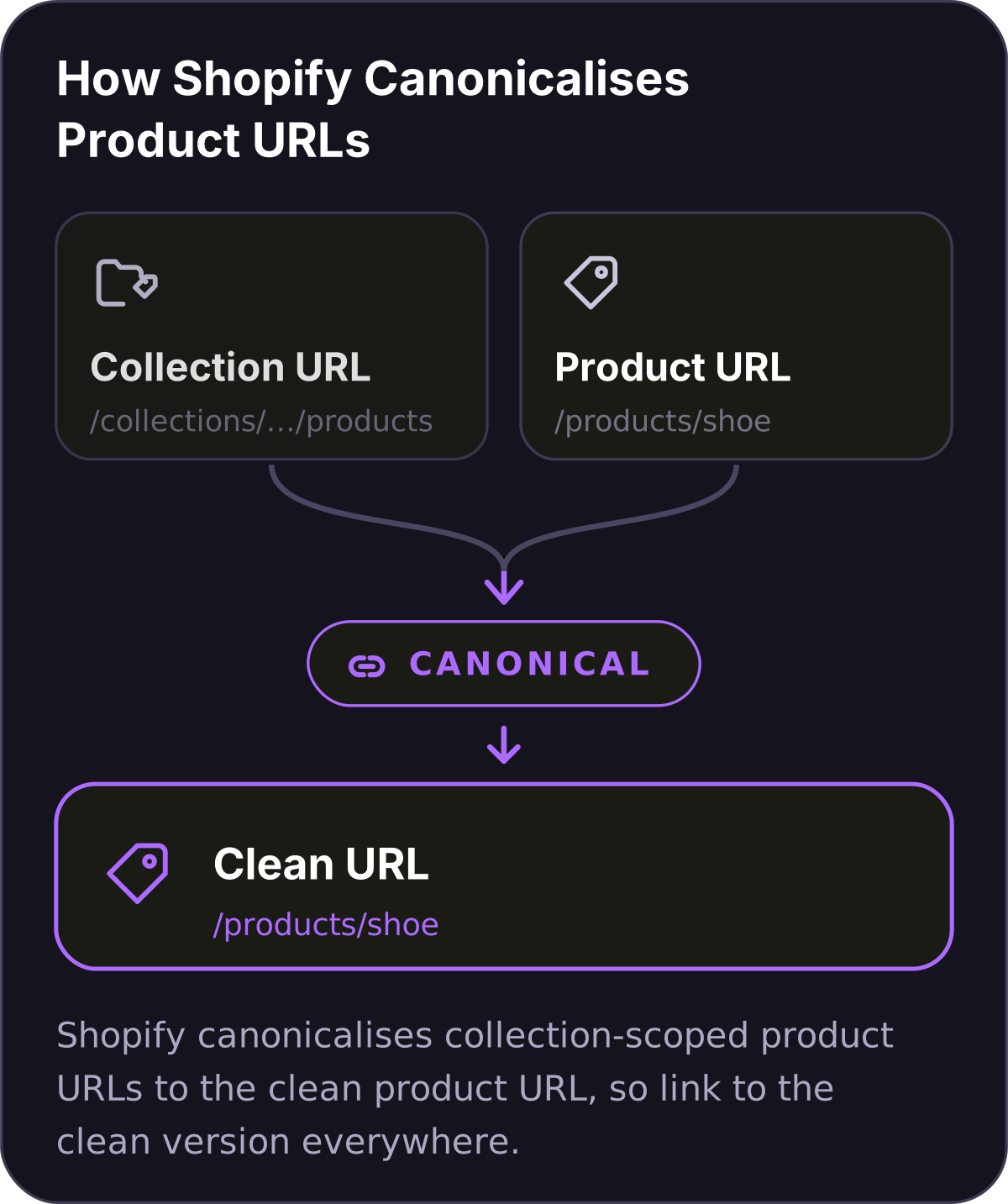
Shopify can serve the same product at more than one address. Here is how the risk works and how to handle it:
- Two URLs, one product: a product in a collection is reachable at
/products/product-handleand at/collections/collection-handle/products/product-handle. - Why crawlers care: two addresses for the same product look like duplicate content.
- Shopify's built-in fix: the collection-scoped URL carries a canonical tag pointing back to the clean
/products/URL, and Google usually consolidates signals correctly. - Where teams still go wrong: themes that internal-link products via the collection path scatter link equity across URLs Google is trying to ignore.
- What to do: link to the canonical
/products/version everywhere (nav, collections, related products, content). - Watch
/collections/all: the auto-created page lists every product and can compete with your curated collections if you leave it indexable.
Product Variant URLs and Filtered Navigation
Variants and filters are the second duplication trap. Selecting a size or colour can append a ?variant= parameter to the URL. Filtered collection views can also generate a long tail of parameter URLs that add no unique content. Left unmanaged, these dilute crawl efficiency on large catalogues. Keep the canonical pointing at the clean product or collection URL, avoid linking to parameter versions in navigation, and be deliberate about which filtered views, if any, you want search engines to treat as landing pages.
Editing robots.txt.liquid and Your XML Sitemap
Shopify generates your sitemap.xml automatically and updates it as you add products, which is genuinely useful. Submit it in Google Search Console so Google discovers new products quickly. Shopify also lets you edit crawl rules through the robots.txt.liquid template, so you can stop crawlers wasting budget on internal search, cart or parameter URLs. Edit this carefully, because a wrong rule can deindex pages you want ranked, and always confirm changes in Search Console.
Theme, Liquid and JavaScript Limits
Shopify themes are built on Liquid, and heavier themes lean on JavaScript to render content, filters and product options. When core content only appears after JavaScript runs, you add a rendering step. That can slow indexing and, in the worst cases, hide content from crawlers entirely. Favour a lightweight theme, keep important content in the initial HTML where you can, and test how your key pages render rather than assuming what you see in the browser is what Google gets.
Keyword Research for Shopify Stores
Keyword research for a store is not the same as for a blog, because you are mapping keywords to a buying journey, not just a topic. Every collection and product page needs a clear commercial target, and your content needs to catch shoppers earlier, while they are still comparing. Our full keyword research framework goes deeper, but the store-specific priorities are straightforward.
- Collection pages: Target broad commercial terms shoppers use to browse a category, such as "merino base layers" or "reusable coffee cups".
- Product pages: Target specific, high-intent terms including model names, attributes and use cases, such as "insulated 1L drink bottle".
- Comparison and buying-guide content: Target "best", "vs" and "how to choose" queries that pull shoppers in before they are ready to buy.
- Informational blog content: Target the questions your customers ask, then link through to the relevant collections.
For research and clustering at store scale, we lean on Semrush for volume and competitive data, Keyword Insights for grouping hundreds of terms into page-level clusters, and Ahrefs for gap analysis against competitors. The goal is one primary intent per page, so your collections and products do not compete with each other.
On-Page SEO for Product and Collection Pages
Product and collection pages are the revenue pages, so on-page optimisation here matters more than anywhere else on the store. Shopify gives you every field you need; the work is filling them with something better than the default.
- Title tags: Lead with the primary keyword, then add a differentiator like a key attribute or your brand, kept under about 60 characters.
- Meta descriptions: Write to earn the click, not to please a crawler, and include the keyword naturally.
- Product descriptions: Replace manufacturer copy with unique, specific descriptions that answer real buyer questions, because duplicate supplier text is a common reason store pages fail to rank.
- Headings: Use one clear H1 that matches search intent and structure the rest of the page logically.
- Image alt text and file names: Describe the product with keywords, which helps both accessibility and image search.
- Reviews: Surface customer reviews on product pages to add unique content and trust signals that support conversions.
Collection pages deserve unique intro content too. A short, keyword-relevant paragraph at the top of a collection gives Google and AI platforms something to read beyond a grid of product tiles.
Site Structure and Internal Linking on Shopify
How you organise a Shopify store decides how efficiently search engines crawl it and how easily shoppers find products. The stores that rank keep a shallow, logical hierarchy where every product is reachable within about three clicks of the homepage. This is a core theme in our wider eCommerce SEO guidance, and it applies doubly on Shopify because collections are your main architectural tool.
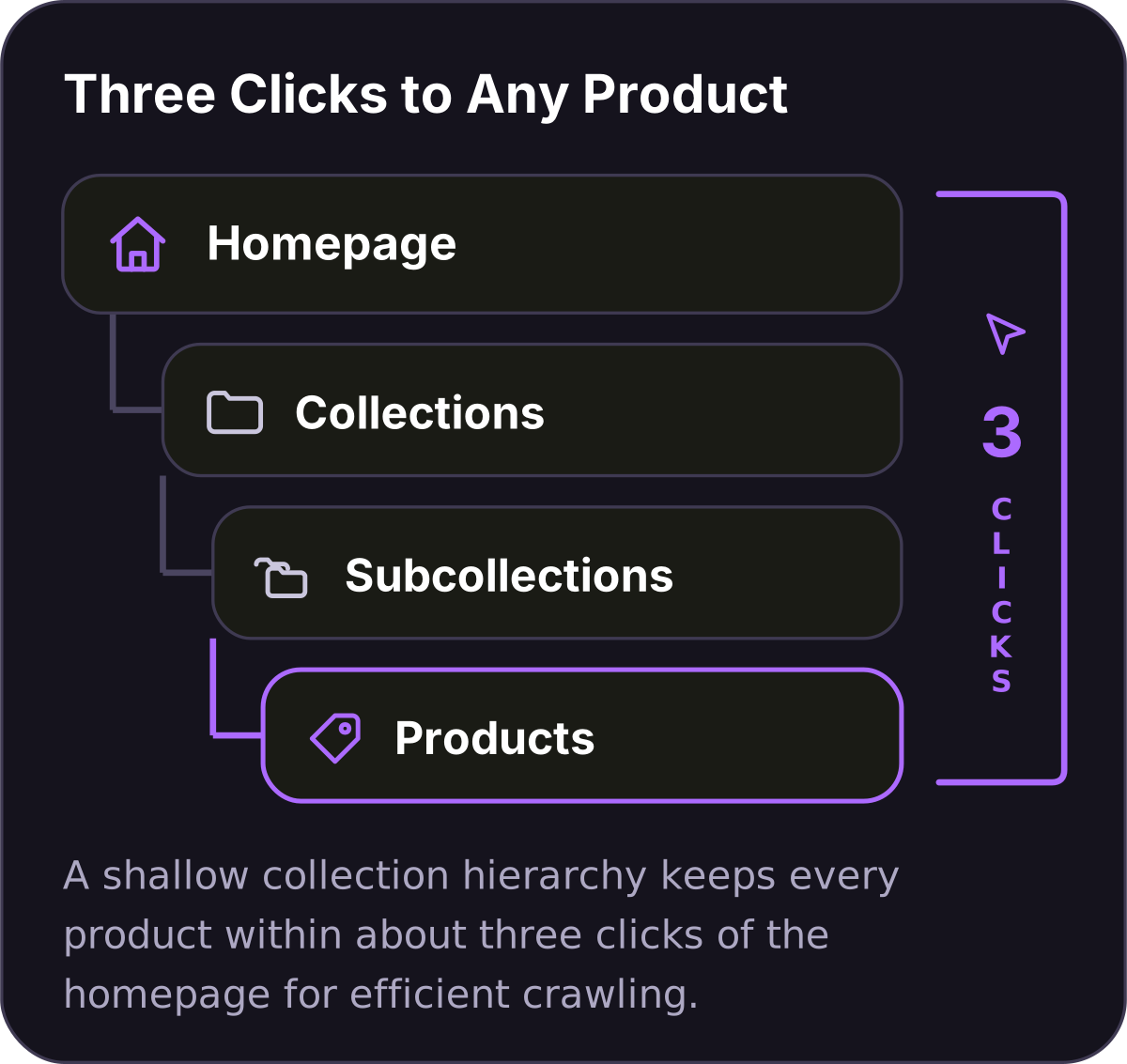
- Use collections deliberately to group products around how people actually search, not just how you stock them.
- Link related products and connect collections to supporting blog content so link equity flows to the pages you want ranked.
- Keep breadcrumb navigation on, ideally with breadcrumb structured data, so both shoppers and crawlers understand the hierarchy.
- Audit for orphan products that no collection or internal link points to, because they are effectively invisible.
Internal linking is the lever most stores underuse. Every important product should receive contextual links from relevant collections, guides and related products.
Site Speed and Core Web Vitals on Shopify
Speed is a ranking and revenue issue at once, and Shopify stores have a specific enemy: app bloat. Every app you install can inject scripts that load on every page, and a store that has collected a dozen apps over two years is usually carrying scripts it no longer uses. Google measures real-world experience through Core Web Vitals, and the thresholds are concrete: Largest Contentful Paint under 2.5 seconds, Interaction to Next Paint under 200 milliseconds and Cumulative Layout Shift under 0.1.
Because most Shopify traffic is on mobile, speed there is where revenue is won or lost. Deloitte's Milliseconds Make Millions study found that a 0.1 second improvement in mobile load time lifted retail conversions by 8.4%, so this is not a vanity metric. Our Core Web Vitals audit process for stores focuses on the highest-leverage fixes.
- Audit installed apps and remove any that inject scripts you no longer need.
- Choose a lightweight, well-coded theme over a feature-heavy one.
- Serve modern image formats and correctly sized images, since product imagery is usually the heaviest asset.
- Limit render-blocking scripts and defer what is not needed for the first paint.
Structured Data and Product Schema on Shopify
Structured data is how you translate your pages into a language search engines and AI platforms parse without guessing. For a store, Product schema is the priority, because it marks up price, availability and reviews, and it feeds both Google's shopping surfaces and AI product answers. Our schema SEO methodology treats it as a parsing layer over content you already show, never as invented markup.
Shopify's approach to schema is theme-dependent and often shallow, which is where two options come in.
- Theme edits: A developer can add or extend Product, Review and BreadcrumbList schema directly in the theme's Liquid templates for full control.
- Metafields: Shopify metafields let you store structured attributes (materials, dimensions, certifications) and pull them into both your content and your schema, which is exactly the kind of specific, extractable detail AI platforms reward.
Whichever route you take, validate every page type with Google's Rich Results Test, and mark up only what a shopper can actually see on the page.
Content, Blogging and the Shopify Blog's Limits
Content is how a store builds topical authority and catches shoppers before the buying query, but Shopify's built-in blog has real constraints worth planning around. Articles live under a /blogs/ path (the default blog is literally /blogs/news/), there are no true nested categories, and the tagging system can spin up thin or near-duplicate tag pages if you let it index them. None of this stops you ranking; it just means structure is a decision, not a default.
Build content in clusters rather than one-off posts, so a group of related articles supports a target collection. This is the topic cluster model applied to a store: a buying guide links down to the products it recommends, and related how-to posts link back up to the guide. Keep tag pages out of the index unless a tag genuinely maps to a useful landing page, and give each article a clear job in the journey rather than publishing for volume.
Getting Your Shopify Store Cited in AI Search
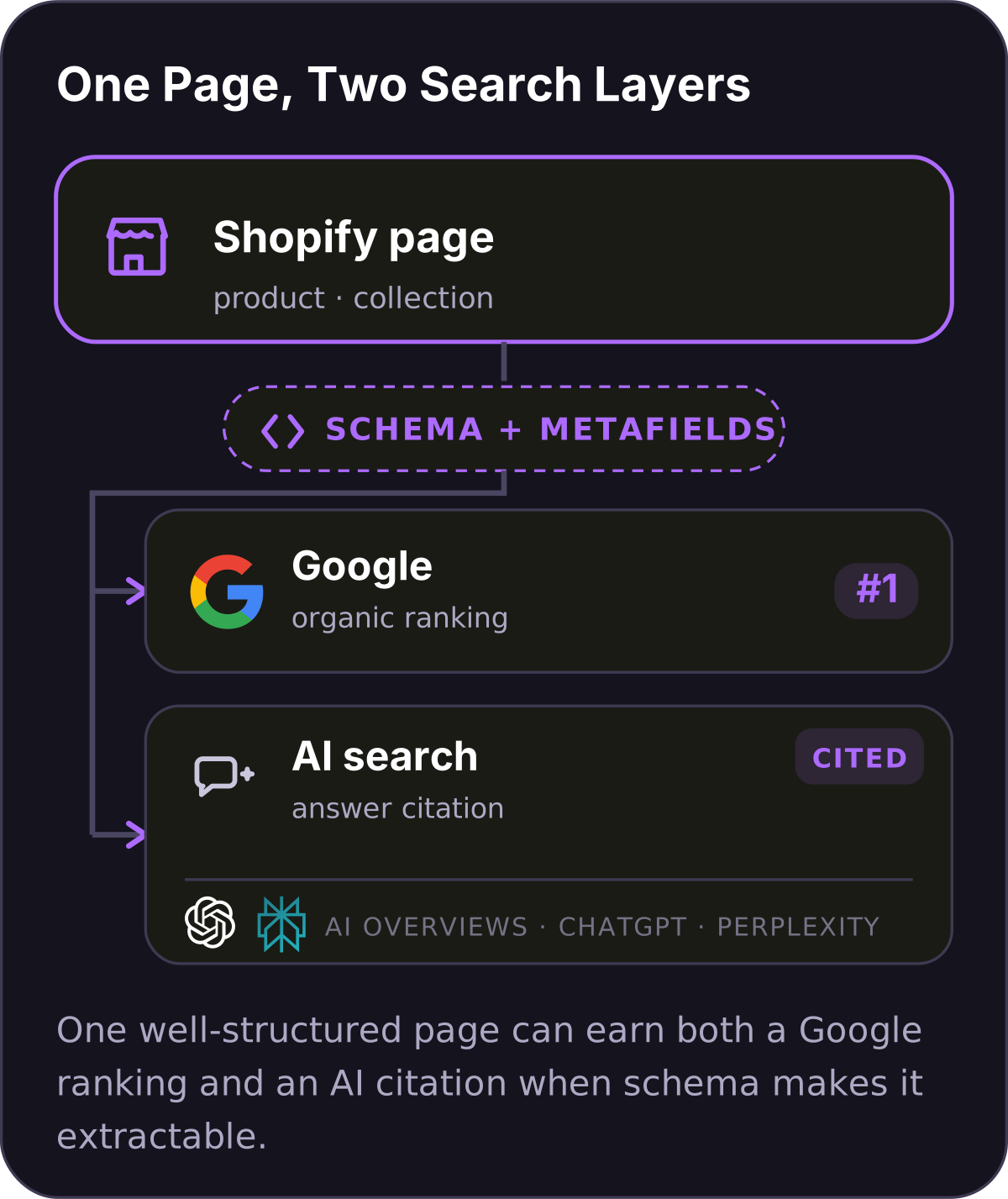
This is the layer most Shopify SEO guides still treat as a footnote, and it is the one we build stores around. Shoppers now research in AI answers before they click, and platforms like Google AI Overviews, ChatGPT and Perplexity read a page, extract what they need and cite sources. If your product and collection pages are not structured to be read and quoted, you are invisible in a channel your competitors have not claimed yet. Our generative engine optimisation work shows the levers that consistently earn citations:
- Clear, quotable answers
- Specific data
- Structured facts
- Genuine authority
AI systems tend to favour pages that answer a question directly and early, back claims with specifics, and read as trustworthy, so a store page padded with marketing language is far less quotable than one that states the facts plainly.
For a Shopify store, that translates into concrete moves.
- Answer real buyer questions directly on the page in a few clean sentences an AI system can lift and cite.
- Use metafields and schema to expose specific, factual product attributes rather than vague marketing copy.
- Build the kind of authority signals, reviews, credentials and consistent expertise, that make a platform trust your store as a source.
- Track AI citations as a visibility KPI alongside your rankings, since they are a leading indicator that revenue is coming, not a replacement for rankings.
We have seen this work first-hand. One Australian eCommerce brand we worked with was stuck in a saturated market until we optimised for both Google and AI search at once. By becoming first in their category to do so, they earned 169 AI citations and added about $1.75M in revenue over 16 months at a 2,327% ROI. They spent nothing on link building. The AI SEO foundations that drove it apply directly to Shopify stores.
Selling Overseas: Shopify Markets and International SEO
If your Shopify store sells beyond Australia, international SEO becomes part of the job. Shopify Markets lets you manage multiple countries, currencies and languages, but it also introduces domain, hreflang and localisation decisions that shape how you rank in each market. Get the structure right early, because retrofitting it across a live catalogue is painful. Our international SEO strategy guidance covers the technical setup and the localisation work that turns global reach into global revenue.
Off-Page SEO: Building Authority for a Shopify Store
Off-page SEO still matters, because authority is part of how both Google and AI platforms decide who to trust. The difference for a store is that you can earn links through the products and expertise you already have, rather than chasing volume. The Australian brand above earned its results with zero paid link building, which tells you where the leverage is. Our backlinks guidance goes deeper, but the store-appropriate tactics are consistent.
- Earn editorial coverage and links with genuinely useful buying guides and original data.
- Build digital PR around your products, founders and category expertise.
- Pursue relevant supplier, partner and industry mentions rather than low-quality directories.
Common Shopify SEO Mistakes We See
When we audit a Shopify store, the same avoidable problems come up again and again. None are hard to fix once you know to look for them, and clearing them often releases rankings that were held back for months.
- Leaving default product descriptions in place: Manufacturer copy that dozens of other stores also use gives Google no reason to rank your page over theirs.
- Ignoring app bloat: Every abandoned app can keep loading scripts, quietly dragging down the Core Web Vitals that affect both rankings and conversions.
- Indexing thin tag and filter pages: Unmanaged tag pages and parameter URLs spread crawl budget across pages that add nothing.
- Linking products through collection paths: Internal links that use the
/collections/.../products/...URL split signals away from the canonical product page. - Treating the blog as an afterthought: Occasional unrelated posts build no topical authority, while clustered content that supports collections does.
- Skipping structured data: Without Product and review schema, you hand an easy advantage to competitors whose pages are simpler for Google and AI platforms to parse.
- Measuring only rankings: Stores that ignore AI citations miss the earliest signal that a new channel is starting to send buyers.
Clearing these is usually the fastest win available on a Shopify store, because you are removing brakes rather than adding horsepower.
Frequently Asked Questions
Is Shopify Good for SEO?
Shopify is good for SEO in that it handles a solid amount of technical groundwork automatically, including SSL, a generated sitemap and canonical tags. Its limits are structural, like fixed URL patterns and a basic blog, and none of them prevent a well-optimised store from ranking. The platform gives you a fair start, and the results come from the strategic work you add on top.
Does Shopify Have Built-In SEO Tools?
Shopify includes editable title and meta description fields, automatic canonical tags, a generated sitemap.xml and an editable robots.txt.liquid, plus image alt text fields. These cover the basics but not keyword research, advanced schema or content strategy. Most stores extend them with dedicated SEO tools and, where useful, a Shopify SEO app.
Can You Do SEO on Shopify Yourself, or Should You Hire an Agency?
You can absolutely handle Shopify SEO fundamentals yourself, including titles, descriptions, image alt text and basic content. The case for specialist help grows as the catalogue scales, technical quirks compound and AI-search optimisation enters the picture. Our guide on choosing an eCommerce SEO company explains what to look for if you decide to bring in expertise.
Where Are the SEO Settings in Shopify?
Page-level SEO lives under the "Search engine listing" section when you edit a product, collection, page or blog post, where you set the title tag, meta description and URL handle. Image alt text is set in the media area of each product. Store-wide files like robots.txt.liquid are edited through the theme code.
What Is the Best SEO App for Shopify?
The best app depends on the gap you are filling, whether that is bulk meta-tag editing, schema injection or broken-link management. Apps help with execution, but they do not replace strategy, and stacking too many hurts site speed. Choose the smallest set that solves a real problem and audit them regularly.
Do Shopify Tags Help SEO?
Product tags are primarily for merchandising and filtering, not a direct ranking factor. The SEO risk is that tag pages can create thin or duplicate content if they are indexed without adding value. Use tags for organisation, and keep low-value tag pages out of the index.
Does Changing a Shopify Theme Affect SEO?
It can, because themes control page structure, speed, heading markup and built-in schema. A heavier or poorly coded theme can slow your store and change how content renders, while a lightweight theme can improve Core Web Vitals. Test key pages before and after any theme change and confirm nothing important shifted.
How Long Does Shopify SEO Take to Work?
Most stores see meaningful movement within a few months, with compounding gains over six to twelve. Timelines depend on competition, your starting authority and how much technical and content work the store needs. AI citations can appear faster than expected once pages are structured to be quoted.
Where Shopify Ends and Your SEO Begins
Shopify hands you a fast, secure storefront with the technical basics covered, and that is exactly why so many stores stop there and plateau. The stores that pull ahead treat the platform's automation as a foundation, then do the deliberate work: fixing the duplicate-URL quirks, targeting the right keywords, tightening speed, structuring data for machines and building genuine authority. Layer AI-search visibility over all of it, and you show up where shoppers now research as well as where they buy. That combination, not any single app or trick, is what turns a Shopify store into a store that ranks and sells.
About the Author
Want Insights Like This Fortnightly?

Our AI SEO strategies and tactics delivered fortnightly, including bonus trade secrets not shared anywhere else. No fluff. Just what's working right now. 5-minute read.


