
Off Page SEO: How to Build Authority, Backlinks and AI Visibility

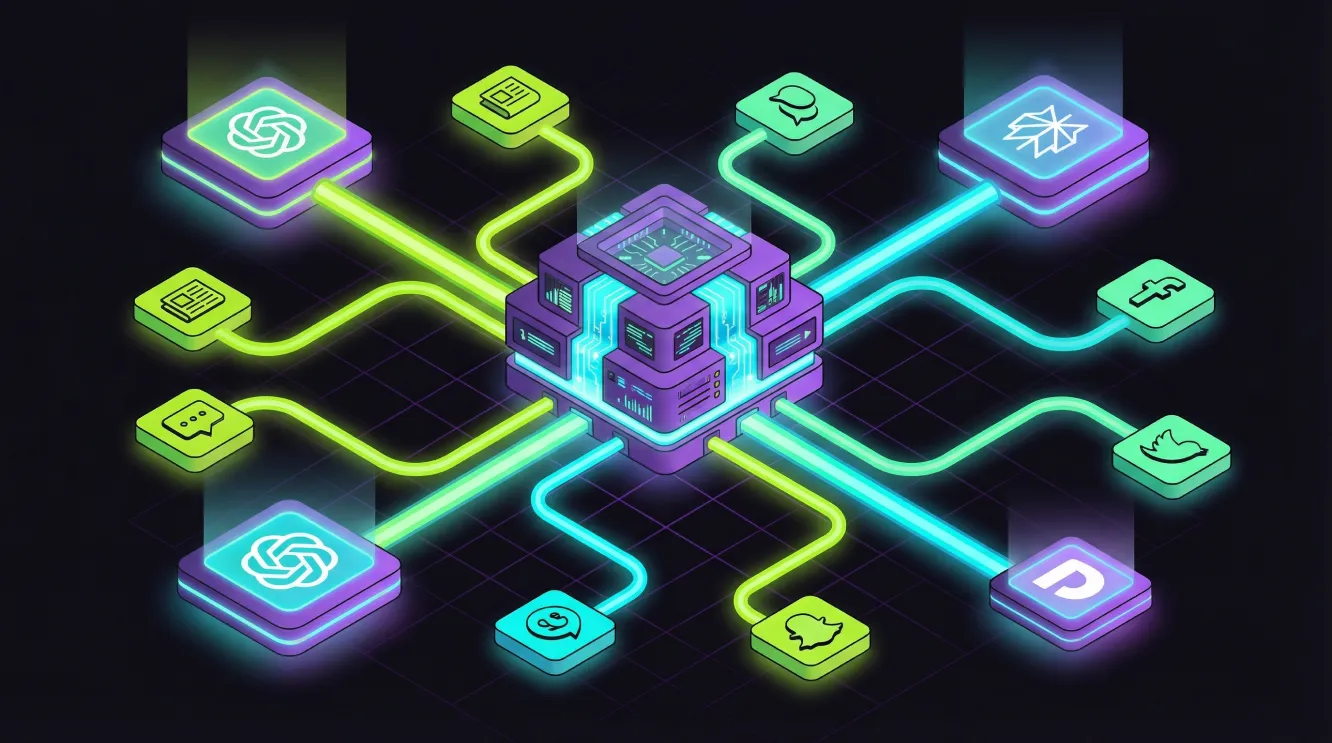
Most businesses put all their energy into what happens on their website, the words on the page, the speed of the server, and the layout of the content. But if the rest of the web doesn't know you exist, those efforts will only take you so far. Off page SEO is what signals to Google, and now to AI platforms like ChatGPT and Perplexity, that your site is worth citing, recommending and ranking. Getting it right is the difference between a website that grows quietly in the background and one that earns compounding visibility across every search surface that matters.
Quick Guide: What Is Off Page SEO?
Off page SEO refers to all the optimisation activities that happen outside your website to improve its authority, trust and visibility in search results. The main components include backlinks, digital PR, guest posting, reviews, brand visibility and your presence across third-party platforms such as directories and social media. These external signals can strengthen your site’s credibility and discoverability, especially in competitive search environments.
Want to Build Serious Off page Authority?
Off page SEO is one of the hardest parts of search to execute well. It takes the right strategy, the right outreach and a clear plan for both traditional Google rankings and AI search visibility. Our link building agency service pairs strategic link acquisition with digital PR and brand mention campaigns that help you earn authority in Google, ChatGPT, Perplexity and AI Overviews, not just one platform. Explore our approach and see what it takes to build a backlink profile that compounds over time.
Explore Our Link Building ServicesWhy Off Page SEO Still Drives Rankings
Off page SEO has evolved dramatically. But the fundamentals - earn external validation, build real-world authority, grow a credible link profile - remain as relevant as ever.
The Shift from Link Count to Link Quality
In the early days of SEO, more backlinks often meant better rankings. That stopped being true a long time ago. Backlinko’s analysis of 11.8 million Google search results found that the #1 result had an average of 3.8x more backlinks than positions 2 through 10. That is a correlation, not proof that backlink volume alone drives rankings, which is why link quality, relevance and editorial context matter more than raw volume alone.
Google's spam updates have made manipulative link building more dangerous than ever. A single high-authority, topically relevant backlink from a trusted industry publication carries far more weight than dozens of low-quality directory links. Your link-building strategy should be built around earning links, not manufacturing them.
The clearest signal of a strong backlink is this:
- The linking site is relevant to your industry.
- It has genuine traffic and editorial standards.
- It placed your link in the body of a real article rather than a footer or sidebar.
Off Page Signals and E-E-A-T
Google’s E-E-A-T concepts - Experience, Expertise, Authoritativeness, and Trustworthiness - are useful for thinking about search quality, but they are not a direct score you can optimise for. Off page signals that can support your external reputation and help reinforce authority and trust include:
- Reputable editorial links
- Third-party coverage
- Strong reviews
This matters because E-E-A-T is not something you can optimise with a checkbox. It is a reputation built gradually, across the web, over time. Off page SEO is the mechanism by which that reputation is constructed.

The Core Components of an Off Page SEO Strategy
Off page SEO is not one tactic. It is a combination of activities that together build your website's authority and visibility. Here is how each component works, and what it takes to get it right.
1. Link Building
Backlinks remain the backbone of any serious off page SEO strategy. When a high-authority website links to yours, it passes what SEOs call "link equity", a portion of its own credibility, to your page. The more of this equity you accumulate from trusted, relevant sources, the stronger your domain becomes.
Effective link-building tactics include:
- Digital PR: Publishing data studies, original research or newsworthy content that earns coverage from major publications
- Guest Posting: Writing valuable articles for high-authority sites in your niche in exchange for an editorial backlink
- Broken Link Building: Finding dead links on authoritative sites and offering your content as a replacement
- Content-Driven Outreach: Creating genuinely useful resources, guides, tools, and calculators, that other sites want to cite
- Competitor Link Analysis: Using tools like Ahrefs to identify where your competitors earn links, then targeting the same sources
One thing worth knowing: the distinction between standard editorial links and qualified links still matters. Google uses links as a signal for relevance and discovery. For qualified links, Google recommends:
- Sponsored for paid links
- UGC for user-generated links
- Nofollow when the other values do not apply
2. Digital PR
Digital PR sits at the intersection of traditional public relations and link building. The goal is to earn coverage and backlinks from high-authority media outlets, industry publications and news sites.
This might involve:
- Publishing proprietary research that journalists want to quote
- Pitching a counter-intuitive data story that earns coverage in relevant trade publications
- Securing a feature in a general-interest outlet like a business newspaper or technology site
Digital PR is particularly valuable because it can earn placements on authoritative publications that are difficult to secure through routine outreach alone. Our digital PR campaigns focus on relevant, high-authority coverage, including DR 70+ publications with significant traffic where appropriate.
3. Brand Mentions and Unlinked Citations
Not every reference to your brand online comes with a clickable link. Unlinked brand mentions can still support awareness, referrals and future link opportunities, even if Google has not confirmed them as a standalone ranking factor.
There is also growing evidence that broader off-site visibility matters for AI search. Ahrefs’ study of 75,000 brands found that branded web mentions and branded anchors correlated more strongly with AI visibility across ChatGPT, Google AI Mode and AI Overviews than classic metrics like backlinks or URL Rating. That is still correlation, not causation, but it suggests that brands mentioned widely across the web are more likely to appear in AI-generated answers.
That makes it worth building a presence across:
- Forums
- Q&A platforms
- Review sites and industry discussions
You can monitor unlinked mentions using tools like Ahrefs Content Explorer or Google Alerts, then reach out to the referring site and request a link attribution. Converting even a fraction of those mentions into followed links can strengthen your authority over time.
4. Guest Posting and Contributed Content
Guest posting places your expertise and a link back to your site on established publications in your industry. Done well, it achieves three things at once:
- It builds backlinks
- It expands your brand's reach to new audiences
- It creates the kind of cross-platform presence that AI search platforms look for when deciding which sources to recommend
The quality bar has risen significantly. A poorly written guest post on an irrelevant site with obvious paid placement signals is not worth the effort, and may actually trigger a spam flag from Google. Focus instead on:
- Publications with real editorial standards and genuine readership
- Sites with a Domain Rating between 20 and 65 (strong enough to move the needle, accessible enough to pitch realistically)
- Topics that directly align with the audience and subject matter of the target site
5. Review Platforms and Business Directories
Profiles on platforms like Google Business Profile, Trustpilot, G2, Capterra and industry-specific directories are an often-overlooked part of off page SEO. They can:
- Support local visibility
- Strengthen your broader trust footprint
- Increase your presence across the third-party sources that people and AI systems use to evaluate brands
SE Ranking research found that domains with profiles on platforms such as Trustpilot, G2, Capterra, Sitejabber and Yelp were cited by ChatGPT more often than domains without that presence. That is a correlation, not proof that directory profiles or review sentiment directly cause more citations, but it does suggest that being visible across trusted third-party platforms can support AI search visibility.
Off Page SEO in the Age of AI Search
If you are building an off page strategy purely for Google rankings, you are already behind. The same authority and visibility signals that help you in search can also support your chances of being cited in AI search experiences. But citation behaviour varies by platform, and the best-supported position is that strong SEO fundamentals and broad web visibility improve your odds rather than guarantee inclusion.
How AI Platforms Decide What to Cite
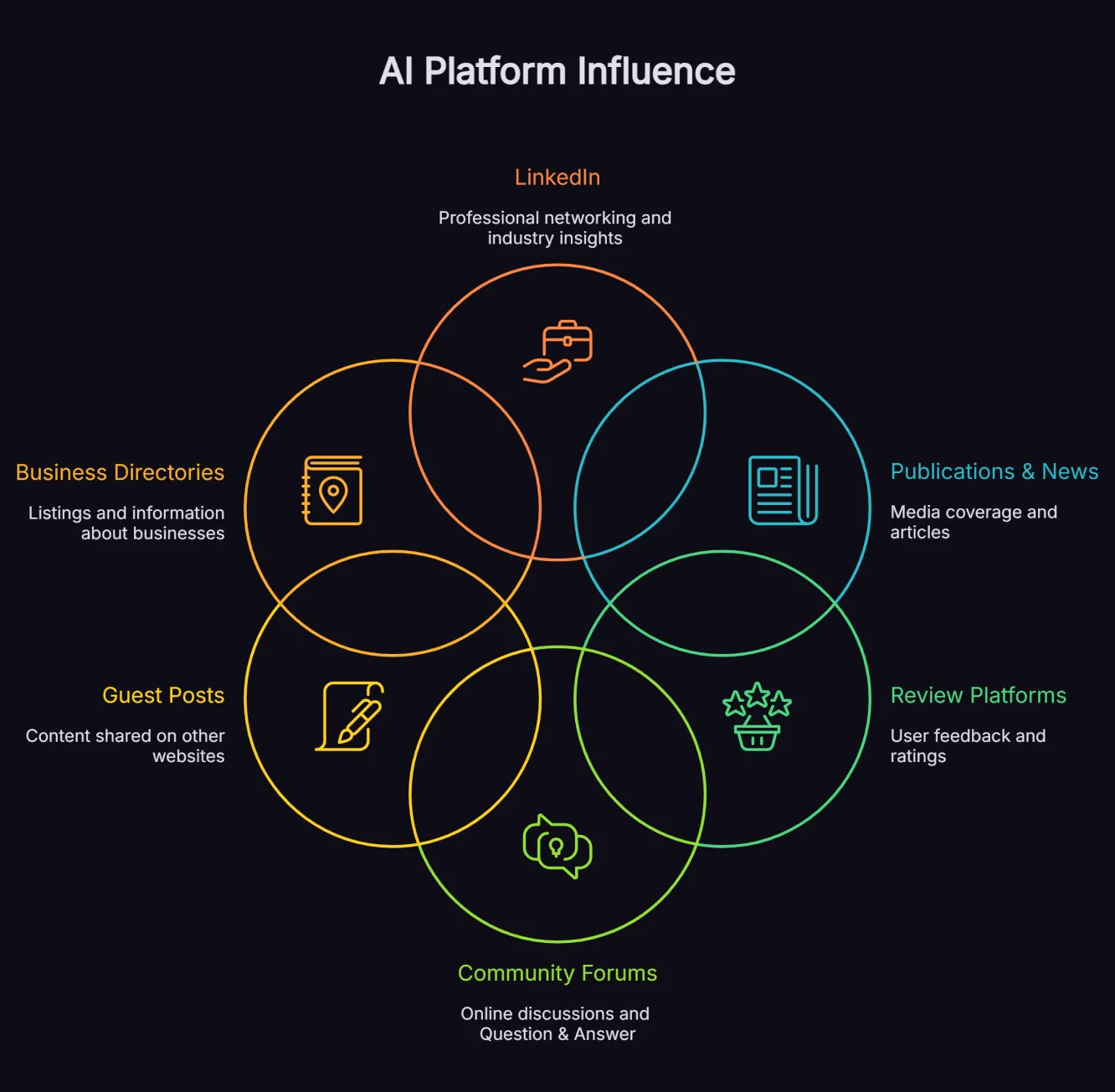
AI platforms like ChatGPT, Perplexity and Google AI Overviews do not just look at your website. They triangulate signals from across the web:
- Industry articles
- Review platforms
- Community discussions
- Directory listings
- YouTube content
- Social media
- Third-party publications
This is why a well-rounded off page presence matters so much.
Semrush found that ChatGPT Search often cites pages ranking outside Google’s top 20 for related queries. That means page-one rankings alone do not guarantee AI citations. A broader web presence may help, but citation behaviour still varies by platform, query and retrieval method.
There is no single set of domains that dominates LLM responses across every platform. Citation patterns vary by platform and query type. SE Ranking’s cross-platform comparison found that YouTube was the most cited domain overall across the tools it analysed, while LinkedIn appeared more selectively in professionally oriented AI Overview queries. What these sources tend to share is:
- Strong brand recognition
- Wide distribution
- Content that is consistently referenced across trusted platforms
SE Ranking sites with over 32,000 referring domains are 3.5x more likely to be cited by ChatGPT than those with up to 200 referring domains. And domains with significant brand mentions across platforms like Quora and Reddit have roughly 4x higher chances of being cited.
Building Cross-Platform Presence for AI Visibility
The practical implication is that off page SEO for AI search is fundamentally about distribution. You need to appear in the places AI platforms look for authoritative answers:
- Industry publications and news sites (via digital PR)
- Review platforms (G2, Trustpilot, Capterra, Google Reviews)
- Q&A communities (Reddit, Quora)
- Professional networks (LinkedIn)
- Third-party directories and industry resource pages
- Guest posts and contributed content on recognised publications
Every additional credible platform where your brand name appears, associated with the topics you want to rank for, strengthens the signal that you are a reliable source. This contributes to broader brand visibility across the web. In our framework, topical authority also depends on:
- Focused site coverage
- Internal linking
- Strong topic coherence across your website
Our AI SEO article goes deeper into how these citation signals work and what it takes to build a presence that earns consistent AI recommendations.
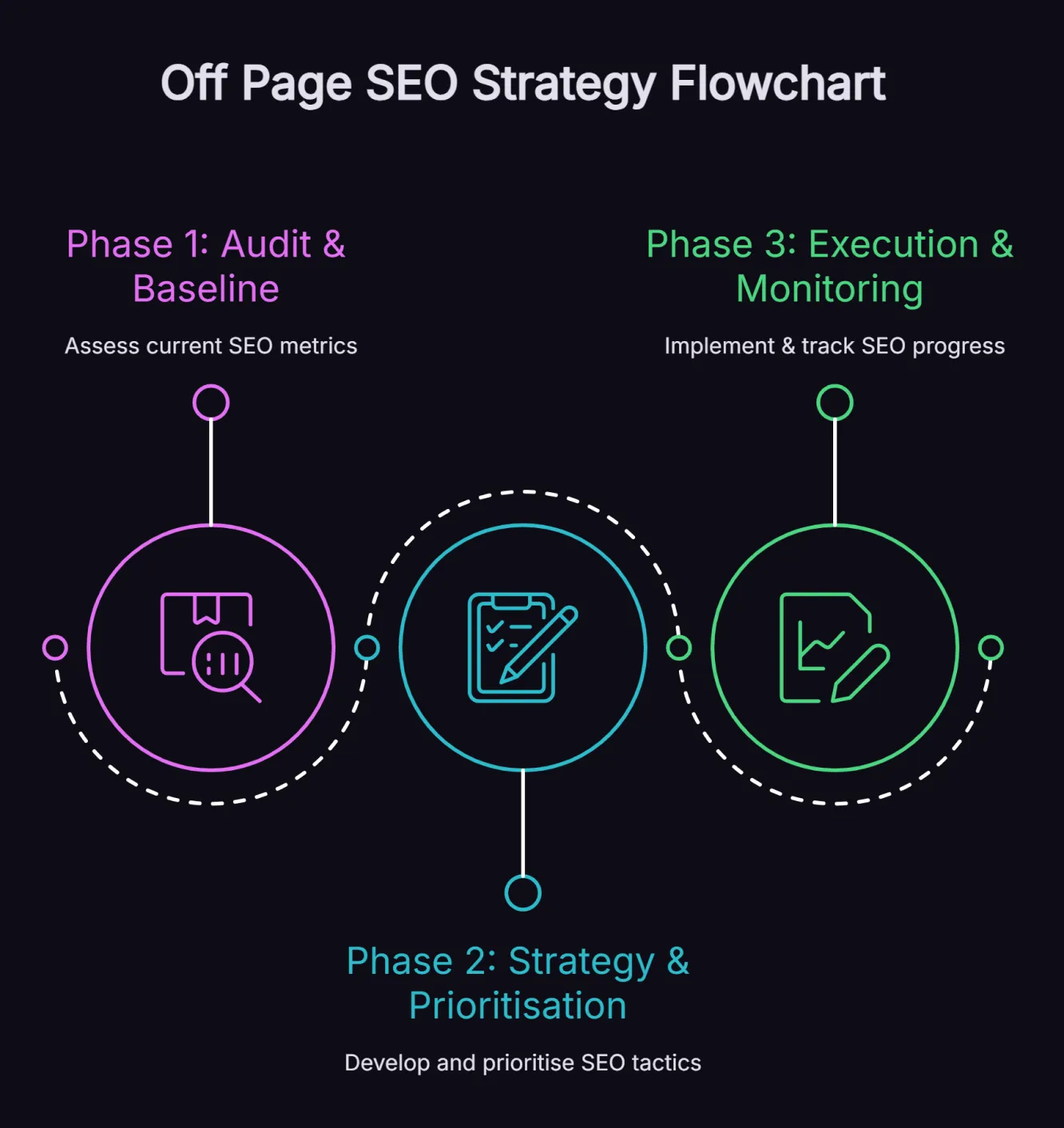
How an Effective Off Page SEO Campaign Works
Off page SEO is not something you can approach in isolation. It needs to connect with your content strategy, your technical SEO health and your overall brand positioning. Here is how we structure an effective campaign.
Phase 1: Audit and Baseline
Before earning a single new link, you need to understand what your profile looks like today. A backlink audit using Ahrefs reveals:
- Your current Domain Rating (DR) and URL Rating (UR)
- The number and diversity of referring domains
- Link quality distribution (what proportion comes from high-authority sites)
- Any toxic or spammy backlinks that could be suppressing your rankings
- How your link profile compares to competitors
This baseline shapes every decision that follows. If you have a significant DR gap against competitors, link building is a priority. If your profile is actually competitive, the constraint is more likely to be content quality or technical SEO.
Our AI SEO strategy process always includes a full link analysis to determine whether link building is even necessary, because not every client needs it, and recommending it where it is not needed wastes budget.
Phase 2: Strategy and Prioritisation
Based on the audit, we built a prioritised off page strategy covering:
- Guest Post Link Building: Securing relevant editorial placements on credible industry sites
- Digital PR Campaigns: Earning placements on high-authority sites (DR 70+) to accelerate domain authority growth
- Brand Mention Campaigns: Seeding your brand across forums, Q&A platforms and review sites to build AI citation potential
- Review Acquisition: Systematically growing your footprint on G2, Trustpilot and Google Business Profile
Phase 3: Execution and Monitoring
Our B2B property management client saw 6,864% ROI over 17 months, a result that combined a strong content programme with strategic link building that shifted their domain authority from a position of weakness to one where they could compete with national brands for highly competitive keywords.
The key was patience and precision. Rather than chasing volume, every link acquisition was evaluated against relevance, authority and the specific pages we needed to strengthen. Over time, that targeted approach compounds in ways that bulk link building never does.
Tracking link building results requires a mix of metrics:
- Domain Rating growth over time (monthly snapshots via Ahrefs)
- Referring to the domain count, particularly new domains added month-on-month
- Ranking improvements for target keywords (look for movement in positions 11-30 first)
- Brand mention volume across the web
- AI citation frequency across ChatGPT, Perplexity and AI Overviews
We pair this with our content marketing programme, because links without content, or content without links, both underperform.
What to Avoid
There are off page practices that can harm your rankings just as quickly as the right ones can improve them. Avoid:
- Link Farms and Private Blog Networks (PBNs): Google's spam detection is sophisticated enough to identify these patterns, and the penalties are severe
- Paid Link Insertions without Disclosure: These violate Google's guidelines and carry significant devaluation risk
- Anchor Text Over-Optimisation: A natural backlink profile has varied anchor text; if 80% of your links use the same exact-match keyword phrase, that is a red flag
- Low-Quality Guest Posts on Irrelevant Sites: The days of publishing mediocre content on any site that accepts guest posts are over; quality and relevance are the only metrics that matter
- Ignoring Toxic Links: Review spammy or manipulative backlinks periodically. Most sites do not need Google’s Disavow tool. Consider it mainly when you have a substantial number of artificial links and a manual action, or a likely manual action, tied to unnatural links.
FAQs: Off Page SEO
What is the difference between on page and off page SEO?
On page SEO covers everything you can directly control on your website, content quality, title tags, internal linking, structured data and technical performance. Off page SEO refers to everything that happens away from your site: backlinks, brand mentions, digital PR coverage, reviews and your presence across third-party platforms. Both are necessary. On-page SEO helps search engines understand and evaluate your content, while off page SEO strengthens your site’s credibility through external links, references and third-party validation.
How long does off page SEO take to show results?
Off page SEO is a medium-term investment. Google says some SEO changes can take a few hours while others can take several months, and industry surveys often place early movement in the three-to-six-month range. More competitive gains usually take longer, depending on your starting authority, niche and execution quality.
Do I need link building if my content is already strong?
Possibly not; it depends on your competitive landscape. If you are targeting low-competition keywords in a niche where the top-ranking pages have modest Domain Ratings, content quality alone can get you there. But in most established industries, the pages on page one have both strong content and strong backlink profiles. Our AI SEO strategy process includes a competitive link analysis that gives you a clear answer before recommending any investment in link building.
Are brand mentions as valuable as backlinks?
They serve different purposes. Backlinks remain the clearer SEO signal because Google uses links to discover pages and understand relationships between content. Brand mentions are still useful for awareness, referrals and broader web visibility, and some AI-search studies suggest that stronger off-site brand presence correlates with more citations.
What is digital PR and how is it different from link building?
Digital PR is a subset of link building that focuses specifically on earning coverage from media outlets, news publications and high-authority industry sites. Traditional link building targets a broader range of site types, from niche blogs to resource pages to partner sites. Digital PR is higher effort per placement but delivers links from sites with Domain Ratings of 70+ that would be impossible to earn through standard outreach. It is most valuable when you need to accelerate Domain Rating growth against well-established competitors.
Does social media affect off page SEO?
Social signals such as likes, shares and follower counts are not direct Google ranking factors. Social media can still help indirectly by expanding reach, earning links and increasing brand visibility. In AI search, citation patterns vary by platform and query type. For example, SE Ranking found YouTube was the most cited domain overall across the tools it analysed, while LinkedIn appeared more selectively in professionally oriented AI Overview queries.
How do I know if my backlink profile is healthy?
Run a backlink audit in Ahrefs or Semrush. Look for: a Domain Rating that is competitive with your top-ranking competitors, referring domains that span multiple different industries and regions, a mix of anchor text types (branded, generic, topical and bare URL), a high proportion of dofollow links from sites with genuine traffic, and no suspicious spikes in link acquisition that could signal manipulation. If you find a large number of spammy, artificial or low-quality links, review them carefully before taking action. Google says most sites will not need the Disavow tool, and it is generally most appropriate when problematic links have caused, or are likely to cause, a manual action.
Build the Authority Search Can Trust
Off page SEO is what turns a well-built website into a brand that earns trust, rankings and AI visibility across the wider web. The businesses that win are not waiting to be discovered. They are building authority through earned links, credible coverage and a presence that shows up wherever their audience looks for answers. If you are ready to strengthen that authority, our link building agency service is designed to help you do it strategically.
About the Author
Want Insights Like This Fortnightly?

Our AI SEO strategies and tactics delivered fortnightly, including bonus trade secrets not shared anywhere else. No fluff. Just what's working right now. 5-minute read.


