Frequently asked questions
What can an ecommerce SEO campaign cover?
Your campaign works across your whole store: strategy, technical fixes, product data set up so Google can read your prices and stock, content, links, conversion recommendations and revenue reporting. For one meal delivery store, that meant 1,500+ words under each category's product grid answering what shoppers asked, such as which meals suit a gluten-free family, and nutrition details moved up to where shoppers see them without scrolling. Your scope starts from that list and is shaped around your goals.
Which ecommerce SEO agency should you hire?
Hire an agency that has already grown an online store through Google and AI search and can show you the results. In Rankmax's meal delivery case study, the brand's slice of all visibility across the meal delivery searches we tracked rose from 2% to 4.7% in six months, overtaking the former leader. Ask any agency you shortlist to report on sales as well as traffic.
How much does ecommerce SEO cost?
Catalogue size sets much of the scope, together with your platform, the state of your product data and how contested your categories are. Your audit comes first, and the scope, with strategy included, is agreed from what it finds.
Is ecommerce SEO worth it?
It is worth it when your store can turn search visits into sales you can measure. For an Australian meal delivery brand, organic and AI search kept delivering customers after the brand cut its paid traffic by about 70%. Your monthly report sets the work against your own revenue and ROI.
Is ecommerce SEO still worth it now that AI tools answer buyers' questions?
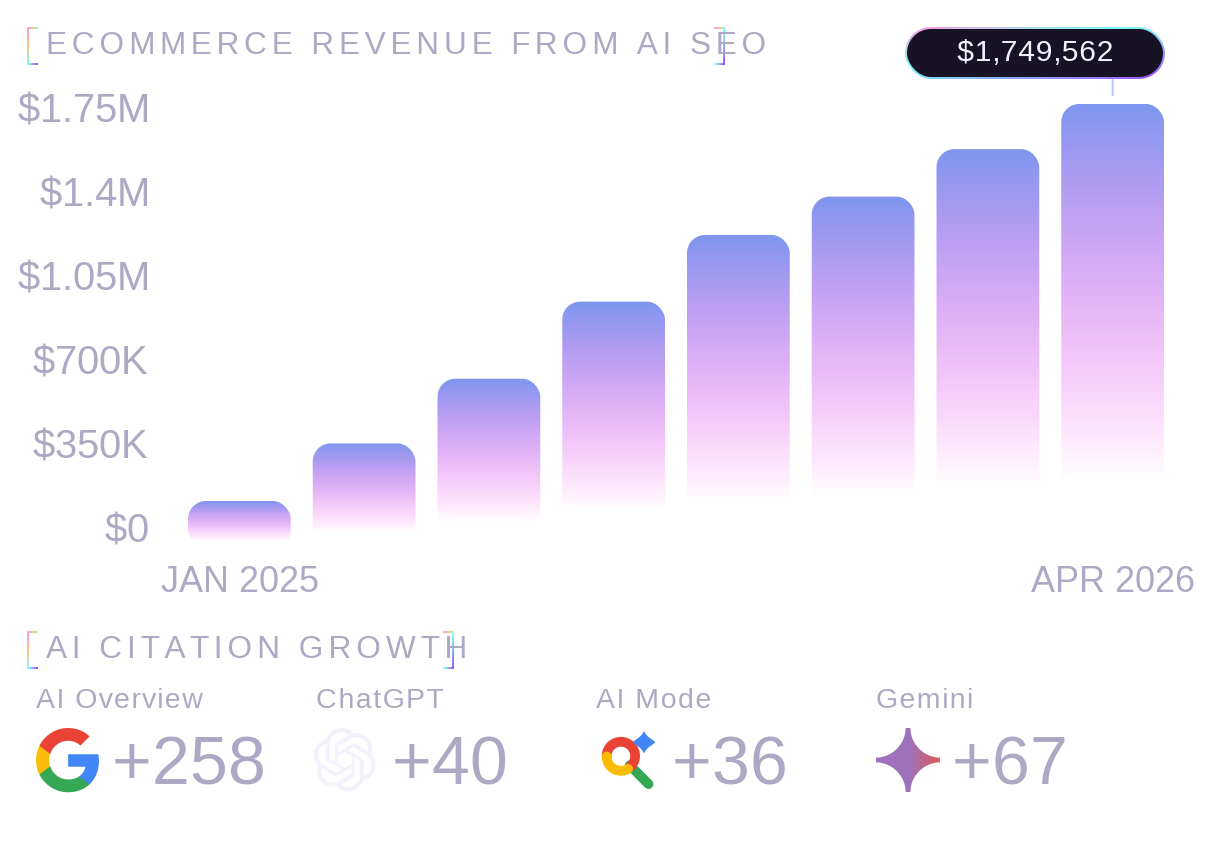
It is. For an Australian meal delivery brand, the searches where the brand appeared in Google's AI summaries grew from 8 to 360 over 16 months while its page-one rankings grew, and shoppers arriving from AI tools bought at 2.6%, up from 2.0%. The same product data and category content serve both.
How long does ecommerce SEO take to show results?
For an Australian meal delivery brand, new pages appeared in Google results within about 60 days. Within about 30 days of its nutritionists' credentials going on the site, pages stuck on page three moved towards page one. Your own timing depends on your store's technical health and how contested your categories are, and your report tracks it each month.
Which ecommerce platforms can your campaign run on?
Rankmax has run store campaigns on Shopify, WooCommerce, BigCommerce, Magento and custom-built platforms. Each needs its own technical work. Shopify, for example, covers the basics out of the box, so the work there goes into the platform-specific fixes most guides skip.
How does ecommerce SEO work for stores with thousands of products?
Rankmax has worked with catalogues of over 10,000 SKUs. At that size, every fix is ranked by the revenue at stake, and technical problems come first: one store had 179 pages missing a main heading and 982 images missing their dimensions before the clean-up. Content then goes to the categories and specific searches most likely to sell.
Can you do ecommerce SEO in-house?
You can. Before working with Rankmax, an Australian meal delivery brand had one marketing manager covering several channels, SEO among them, and a history of inconsistent SEO. The question is whether your team can run technical fixes, product data and content every month alongside everything else.
Does Rankmax work with businesses outside Australia?
Yes. Rankmax is headquartered in Melbourne and 100% remote, with campaigns running in Australia, New Zealand, North America, the United Kingdom and Asia Pacific. If your store ships to several countries, each one gets the market and language setup it needs.