
eCommerce AI SEO Case Study: $1.75M Attributed Revenue Over 16 Months
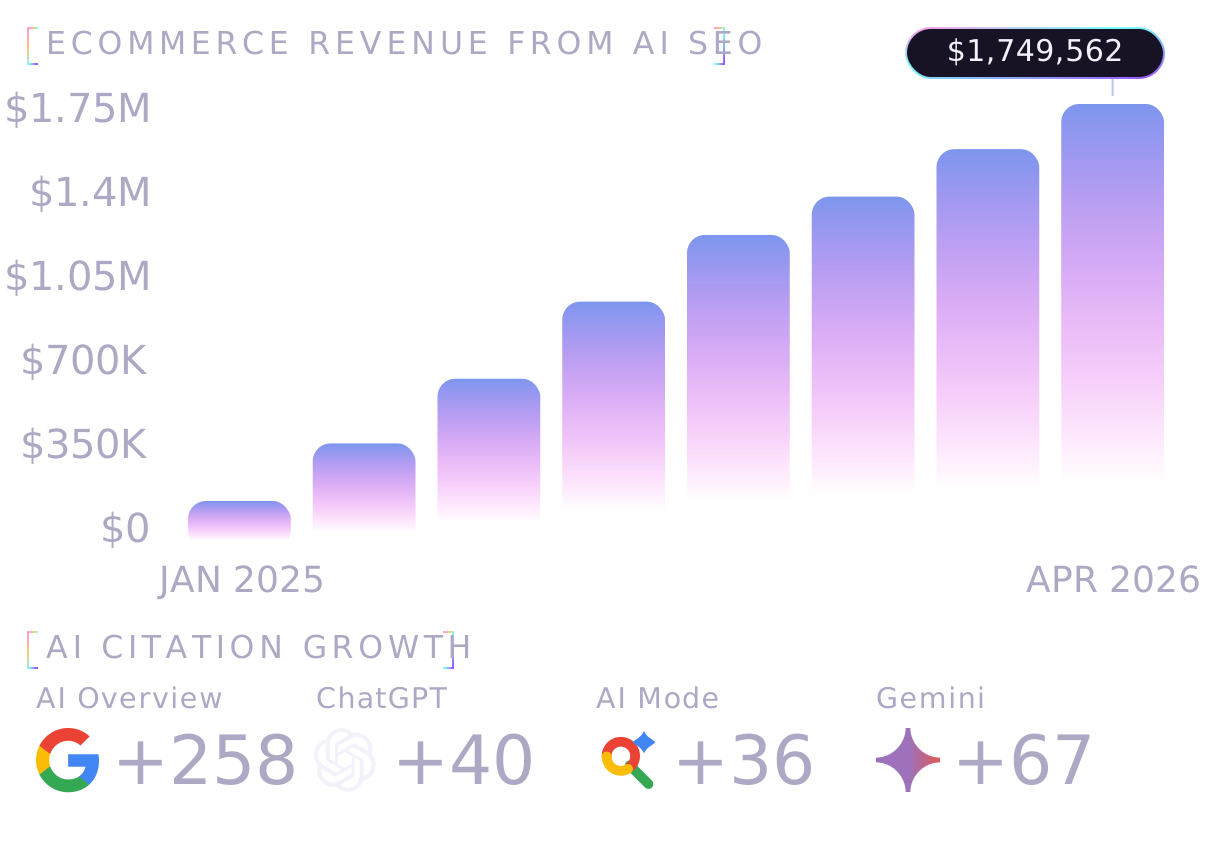
When an Australian meal delivery company came to us in January 2025, monthly revenue from organic and AI channels sat at about $77,400 despite heavy content investment. Incumbents with larger budgets dominated the same head terms, and traditional SEO alone was not moving the needle. This eCommerce AI SEO case study is a sixteen-month review of dual Google and AI SEO work through April 2026, and shows how the programme attributed about $1.75 million in organic-and-AI revenue at an average 2,087% ROI - while organic and AI channels kept delivering customers and sales as the brand stepped paid advertising down.
A Quick Overview of This eCommerce AI SEO Case Study
This is a first-party look at an Australian meal delivery eCommerce brand that needed commercial growth in a saturated category. We paired technical fixes, EEAT for nutrition content, hybrid category pages and dual optimisation for Google plus AI platforms across a continuous sixteen-month measurement window (January 2025 to April 2026).
The Challenge: Breaking Through in a Saturated Market
The meal delivery sector stacks three problems that thin SEO programmes rarely solve together.
Competitive Keyword Landscape
Well-funded competitors already owned the obvious head terms across paid and organic. The client's domain strength could not match established brands on generic "meal delivery" queries, and undifferentiated content was not earning rankings or trust.
Limited Technical Resources
One marketing manager owned multiple channels. There was no dedicated SEO owner. Earlier SEO attempts had been inconsistent, so further organic investment needed a clear commercial case.
AI Search Visibility Gap
Buyers were already asking ChatGPT and other assistants for meal delivery recommendations. Industry trackers put ChatGPT on the order of 900 million weekly active users from early 2026, with the mobile app later estimated past one billion monthly active users. The client was largely absent from those answers, so an entire discovery channel was going to competitors who had not necessarily out-executed them on product - only on structured, citable content.
Sources for platform scale (third-party, dated): Business of Apps ChatGPT statistics; Reuters / Sensor Tower app MAU report (June 2026).
The Solution: Dual Google and AI SEO Strategy
We did not try to outspend incumbents on the same generic terms. We built an AI SEO strategy around high-intent dietary and local modifiers, machine-readable product data, EEAT for YMYL nutrition content and conversion-focused templates. The same system feeds traditional rankings and AI citations.
Phase 1: Content Gap Analysis
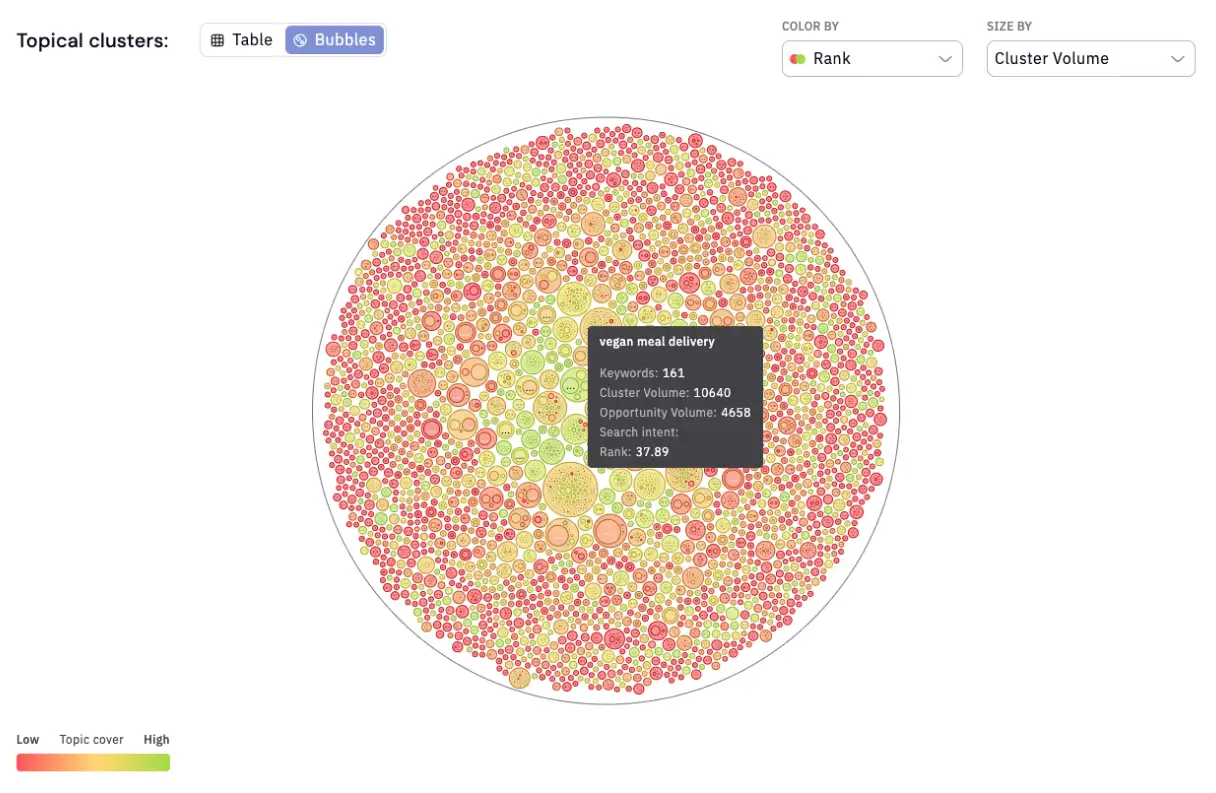
We mapped the meal delivery search landscape with Ahrefs, Semrush, People Also Ask, AnswerThePublic, Reddit and Quora - more than 6,000 candidate terms. Clustering by intent and commercial value (not volume alone) showed competitors fighting over the same head terms while leaving hundreds of specific, high-intent queries thinly covered.
That shifted the plan from one "magic keyword" to a portfolio of winnable queries such as dietary and city combinations (for example keto meal delivery in a named Australian city) where the brand could show up because others simply were not present.
Phase 2: Structured Data for Shopping and AI Visibility
Product and merchant data had to be unambiguous for Google Shopping surfaces and for models that prefer clean entities. We aligned product data with Google's eCommerce documentation, including:
Clear markup reduces guesswork for crawlers and answer engines. It does not replace useful content, but it removes friction when systems decide what to cite.
Phase 3: Conversational Content Optimisation
We used a repeatable brief process so each URL could rank in Google and still be citation-worthy in AI answers.
Step 1: Target Keyword Research
Commercial-intent terms with realistic difficulty first. Specific dietary and geo combinations beat generic head terms the client could not win yet.
Step 2: Query Fan-Out Analysis
For each target, we prompted ChatGPT, Claude and Perplexity to see how systems expand the topic. That typically surfaced 20 to 30 related queries per seed - the same pattern we document in our query fan-out work - which then shaped H2/H3 coverage.
Step 3: Real User Question Mining
We pulled questions from:

Step 4: Comprehensive Brief Creation
Each brief combined primary keyword coverage with the related questions AI systems and shoppers both expect from authoritative nutrition and product content.
Step 5: Dual Optimisation Execution
Pages were structured for crawl clarity and passage-level answers. In this engagement, pages appeared in traditional results within about 60 days and began earning ChatGPT citations within about 90 days.
Phase 4: EEAT Authority Building
Nutrition and diet content is YMYL. An EEAT audit found gaps that suppressed trust and rankings:
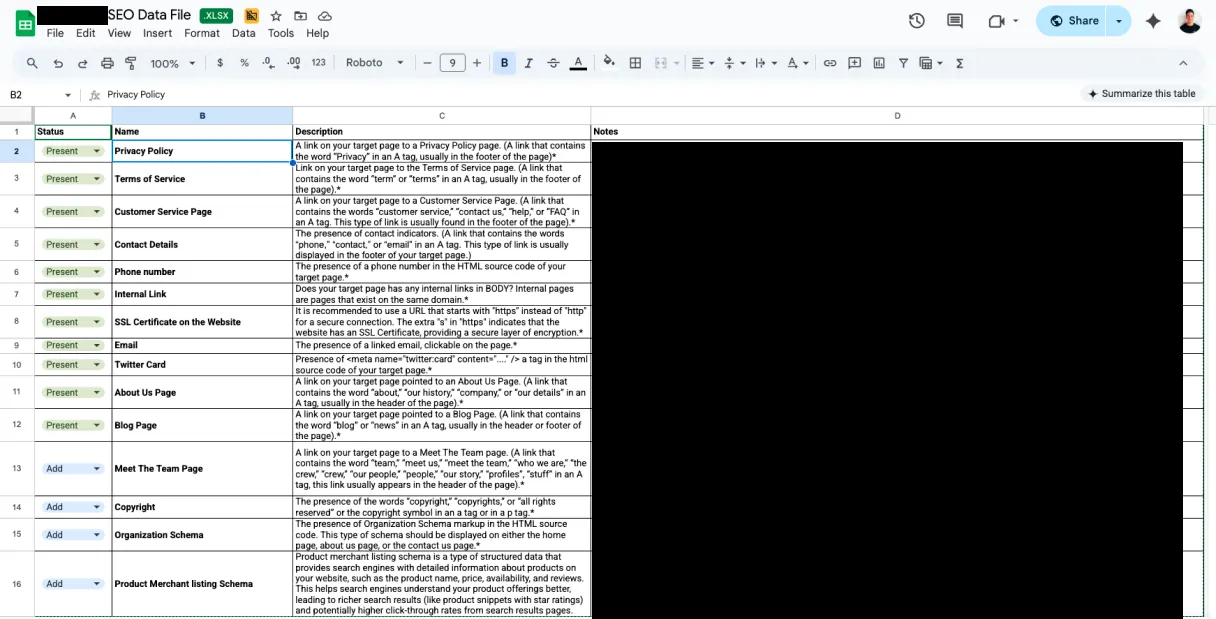
What we implemented:
Within about 30 days, pages that had sat on page three moved toward page one for several high-value health queries (for example nutritionist-approved meal plans and dietitian-designed keto meals). Google could verify expertise behind the copy, not only keyword presence.
Phase 5: Link Growth Without Outreach Spend
Instead of paid links, we invested in resources food bloggers and nutrition writers actually reference: long-form macro guides, meal prep templates, blood-sugar diet explainers, seasonal Australian produce calendars and portion tools.
Organic link outcomes during the main growth window of the campaign:

At typical quality-link market rates, those 337 high-DR links would often be quoted above $100,000 in aggregate outreach cost. We put that budget into content that kept earning references. The DR move looks small on a global scale; in this category it was enough to leapfrog several competitors stuck on low-quality link networks.
Phase 6: Revenue-Focused Design Improvements
Rankings without conversion still fail commercial SEO. We supplied wireframes and UX recommendations:

Each hybrid category targeted an audience or diet (busy parents, shift workers, keto, gluten-free) with 1,500+ words of useful content under the product grid. Shoppers searching "gluten-free family meals" got answers before the grid. Depth helped Google; clarity helped parents; conversion followed intent.
Implementation: Content System and Technical Foundations
Content Production System
We ran an AI-assisted production pipeline at 16 articles and landing pages per month, each through three stages:
By month three, 48 cornerstone pieces targeted high-value commercial themes. Volume only worked because expert review stayed in the loop. Later sprints extended the same system into NDIS and funded-care themes, location landing pages and cluster defence on keto and postpartum.
Technical SEO Overhaul
In parallel we ran a full technical pass - the same discipline we outline in our technical SEO guidance - covering Lighthouse / Core Web Vitals, a full crawl, Search Console health and EEAT.
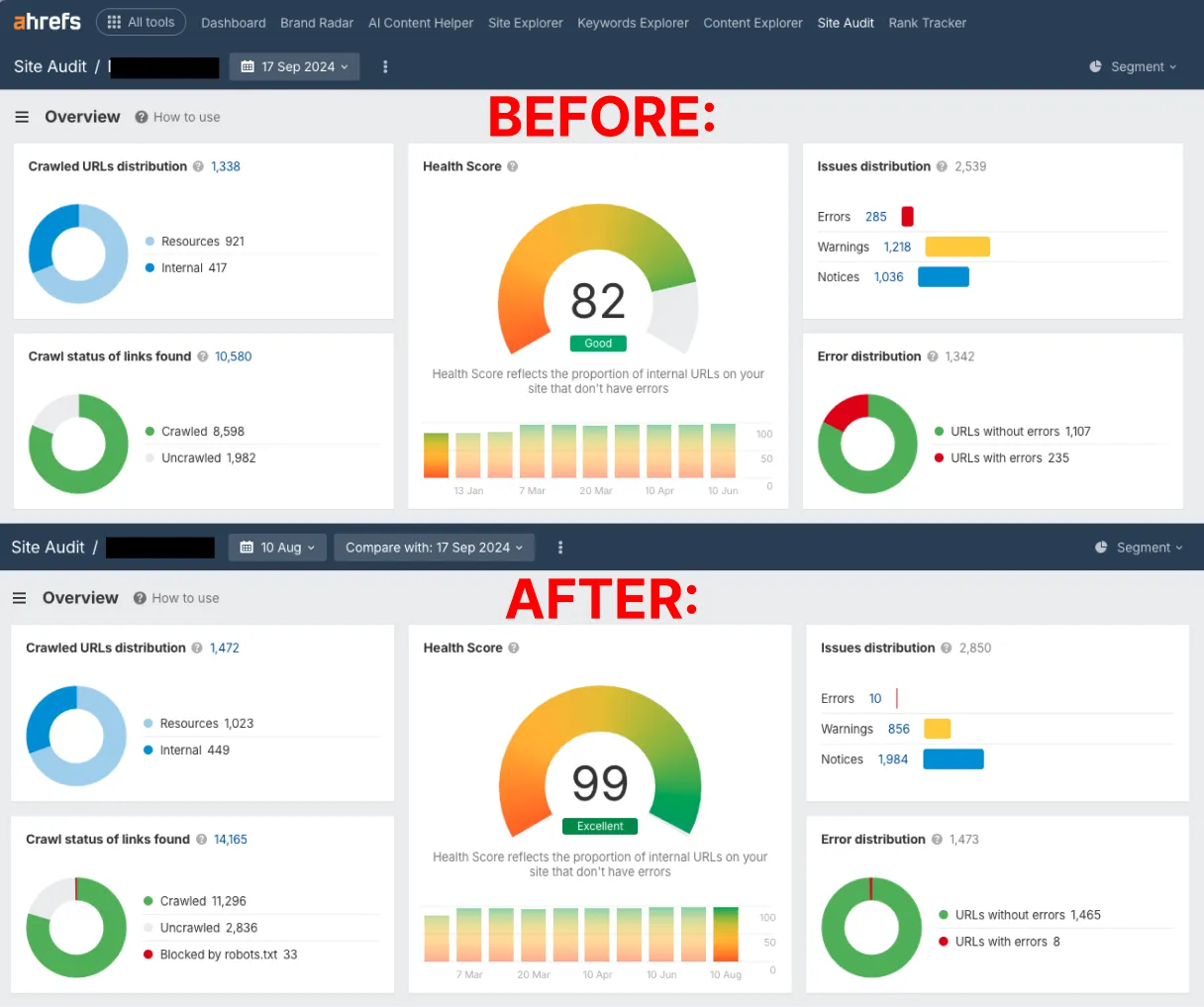
Critical issues found:
Fix sequence:
Without that foundation, even strong content struggles to earn stable rankings or clean AI retrieval. Through April 2026 the site health score was still 99, confirming technical SEO stayed a support layer rather than a bottleneck.
Results Across the Full 16-Month Campaign

Revenue Growth Across Sixteen Months
All revenue figures below are Google Analytics attributed revenue from organic search plus AI LLM channels. Source: continuous April 2026 ROI series (fee column redacted in the public pack; ROI % and revenue only).
| Window | What happened |
|---|---|
| Jan 2025 baseline | $77,400 monthly attributed organic + AI revenue |
| Jul 2025 strongest month | $157,100 monthly attributed revenue - SEO was compounding while paid search and paid media were also at peak intensity |
| After the paid peak | The business stepped paid budgets down as economic uncertainty increased and weighed on the category. Attributed organic + AI revenue stayed commercially strong rather than collapsing with the media cut |
| Apr 2026 (end of this review window) | $92,400 monthly attributed revenue at 1,747% ROI |
| Full 16 months | ~$1.75 million cumulative attributed organic + AI revenue ($1,749,562; average ROI 2,087%) |
How to read the July peak honestly: the single highest month was not "SEO alone then free-fall". Peak paid media and peak SEO compound together. Independent Semrush data at campaign end shows paid traffic down about 70% from the early-campaign level while organic traffic was still materially higher than at the start. When paid was reduced, organic-and-AI attribution cooled from that joint high - which is expected when paid has a flow-on effect on branded demand, remarketing pools and multi-touch journeys - while monthly ROI stayed four-figure and the programme kept contributing customers and sales without requiring higher ad spend.
Dietary niches (keto, paleo, gluten-free, dairy-free, postpartum) and funded-care / NDIS themes remained the commercial engine. National head terms stayed contested; the moat was the cluster of specific intents larger meal brands under-served.
Return on Investment

Selected monthly ROI on attributed organic + AI revenue:
Full-campaign average ROI: 2,087% across 16 months. Unlike paid media, content and technical assets shipped early in the programme were still producing at the end of the review window. Every month in the series stayed in four-figure ROI territory - the commercial shape is consistent profitability, not a short spike.
Ranking Breadth and Organic Traffic (Campaign Start vs End)
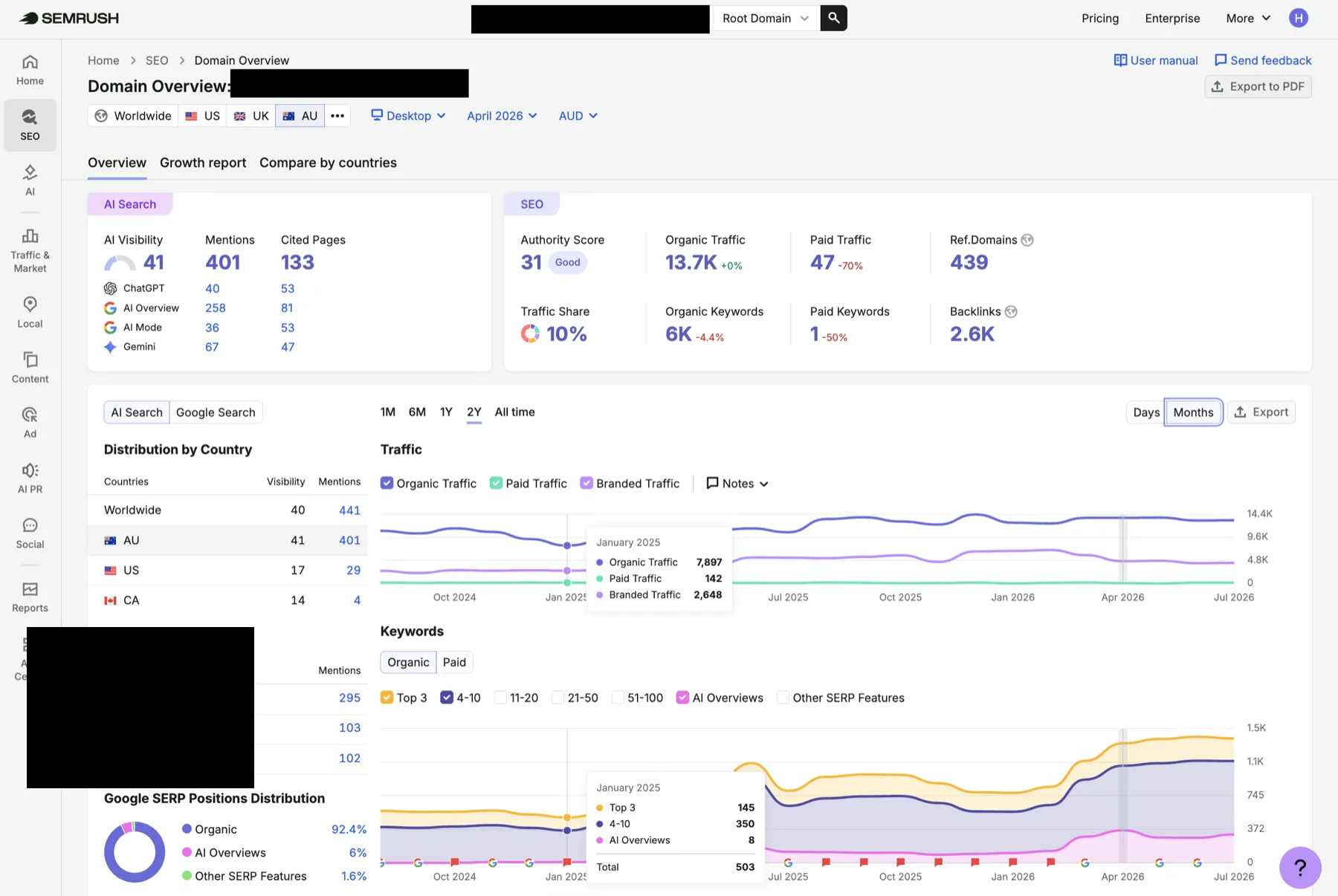
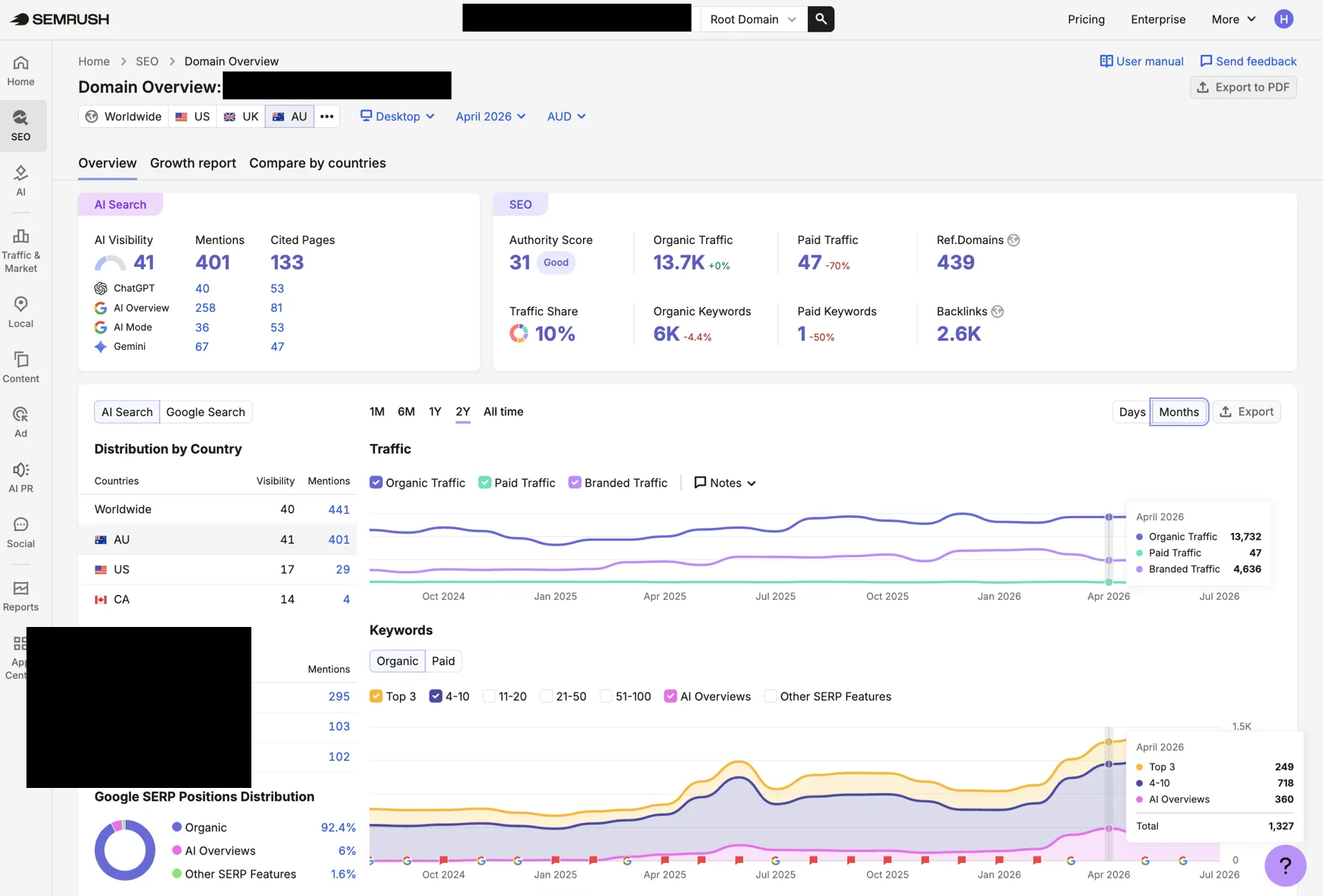
The cleanest before-and-after for rankings is the Semrush Domain Overview at January 2025 versus April 2026 (AU desktop).
| Metric (Semrush AU) | Jan 2025 | Apr 2026 | Direction |
|---|---|---|---|
| Organic traffic (monthly visits) | ~7,900 | ~13,700 | Up ~74% |
| Branded traffic | ~2,650 | ~4,640 | Up ~75% |
| Paid traffic | ~140 | ~50 | Down ~70% (paid stepped down) |
| Top 3 keywords | 145 | 249 | Up |
| Positions 4-10 | 350 | 718 | Up |
| Keywords in AI Overviews | 8 | 360 | Up sharply |
| Referring domains (platform read at end) | - | 439 | Held / extended after growth window |
That is the chart pair we want readers to remember: more page-one real estate, more AI Overview footprint, more organic and branded demand - while paid was deliberately lower.
Market Share and Niche Leadership
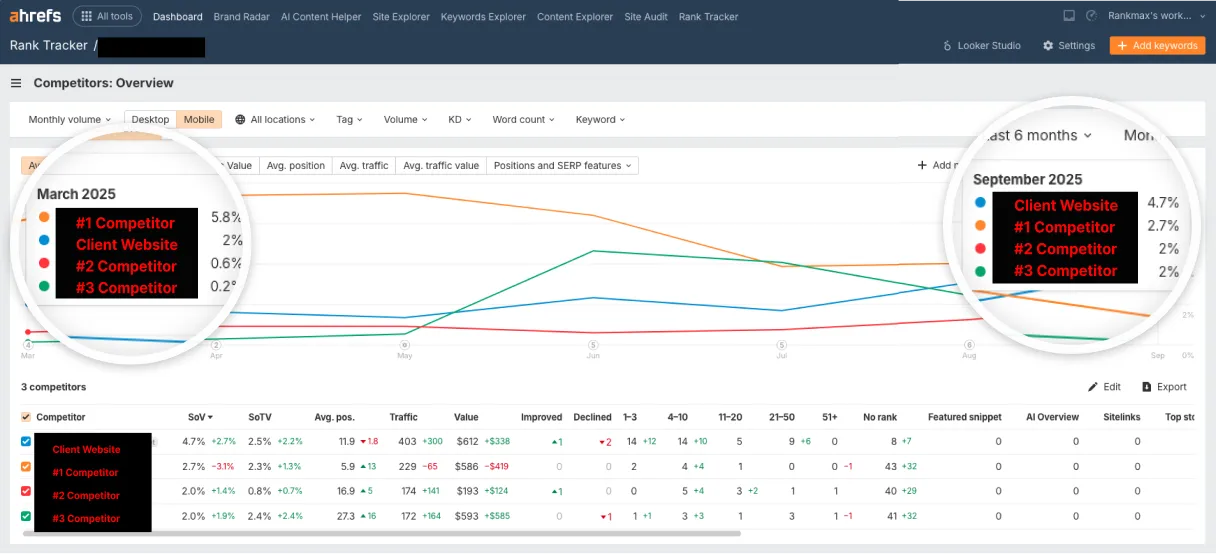
Drivers: keywords larger competitors treated as permanent wins, consistent publishing into dietary and funded-care clusters, and early AI optimisation while others ignored assistants.
Search Visibility Notes
April 2026 year-on-year Search Console and analytics cuts still matter for the end state:
Clicks did not rise in a straight line for the full 16 months (AI Overviews and SERP features diluted CTR; demand and media mix also moved). That is why this case study leads with attributed revenue, ROI, ranking breadth, AI citations and conversion rate - not a single clicks chart as the only success measure. Existing Search Console screenshots stay as proof of the early climb; we are not forcing a full-window GSC clicks chart that under-sells the commercial result.
AI Citation Visibility
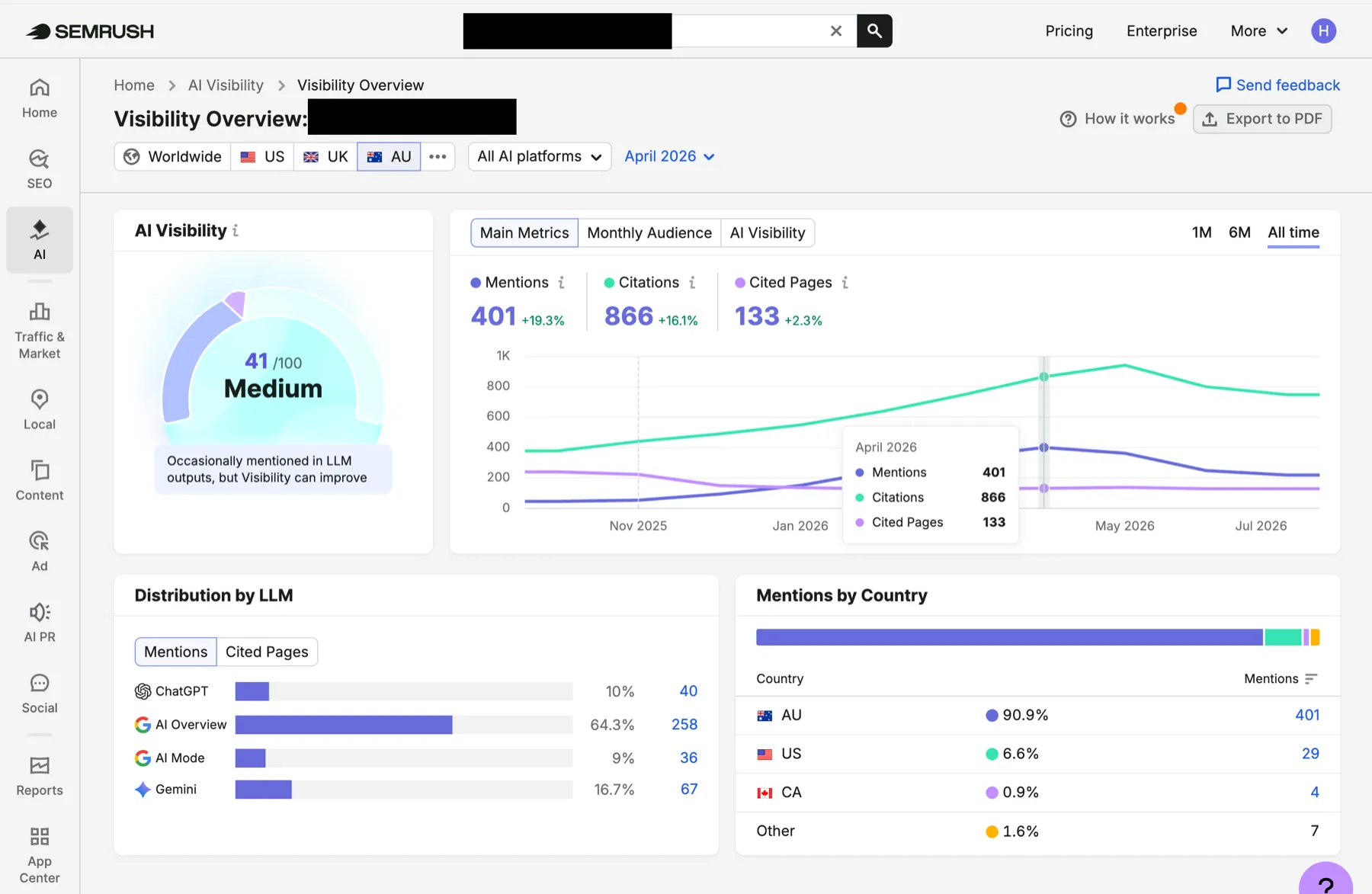
End-of-window AI visibility (Semrush, Australia, all AI platforms, April 2026):
Citations remain a visibility KPI and leading indicator, tracked alongside rankings - not a replacement for rankings and not a standalone "revenue KPI".
By the end of the review window, AI LLM attributed revenue remained a smaller but real complementary channel (about $632 in April 2026 versus about $84 in April 2025 on the ROI series; ~$7,808 AI LLM revenue across the full 16 months). The strategic point is dual capture: blue links and assistant-mediated demand, measured in the same commercial dashboard.
Traffic Quality and Conversion
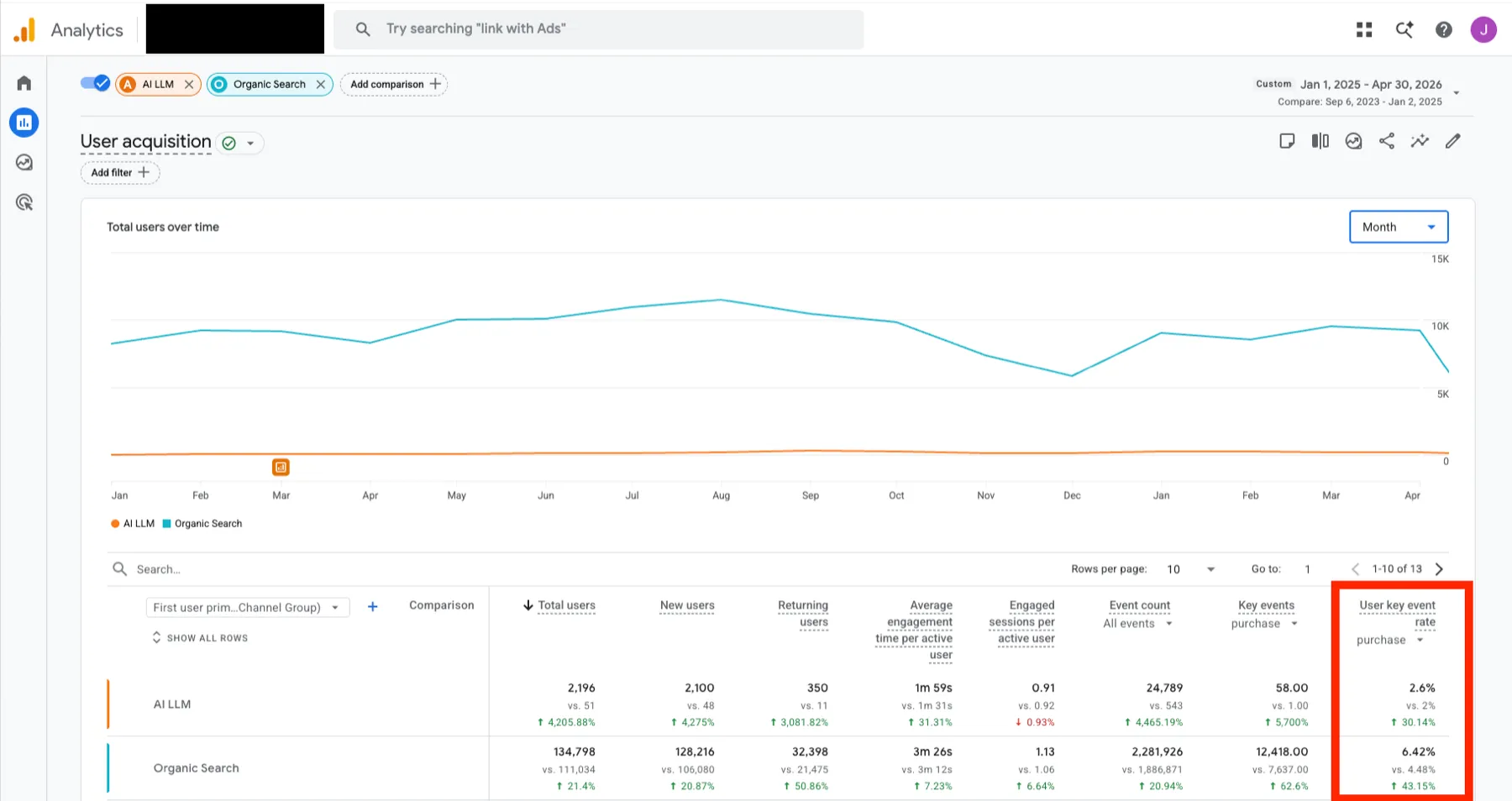
GA4 user key event rate (purchase) - campaign 16 months vs prior 16 months:
| Channel | Purchase rate (campaign) | Prior period | Lift |
|---|---|---|---|
| Organic Search | 6.42% | 4.48% | +43% |
| AI LLM | 2.6% | 2.0% | +30% |
Over the same comparison, organic search delivered about 12,400 purchases from about 135,000 users (vs about 7,600 purchases from about 111,000 users in the prior window) - more customers and a higher close rate, not just more traffic.
During the earlier growth window, organic conversion rate and purchase volume had already improved year on year on the original public charts; those assets stay as supporting proof of quality traffic. By April 2026, average order value for organic purchases also strengthened year-on-year to about $147.71 (from about $137.10), and items per order rose to about 10.99 (from 10.44).
Honest commercial SEO means publishing both sides: the acquisition system won visibility, protected ROI and improved conversion efficiency; checkout and merchandising still matter when SERP features and media mix change how shoppers arrive.
What We Learned
Content Depth Beats Thin Variations
Comprehensive guides that answered clusters of related questions outperformed fleets of thin keyword variations. Topical depth helped both rankings and citation likelihood - and still defended niches sixteen months later.
Structured Data Lowers Friction for Machines
Semrush has reported AI Overviews appearing in a material share of searches (their public study cited about 13.14% in the period referenced on earlier public materials). Readable entities and FAQs do not guarantee a citation, but unmarked product data makes you easier to skip.
Early Dual-Channel Work Compounds
While competitors stayed on traditional SEO only, early assistant-oriented structure and EEAT helped this brand take share in dietary niches. That window narrows as more eCommerce teams invest in the same work.
Paid and Organic Amplify Each Other - Organic Still Stands Alone
Peak attributed organic months lined up with peak paid intensity. When the business later reduced paid spend under greater economic uncertainty, organic-and-AI revenue did not need to "beat July" to stay successful - it needed to keep delivering profitable customers without forcing ad spend back up. Reading July as the only success month misunderstands multi-channel demand. The Semrush start-vs-end pair shows organic and branded demand up while paid was down.
Measure What Commerce Cares About
Clicks alone understate AI-era SEO. Attributed revenue, ROI, page-one breadth, AI citations and purchase conversion rate tell a more complete commercial story when SERP features dilute CTR.
Niche Moats Outlast Head-Term Wars
Position 1 on gluten-free, paleo and dairy-free meal delivery against absent national competitors was more durable than fighting every city head term on the homepage. Location landing pages (for example Gold Coast moving into position 2) worked when they followed the same playbook.
Frequently Asked Questions
How long does it take to see results from AI SEO on an eCommerce site?
Initial movement often shows inside 30 to 90 days when technical blockers are cleared in parallel with publishing. In this engagement, meaningful revenue impact compounded through the first quarter and the full sixteen-month window reached about $1.75 million in attributed organic-and-AI revenue. Timelines still depend on crawl health, competition, media mix and how fast the site can ship fixes and conversion improvements.
What is the difference between traditional SEO and AI SEO for eCommerce?
Traditional SEO competes for positions in blue-link results. AI SEO also works on citation frequency inside assistant answers, where a brand can appear more than once in a single response across product, diet and delivery contexts. You still need rankings and a sound site; citations are an extra visibility layer tracked beside them.
Can smaller eCommerce brands use the same approach?
Yes. Smaller teams often ship fixes faster and can own niche dietary or local modifiers that national brands under-serve. Focus on categories where you have real expertise and clean product data rather than only head terms you cannot win yet.
How should eCommerce teams think about SEO investment?
Budgets vary with catalogue size and competition. Public industry write-ups often place serious eCommerce SEO programmes in a wide monthly range once content, technical work and specialist time are included - for example Surfer's SEO budget overview. For mid-market stores we typically see spend weighted toward content production, senior strategy time and technical or CRO enablement rather than paid links. Starting points depend on scope - book a discovery call if you want a fit check for your catalogue.
Will AI replace Google for eCommerce purchase journeys?
Not on the evidence so far. Assistants are a growing discovery layer while Google remains central for many transactional queries. The durable approach is dual optimisation, not a bet on one channel disappearing. Background reading: Bloomberg on Google's AI search competition.
How do you measure AI SEO beyond rankings and sessions?
Track citation presence by platform, AI LLM attributed revenue where analytics allow, assisted conversions, and branded search lift after assistant exposure. Manual prompt panels still help interpret tool dashboards. Treat citations as a visibility KPI alongside rankings - and keep monthly attributed revenue, ROI and purchase conversion rate as the commercial scoreboard.
Why a Sixteen-Month eCommerce AI SEO Review Still Matters
An Australian meal delivery brand moved from about $77,400 in monthly organic-and-AI revenue to roughly $1.75 million attributed across 16 months at a 2,087% average ROI, expanded page-one and AI Overview footprint, reached 866 AI citations by April 2026, and lifted organic purchase conversion by about 43% - while paid traffic was stepped down. The work was not a single tactic. It was technical cleanup, EEAT for YMYL content, hybrid commercial pages, dual Google + AI briefs, and honest multi-channel measurement when paid, conversion and SERP features all moved at once.
If your store is still funding growth almost entirely through ads while shoppers also ask assistants what to buy, the gap is already commercial. The question is how quickly you build an organic and AI layer that protects profitability when media cannot simply be scaled forever.
For stores that need the full commercial system - architecture, content, technical and AI visibility - see our eCommerce SEO agency overview.
What The Client Had To Say:
"Very cool to be able to first hand reap the benefits of what Rankmax is doing in the space of SEO and AI. The results so far have been beyond any we've seen with an agency before. 10/10 recommend."
- Abbey, Co-Founder & CEO | ⭐⭐⭐⭐⭐ (5/5) | ✓ Verified Google Review
About the Author


Want Help Putting This into Practice?

Everything we publish comes from the same methodology we run for clients every day. Book a discovery call and we will show you how it applies to your business.


