
Generative Engine Optimisation (GEO): What It Is, and How We Get Clients Cited in AI Search


Ask ChatGPT, Perplexity, or Google’s AI Overview a question your business could answer, and watch what happens. The engine writes a confident paragraph, names a handful of sources, and the searcher gets their answer without visiting a single site. If your page is not one of those cited sources, you are invisible at the exact moment a buying decision is being shaped. Generative engine optimisation is the practice of fixing that, and this guide covers what it is, where the term came from, how it differs from SEO, and the specific way we get client content cited in AI answers. Here is where it starts.
What Is Generative Engine Optimisation (GEO)?
Generative engine optimisation (GEO) is the practice of structuring your content and online presence so that AI systems like ChatGPT, Google’s AI Overviews, Perplexity, and Gemini cite you when they answer a user’s question. Where traditional SEO earns a ranked link, GEO earns a mention inside the answer itself.
The shift is subtle but total. A generative engine does not hand the user ten blue links to choose from. It reads across many sources, synthesises them, and returns one summarised answer with a short list of citations. Your job moves from ranking a page to becoming one of the sources the model trusts enough to quote.
That is why GEO is sometimes described as generative engine optimization (the US spelling you will see in most global coverage). Same practice, different keyboard. The goal is identical: be the passage the machine lifts, not the link it ignores.
Ready to Get Cited in AI Search?
Getting cited by AI is not luck, and it is not a single trick. It is a repeatable discipline that sits on top of solid SEO foundations. We build and run that discipline for businesses across SaaS, eCommerce, and professional services through our AI SEO strategy service. If you would rather see the full method before you read on, that page lays out how we approach it end to end.
Explore Our AI SEO StrategyWhere the Term “Generative Engine Optimisation” Came From
Most Australian coverage treats GEO as a buzzword with no birthday. It has one. The term was coined in a 2023 research paper titled “GEO: Generative Engine Optimization” by Aggarwal, Murahari, Rajpurohit, Kalyan, Narasimhan, and Deshpande, a team from Princeton University, IIT Delhi, Georgia Tech, and the Allen Institute for AI. The paper was submitted to arXiv in November 2023 and accepted to KDD 2024, the leading academic conference on data mining.
The researchers defined generative engines as search systems that “synthesize information from multiple sources and summarize them using LLMs,” then introduced GEO as, in their words, “the first novel paradigm to aid content creators in improving their content visibility in generative engine responses.”
To test what actually works, they built GEO-bench, a benchmark of roughly 10,000 real user queries spanning multiple domains. Running content through it, they found that the right optimisations “can boost visibility by up to 40% in generative engine responses.” The paper also isolated the specific tactics that moved the needle, which we come back to in the how-to section below. That research spine is the reason we anchor our GEO work to validated levers rather than guesswork, and it is the piece almost no competing guide grounds properly.
GEO vs SEO: What Actually Changes
GEO does not replace SEO. It extends it. Nearly everything that earns you a good organic ranking, clean crawlability, real authority, well-structured pages, also helps a model decide to cite you. What changes is the unit you optimise and how you measure success.
| Dimension | Traditional SEO | GEO |
|---|---|---|
| Primary goal | Rank a page in the results list | Get cited inside the AI answer |
| Unit optimised | The page and its keywords | The passage and its extractable claims |
| Success metric | Position and organic clicks | Citations, share of voice, AI referral traffic |
| How you win | Relevance, backlinks, on-page signals | The above, plus quotable facts, statistics, and clear structure |
| User outcome | Click to your site | Answer served on the results page, citation to your site |
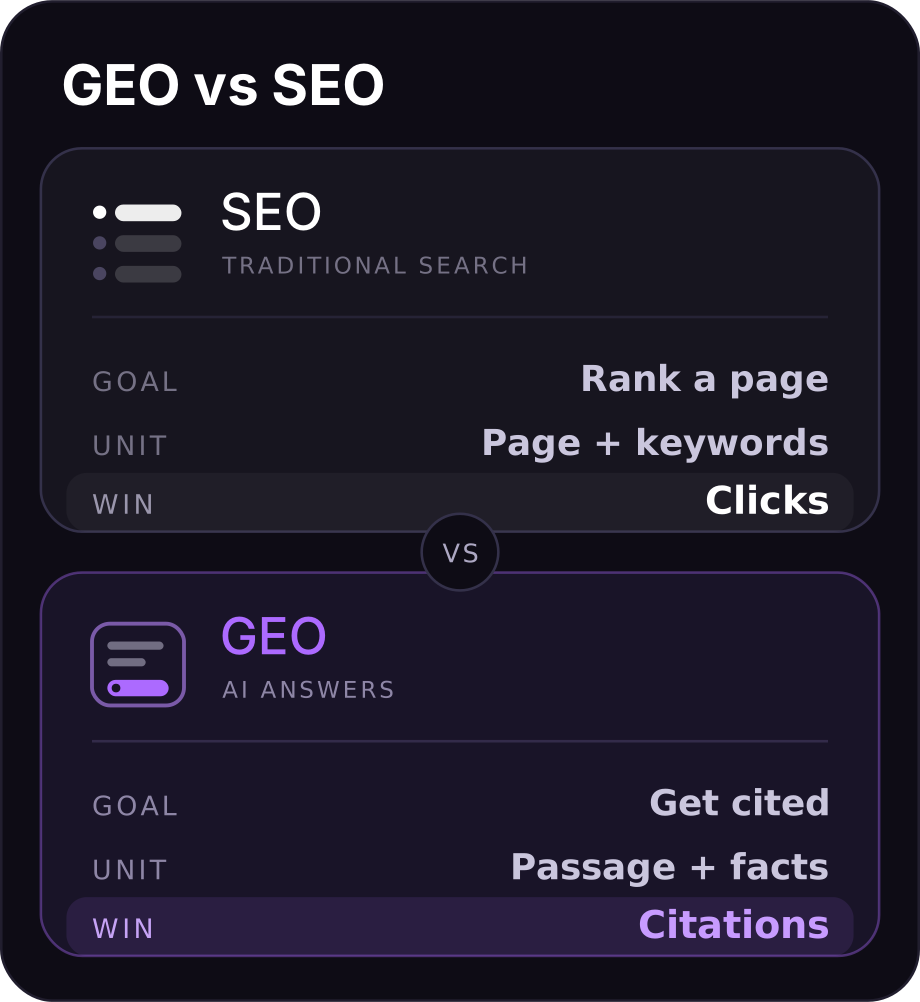
The practical takeaway is that you do not start from zero. A technically sound, authoritative site is already partway to being AI-citable. GEO is the layer you add on top, and we go deeper on the mechanics in our guide on AI SEO vs traditional SEO.
GEO vs AEO, AIO and LLM SEO: Untangling the Terms
If you have spent an afternoon reading about this, you have met a dozen acronyms that all sound like they mean different things. They mostly do not. Here is the plain version:
- GEO (generative engine optimisation): optimising to be cited by generative engines. Owns the academic origin.
- AEO (answer engine optimisation): optimising to be the answer an engine returns. In practice, near-identical to GEO.
- AIO (AI optimisation): a broader umbrella term for optimising for AI systems generally.
- LLM SEO: the same idea framed around large language models specifically.
- AI SEO / Gen AI SEO: the working names most agencies, including us, use day to day for the whole discipline.
The honest summary is that these largely describe the same practice under different names. GEO is the one with the cleanest pedigree because it traces to a peer-reviewed paper. Rather than re-explain each one here, we cover the LLM-specific mechanics in our LLM SEO guide, the broad discipline in our Gen AI SEO guide, and the flagship overview in our AI SEO pillar. GEO owns the name; those guides own the practice.
Why Generative Engine Optimisation Matters Now
The reason this stopped being optional is the click. When an AI summary appears, people stop clicking through. Pew Research Center found that users who saw a Google AI Overview clicked a search result just 8% of the time, versus 15% for users who did not see one, roughly half the click-through. Pew also found that around 18% of Google searches now produce an AI summary, and 88% of those summaries cite three or more sources.
Read those two numbers together. Fewer people are clicking, but the AI is naming sources, and it names several of them. Traffic is compressing into the answer box, and the only way to stay visible there is to be one of the cited sources. Gartner has forecast that traditional search engine volume will drop 25% by 2026 as AI chatbots and virtual agents absorb queries. The game is moving from ranking to being cited, and we dig into the wider fallout in our article on how AI impacts SEO.
We are not describing this from the sidelines. One client we work with, a B2B property management outsourcing company, went from zero AI visibility to 138 AI citations across ChatGPT, Google AI Overviews, Gemini, and Perplexity, and that work sat alongside $5.9M in attributed revenue at a 6,864% average ROI over 17 months. We treat those citations as a visibility KPI, a leading indicator that the engines now trust the content, not as a revenue number in themselves. The revenue came from the whole programme. The citations are how we know the AI layer is working. This is not a one-off: we see the same citation growth pattern repeat across other clients we work with too, including a B2C compensation-claims client, a B2B SaaS client, and an eCommerce brand, among others.
How Generative Engines Choose What to Cite
To optimise for citation, you have to understand what the engine is actually doing when it answers. Most generative engines use a technique called retrieval-augmented generation. Rather than answering purely from what the model memorised in training, the engine retrieves fresh, relevant material at query time and writes its answer grounded in that retrieved content.
The process looks roughly like this:
- The query is expanded: the engine fans a single question out into several related searches to cover the angles a good answer needs.
- Passages are retrieved: it pulls the most relevant passages from across many pages, not whole pages, individual chunks of text.
- The answer is synthesised: the model stitches the strongest passages into one summary and attributes the claims it used to their sources.
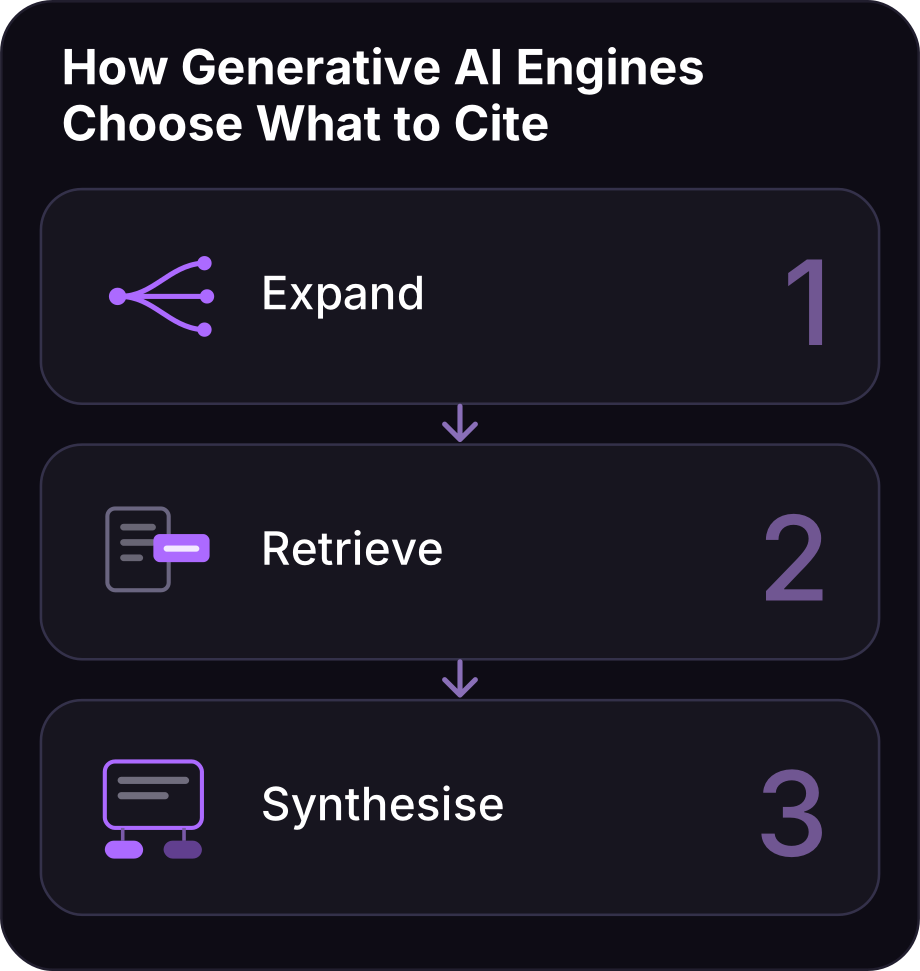
Two things follow directly from this. First, structure matters more than ever, because the engine is grabbing passages, so a clear, self-contained passage that answers the question outright is far easier to lift than the same point buried in a wall of text. Second, extractability beats cleverness. We explain the retrieval mechanics in more depth in our guide on how AI search works, and cover the query-expansion step in our query fan-out article.
How to Do Generative Engine Optimisation
The Princeton paper did not just define GEO. It tested nine tactics against GEO-bench and identified the ones that reliably lifted visibility. We anchor our client work to those validated levers first, then layer the operational SEO work on top. The five levers the research validated are:
- Cite authoritative sources: back your claims with credible references. Content that cites its sources gets cited in turn.
- Add direct quotations: include relevant quotes from experts or primary sources. Quotable passages are lift-able passages.
- Add statistics: replace vague claims with specific, sourced numbers. Engines favour hard data over hand-waving.
- Optimise fluency: write clearly and readably. Clean prose is easier for a model to extract and trust.
- Write with an authoritative voice: state things with confident, expert framing rather than hedged uncertainty.
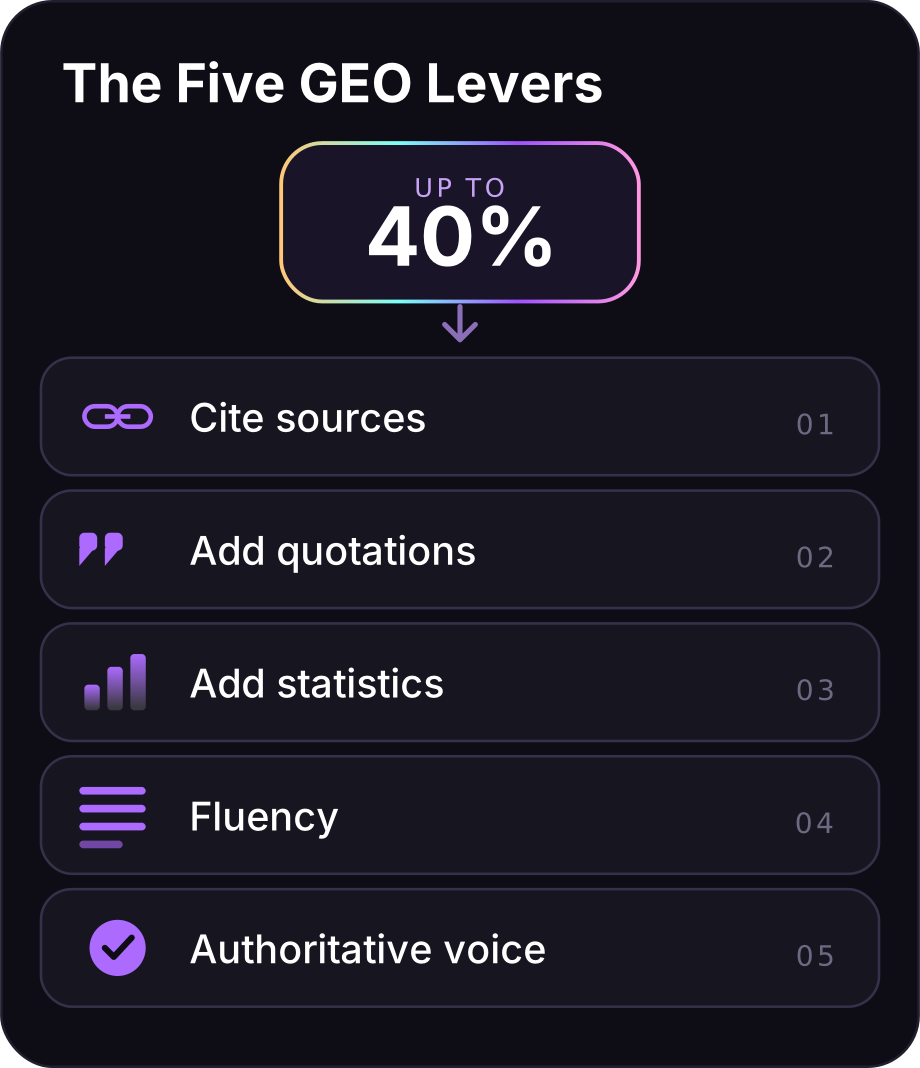
Those levers are the content spine. On top of them, we run the operational layer that makes the content reachable and trustworthy in the first place:
- Crawlability and indexability for AI bots: confirm the crawlers behind ChatGPT, Perplexity, and Google can actually reach and read your pages.
- Structured data: add schema so machines can parse what each page is about, which we cover in our guide to schema for SEO.
- Entity and brand consistency: make sure your name, offering, and facts are described consistently everywhere the engines look.
- Freshness: keep key pages current, because engines lean toward recent, maintained content.
- Earned brand mentions: build the third-party mentions and references that tell an engine you are a real, cited authority.
Done together, these turn a page from something a model happens to find into something it chooses to quote.
How to Measure Generative Engine Optimisation
You cannot manage what you do not measure, and AI visibility needs its own scorecard because it does not show up cleanly in a rankings report. We track GEO across five metrics:
- AI citations and mentions: how often, and where, the engines cite your content. This is the core leading indicator.
- Share of voice in AI answers: how much of the AI conversation in your category you own versus competitors.
- AI referral traffic: the visitors who do click through from an AI answer to your site.
- Branded vs unbranded citations: whether you are cited for your own name or for the topics you want to own.
- Coverage across platforms: your presence spread across ChatGPT, Perplexity, Google AI Overviews, Gemini, and Copilot, because visibility on one is not visibility on all.
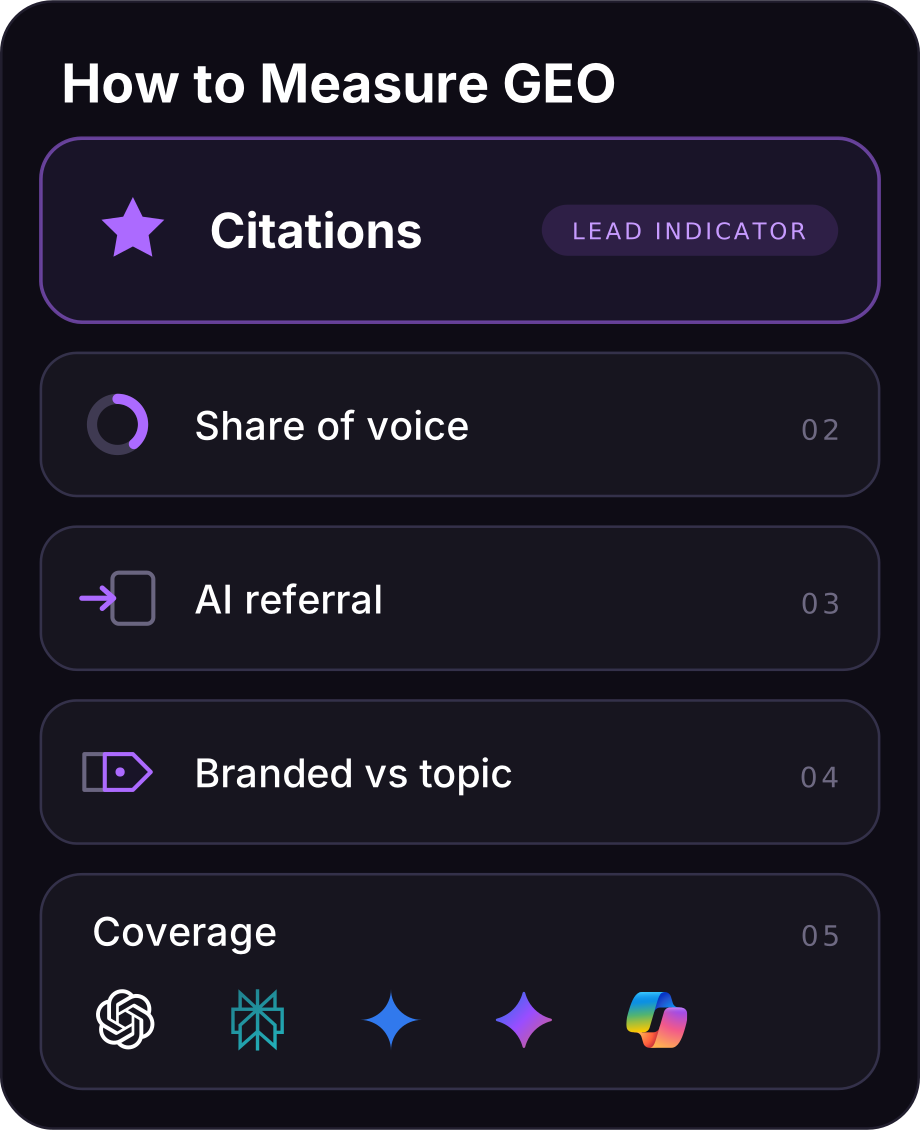
A quick word on the first metric. AI citations are a visibility KPI, a leading indicator that the engines now trust your content, not a revenue figure. Rising citations tell you the AI layer is working before the commercial results follow. For the tooling side, we keep a current view of the platforms worth using in our review of the best AI visibility tools, rather than naming individual products here.
Frequently Asked Questions
Is GEO Replacing SEO?
No. GEO extends SEO rather than replacing it. The technical foundations, authority signals, and content quality that earn rankings are the same ones that earn AI citations. GEO adds a layer on top for the way generative engines read and cite content, so the smart move is to do both.
What Is the Difference Between GEO and SEO?
Traditional SEO optimises a page to rank in the list of results, measured by position and clicks. GEO optimises passages to be cited inside an AI-generated answer, measured by citations, share of voice, and AI referral traffic. SEO wins the link; GEO wins the mention.
How Do I Get My Content Cited by ChatGPT?
Make your content easy to retrieve and easy to trust. Answer questions in clear, self-contained passages, back claims with sourced statistics and direct quotations, confirm the AI crawlers can reach your pages, and build consistent brand signals across the web. Those are the levers the Princeton research validated, and they are what we run for clients.
How Long Does Generative Engine Optimisation Take to Work?
It depends on your starting foundations, but AI citations tend to appear once the content and technical groundwork are in place. In one B2B programme we ran, AI Overviews began citing the client’s content within weeks of the AI-specific work, though building durable share of voice took months of consistent execution.
Do I Need GEO If I Already Do SEO?
Yes, if your buyers use AI to research. Strong SEO gets you most of the way, but it does not guarantee you are cited in AI answers, and that is where a growing share of attention now sits. GEO is the additional layer that turns a well-ranked page into a well-cited source.
What Tools Measure GEO?
You need tooling that tracks AI citations, share of voice in AI answers, and cross-platform coverage across engines like ChatGPT, Perplexity, and Google AI Overviews. Standard rank trackers do not capture this. We maintain a current, independent review of the AI visibility tools worth using so you can compare them without the sales spin.
The Real Shift: From Ranking to Being Named
The move from search to answers is not the end of SEO, it is the next chapter of it. Generative engines still reward authority, clean structure, and genuine expertise; they just express that reward as a citation inside an answer rather than a link in a list. Generative engine optimisation is how you stay visible through that transition, by giving the engines quotable, sourced, well-structured content they can trust and lift. The businesses that treat AI citations as a visibility signal to build on, rather than a novelty to ignore, are the ones being named while their competitors wait for the clicks that are no longer coming.
About the Author
Want Insights Like This Fortnightly?

Our AI SEO strategies and tactics delivered fortnightly, including bonus trade secrets not shared anywhere else. No fluff. Just what's working right now. 5-minute read.


