
12 Best AI Visibility Tools in 2026 (Tested After Migrating Our Whole Client Stack)

Quick Summary:
My Best AI Visibility Tools Quick Picks
- Semrush - Best all-in-one search visibility platform
- Ahrefs Brand Radar - Best brand-level AI tracking for Ahrefs users
- Profound - Best enterprise-grade AI visibility platform
- SE Ranking (SE Visible) - Best value for combined SEO and AI visibility
- Peec AI - Best clean dashboard for small and mid-sized teams
- Otterly AI - Best for deep GEO audits on a budget
- Scrunch AI - Best for enterprise multi-engine monitoring
- AthenaHQ - Best for agencies that need unlimited seats
- Hall - Best free plan for startups (Australian built)
- Rankscale AI - Best budget AI rank tracker
- Gauge (AI Product Rankings) - Best free instant visibility check
- Google Analytics 4 (LLM filter) - Best free first-party baseline
Also worth knowing: HubSpot AEO - best for teams already inside the HubSpot ecosystem. AI SEO Tracker - best for actionable page-level fixes and agent workflows. Both sit below the ranked 12 and neither has been through our client testing yet.
Keep reading for the detailed reviews, the comparison table, and my selection criteria.
Your customers are asking ChatGPT, Perplexity, Google AI Mode, Microsoft Copilot and Claude for recommendations right now, and most brands have no idea whether they show up in those answers. That blind spot is the whole reason the best AI visibility tools exist. After 18+ years running SEO campaigns, I spent the last few months testing the tools that claim to fix it across our agency's client work. This guide ranks the 12 tools worth knowing in 2026, what each one does well, and which one I would actually pay for depending on your situation.
What Are the Best AI Visibility Tools in 2026?
The best AI visibility tools track how often your brand and pages are cited across AI search experiences like ChatGPT, Perplexity, Google AI Mode, Microsoft Copilot and Claude, then show you the gaps against competitors so you can close them. The right tool for you depends on whether you need a single all-in-one platform that combines SEO and AI visibility, an enterprise-grade monitor for the deepest data, or a free way to start measuring AI traffic today. Our top pick for most teams is the one that bundles AI visibility into a full SEO platform from the entry plan, rather than charging for it as a premium add-on, and we get to it in detail below.
Why You Can Trust This Review
I have been working in SEO since 2007, running campaigns for businesses from local service providers through to ASX-listed companies. I built one of the first AI SEO writing tools in mid-2023, and Rankmax is the only Australian AI SEO agency that has generated more than $26 million in attributed client revenue across Google, AI Overviews, ChatGPT, Perplexity, Gemini and Copilot. AI visibility tracking is not a side experiment for me. It runs across every client account we manage.
Here is how I evaluated these tools:
- Platform coverage: How many AI engines the tool actually tracks, and whether the important ones (ChatGPT, Google AI Overviews, Gemini, Perplexity) are included or paywalled.
- Data you can act on: Whether the tool tells you what to do next, or just hands you a score with no path to improvement.
- Competitive intelligence: How well it surfaces where competitors get cited and you do not, which is where the real strategy lives.
- Value for money: What you get at each price point, and whether AI visibility is bundled or charged as an expensive add-on.
- Fit for the job: Whether it suits a solo operator, an in-house team, an agency, or an enterprise.
A note on my experience: I currently use Semrush (Advanced plan) daily across the Rankmax client portfolio, so those observations are first-hand and recent. I used Ahrefs as my primary platform for around five years and have hands-on time with Brand Radar, and I have held past subscriptions to SE Ranking. For tools I have not run on a paid client account, I have based the assessment on documentation, free tools, and feedback from SEO professionals I trust, and I have flagged that clearly in each review. No tool paid to be included or ranked here.
AI Visibility Tools Compared at a Glance
| Tool | Best For | Starting Price | Free Trial | AI Platforms Tracked | Action |
|---|---|---|---|---|---|
| Semrush | All-in-one search visibility (SEO + AI) | From $139/mo | 7-day trial | ChatGPT, Google AI Overviews, AI Mode, Gemini (Perplexity on Pro+ and Advanced) | Start Free Trial |
| Ahrefs Brand Radar | Brand-level AI tracking for Ahrefs users | From $129/mo on Lite (includes 150 Brand Radar custom prompt checks); optional full AI-index add-ons from $199/platform or $699 all-platforms; standalone custom prompts from $50/mo | No (free tools only) | ChatGPT, Google AI Overviews, Claude, Gemini and more | Get Started |
| Profound | Enterprise GEO platform | $99/mo (Starter) | Free trial + demo | ChatGPT, Perplexity, Google AI Overviews, Copilot and more | Free Trial + Demo |
| SE Ranking | Value SEO + AI visibility | $55/mo (AI Search add-on from $189/mo) | 14-day trial | ChatGPT, Google AI Overviews, AI Mode, Gemini, Perplexity | Start Free Trial |
| Peec AI | Clean dashboard for SMB and agency | EUR89/mo | 7-day trial | ChatGPT, Google AI Overviews, Perplexity, Claude, Gemini, Copilot | Start Free Trial |
| Otterly AI | GEO audits on a budget | $29/mo (Lite) | Free trial | ChatGPT, Google AI Overviews and Mode, Perplexity, Copilot, Gemini | Start Free Trial |
| Scrunch AI | Enterprise multi-engine monitoring | $300/mo | Demo | ChatGPT, Claude, Perplexity, Gemini, Google AI Overviews and Mode, Meta AI | Get Demo |
| AthenaHQ | Agencies needing unlimited seats | $295/mo | Free report | Major LLMs and AI search engines | Get Started |
| Hall | Startups wanting a free plan | Free (paid from $239/mo) | Free plan | ChatGPT, Perplexity, Google AI Overviews and more | Start Free |
| Rankscale AI | Budget AI rank tracking | $20/mo | Free plan | ChatGPT, Claude, Perplexity, Google AI Overviews | Start Free Trial |
| Gauge (AI Product Rankings) | Free instant visibility check | Free | Free | OpenAI, Anthropic, Perplexity | Try Free |
| Google Analytics 4 | Free first-party baseline | Free | N/A | Referral traffic from all LLMs | Use GA4 |
| HubSpot AEO | AI optimisation inside HubSpot workflows | From $45/mo | 28-day trial | ChatGPT, Perplexity, Gemini | Free Trial |
Pricing is current as of May 2026 and changes often. Check each tool's pricing page for the latest figures.
1. Semrush
Best for: Teams that want SEO, AI visibility, PPC and social competitor tracking in one platform, at consistent data quality across every plan tier.
Pricing: From $139/mo (see plans) | Free trial: Yes (7 days)
Start Free Trial | View Pricing
Overview
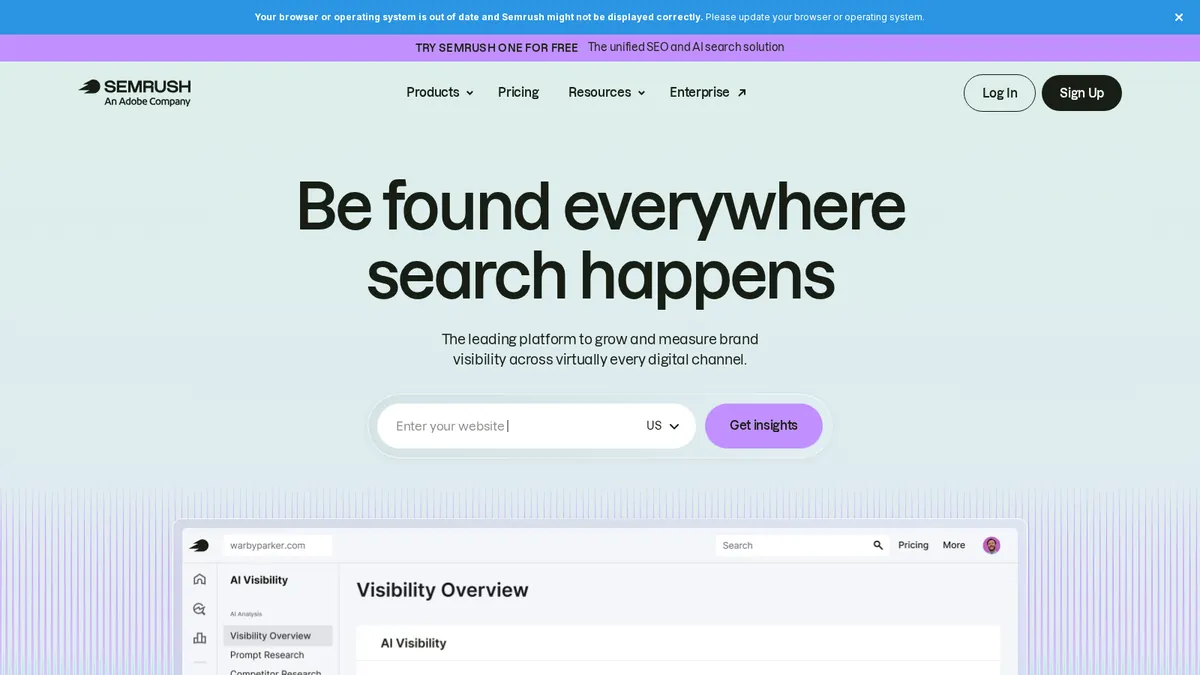
Semrush is one of the most widely used search visibility platforms in the world, trusted by millions of marketers. In late 2025 it consolidated its SEO, content, traffic and AI visibility tools into a single product line called Semrush, which pairs traditional SEO with the AI visibility tracking. The toolkit tracks how your brand and pages appear across AI search, including ChatGPT, Google AI Overviews, Google AI Mode and Gemini, with Perplexity covered in the brand performance tools. That keeps AI visibility tracking in the same platform as your SEO work.
My Experience
I have used Semrush on and off since around 2015, and as of May 2026 it is my daily driver across every Rankmax client account. The shift was driven by data integrity. If you make optimisation, strategy and tactical SEO and AI visibility decisions on bad, incomplete or unreliable data, you can do a business more harm than good, and no third-party platform should ever be a single source of truth. You still need a reliable read though, and after Google deprecated the &num=100 URL parameter on 11 September 2025, Ahrefs' data on plans below Enterprise has not been good enough. Semrush has done a meaningfully better job of maintaining cleaner, more complete data through the same disruption, and that is the core reason I moved the client stack.
The AI visibility tracking is what I now run every week. For every client I track whether our citations and cited pages are trending up or down month to month, what we are being cited for, which pages the AI engines reference, and what those engines actually say about the brand, including whether it is accurate.
I pair that with prompt tracking built from the same target keywords we track in Google organic search, so I can see what the AI engines are saying, who is being cited, and whether our presence is climbing.
The feature I lean on hardest is the AI citation gap analysis in the brand performance set. It shows where the AI engines are discussing competitors and we are not in the picture, which tells me exactly where the gaps are and what to fix in the strategy.
That gap analysis turns into real outcomes. For a personal injury law firm we work with, we used the toolkit to baseline how the firm ranked for the prompts it most wanted to win, such as "best personal injury lawyers in Brisbane". We then shipped a set of technical fixes and on-page changes, and tracked the firm move from the fourth most cited firm to the most cited firm for that prompt in Gemini. The before-and-after is documented publicly on my LinkedIn.
On the agentic side, the Semrush API and MCP are both available on every plan tier with pay-per-unit pricing. That lets me wire AI visibility and SEO data straight into our reporting workflows and AI agent stacks, plus buy additional API blocks as needed with full visibility on consumption. The MCP plugs natively into ChatGPT, Claude and other AI agent stacks from the entry plan.
Key Features
- AI visibility tracking: Tracks brand mentions and citations across ChatGPT, Google AI Overviews, Google AI Mode and Gemini in the Visibility Overview, with Perplexity available in the Brand Performance tools on Pro+ and Advanced plans. Daily prompt tracking, mention monitoring, sentiment, and AI citation gap analysis are included.
- AI Citation Gap Analysis: Shows the prompts where competitors get cited and you do not, so you can prioritise the content and fixes most likely to win citations.
- Organic Research and Position Tracking: Competitor keywords, traffic, top pages and daily rank tracking, with top-100 data that stayed intact through the post-NUM=100 disruption.
- PPC and Social Research: Paid search and social competitor monitoring bundled into the same subscription.
- API and MCP access: Both included from the entry plan with transparent pay-per-unit pricing, plugging natively into ChatGPT, Claude and other AI agent stacks.
Pros
- One of the few platforms I tested that brings AI visibility tracking into the same workflow as your SEO data.
- Maintained consistent top-100 ranking data across all plan tiers through the NUM=100 disruption.
- AI citation gap analysis gives a clear, strategic path to more citations, not just a score.
- AI prompt tracking and keyword tracking both go down to the neighbourhood level. To the best of my testing, no other AI visibility tracker on the market currently offers this level of granular local coverage.
- API and MCP on every tier make it the strongest option for agentic SEO workflows.
- Covers organic, AI, paid and social competitor data in one subscription.
Cons
- The breadth of tooling can feel overwhelming for first-time users.
- AI platform coverage is narrower than the widest standalone trackers, though it is closing fast.
Verdict
Semrush is the platform I trust enough to run our entire client portfolio on. If you want SEO and AI visibility in one place, with data quality that held up through the recent industry disruption and API access on every plan, it is the best all-in-one option in 2026.
Choose Semrush if: You want one platform for SEO and AI visibility tracking, plus PPC and social, without paying enterprise prices to get it working.
Skip Semrush if: Your only need is the very widest AI platform coverage and you do not care about the rest of the SEO toolset.
2. Ahrefs Brand Radar
Best for: Brand-level AI visibility tracking if you already live inside the Ahrefs ecosystem.
Pricing: From $129/month on Lite with 150 custom prompt checks included; optional full AI-index add-ons from about $199 per platform or $699 for all platforms; standalone custom prompt packs from $50/month | Free trial: No (free tools only)
Overview
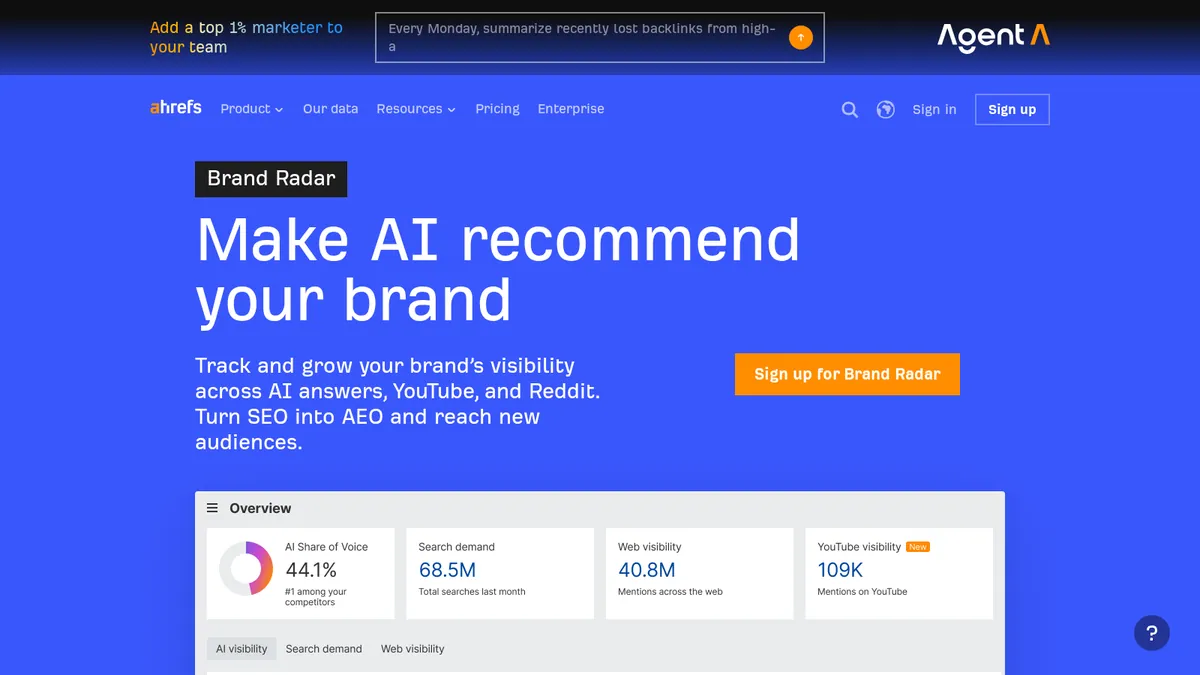
Brand Radar is the AI visibility product built into the Ahrefs platform. It tracks a very large index of AI queries to show where and how your brand appears in LLM answers, and adds share-of-voice, citation tracking and gap analysis on top. The underlying scale is genuinely impressive, drawing on Ahrefs' large crawl and index infrastructure.
My Experience
I have hands-on time with Brand Radar, and the data depth is real. The AI share-of-voice view and the citation tracker do a good job of showing which URLs get referenced and where the unbranded opportunities sit. If you already pay for Ahrefs, it is a capable way to see your AI presence without building prompt sets by hand.
My problem with it is the economics, not the product, and Brand Radar's pricing is layered in a way that is easy to misread. The minimum eligible base plan is Ahrefs Lite at $129 a month. Lite and higher plans now include Brand Radar custom prompt checks (150 per month on Lite, with daily, weekly or monthly cadences), so entry AI tracking is no longer a pure add-on. Full multi-platform AI-index coverage is still an extra purchase at around $199 a month per platform or $699 a month for all platforms, and standalone custom prompt packs start from $50 a month if you need more volume. Semrush still bundles broader AI visibility earlier in its base plans from $139/mo, so full multi-platform AI-index coverage on Ahrefs can still cost more once you add the index packs. Ahrefs has publicly stated that Brand Radar is its fastest-growing product, adding $1M in ARR every two weeks. The pricing is clearly working commercially. For a multi-client agency working under a tight budget, paying that gap for similar coverage was not defensible.
Ahrefs has improved the API picture: API v3 access is now included from Lite ($129/month), so it is no longer an Enterprise-only gate. MCP is available on lower tiers too, but it can still rate-limit heavy users within a day or two of agentic SEO work, so for any team running automated workflows the throughput is not realistic. Proper metered API access, where consumption is predictable and you can buy more capacity as needed still benefits from careful unit planning. Heavy agentic workflows can still hit capacity limits unless you buy more units or wait for the monthly reset.
Ahrefs is still my pick for pure backlink intelligence, where Site Explorer remains best in class. But for deepest multi-platform AI-index coverage specifically, the maths can still be hard for most teams, even though Lite now includes entry custom prompt checks.
Key Features
- AI Share of Voice: Shows the portion of AI answers that feature your brand against competitors.
- Citation Tracker: Identifies which URLs and content the AI engines reference, plus prompts to target.
- Large AI Index: Processes a very large volume of queries across multiple engines with little manual setup.
- Multi-channel signals: Layers in Reddit, YouTube and video mentions for a fuller brand view.
Pros
- Immediate AI tracking with very little setup once you are on Ahrefs.
- Handles large scale across multiple engines.
- Backed by one of the strongest crawl and index infrastructures in the industry.
Cons
- Full multi-platform AI-index packs can still push the all-in total toward about $828 USD a month (Lite plus the all-platforms pack), even though Lite includes entry custom prompt checks.
- No content suggestions or step-by-step fixes, so it tells you the what but not the how.
- Core Brand Radar custom prompts sit inside paid Ahrefs plans from Lite, while higher-volume custom prompt packs and full AI-index add-ons remain separate purchases.
Verdict
Brand Radar is a strong tool if you are already committed to Ahrefs and brand-level metrics are your focus. For most teams the all-in cost is hard to justify against bundled alternatives.
Choose Brand Radar if: You already pay for Ahrefs and want brand-level AI tracking without leaving the platform.
Skip Brand Radar if: You want deep multi-platform AI-index coverage fully bundled into the base plan without add-ons, or you need guidance on what to fix.
3. Profound
Best for: Enterprises that need the deepest AI visibility data and have a team to act on it.
Pricing: From $99/month (Starter, ChatGPT only); Growth from $399/month | Free trial: Yes (self-serve free trial)
Overview
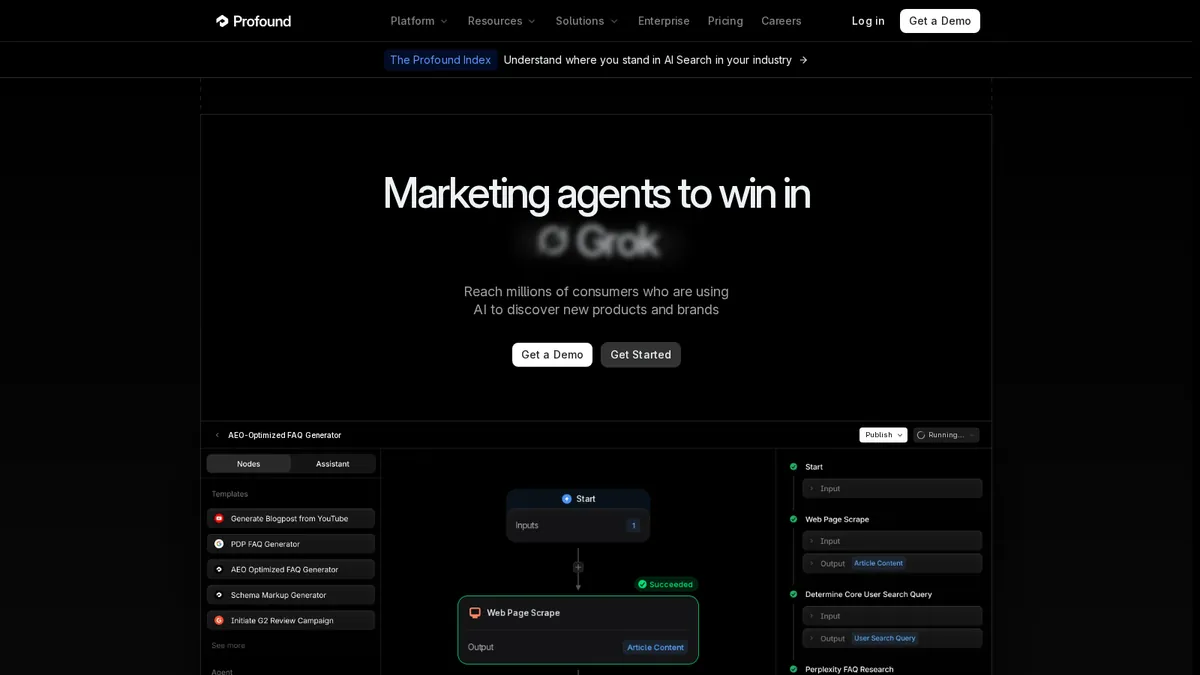
Profound is widely seen as the tool that put the AI visibility category on the map, and it sits firmly at the enterprise end of the market. It tracks brand mentions across the real interfaces of the major AI engines and pairs that with heavy analytics built for large sites, including a conversion explorer and prompt volume research that borrow ideas from traditional keyword tools.
My Experience
I ran Profound on a free trial rather than on a paid client account, which was enough to walk through the onboarding flow, the topic suggestions the platform generates from your domain, and a preview of the dashboard before the data fully populates. The platform is clearly serious. The conversion explorer, which connects AI visibility to downstream conversion signals, is a genuine step beyond what most trackers in this category attempt, and the prompt volume research is unusually good at surfacing questions you would not think to track. The two recurring caveats are price and accessibility. It is built for big brands with dedicated resources, the self-serve trial can be slow to populate without a sales-led onboarding, and detailed prompt or competitor customisation is limited compared with lighter tools.
Key Features
- Conversion Explorer: Connects AI visibility to downstream conversion signals.
- Prompt Volume Research: Surfaces high-value questions people ask AI engines.
- CDN Traffic Integration: Ties AI crawler activity to real human site visits.
- Competitive Intelligence: Tracks competitor mentions and sentiment at scale.
Pros
- Among the most comprehensive AI visibility data sets available.
- Strong competitive benchmarking and prompt discovery.
- Built for enterprise compliance and scale.
Cons
- Premium pricing that climbs quickly beyond the entry tier.
- Limited DIY customisation of prompts and competitors.
- Onboarding can be slow on the self-serve path.
Verdict
Profound is the pick for large organisations that want the deepest data and have people to act on it. Smaller teams will likely find better value elsewhere.
Choose Profound if: You are an enterprise that needs comprehensive AI analytics and has the team to use them.
Skip Profound if: You are a small team or want quick, self-serve setup at a modest price.
4. SE Ranking (SE Visible)
Best for: Teams that want SEO and AI visibility together at a mid-market price.
Pricing: From $55/month (SE Ranking); AI Search add-on (SE Visible) from $189/month | Free trial: Yes (14 days)
Start Free Trial | View Pricing
Overview
SE Ranking is a comprehensive SEO platform that has added AI visibility through its SE Visible product and an AI Search add-on. It tracks brand presence across ChatGPT, Perplexity, Google AI Overviews, AI Mode and Gemini, with sentiment, competitor benchmarking and source analysis, built on more than a decade of SE Ranking's data.
My Experience
I have held an SE Ranking subscription in the past, and it has always been a solid mid-tier platform. The data is not as deep as Semrush or Ahrefs, but it is genuinely good value, and the API is more cost-effective than the enterprise tools if an affordable SEO data source is what you need. The addition of AI visibility tracking, including an AI Overview tracker in the standard plans, makes it a sensible single subscription for smaller teams that want both SEO and AI coverage without running two tools.
Key Features
- AI visibility tracking: Brand presence, sentiment and source analysis across the major AI engines.
- Full SEO platform: Keyword research, rank tracking, audits and backlinks in one place.
- AI Overview tracker: Included in standard plans, which is rare at this price.
- Cost-effective API: A sensible option if you mainly need affordable SEO data access.
Pros
- Strong value for a combined SEO and AI visibility platform.
- Beginner-friendly, clean interface.
- AI Overview tracking included in standard plans.
Cons
- Data depth is not at the level of Semrush or Ahrefs.
- Smaller backlink database than the top platforms.
Verdict
SE Ranking is a smart choice for small businesses and freelancers who want SEO and AI visibility in one affordable subscription.
Choose SE Ranking if: You want a capable all-rounder that covers both SEO and AI visibility without enterprise pricing.
Skip SE Ranking if: You need the deepest data sets or the largest backlink index.
5. Peec AI
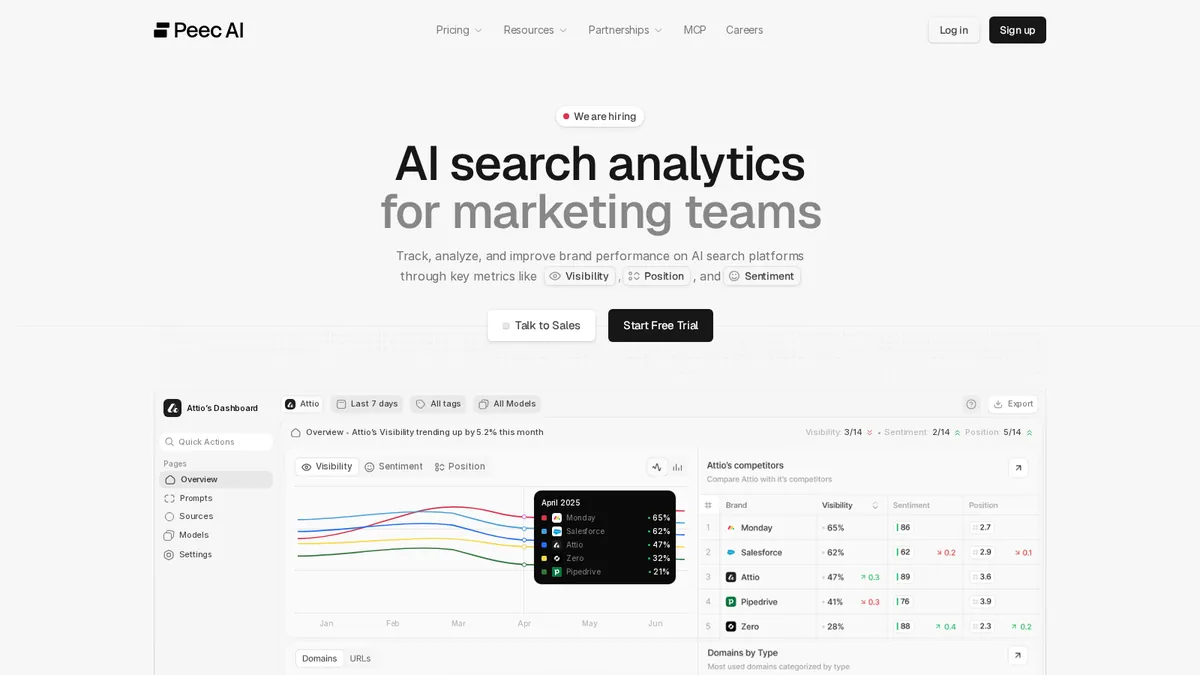
Best for: Small and mid-sized marketing teams that want a clean, fast AI visibility dashboard.
Pricing: From EUR89/month (Starter, 25 prompts) | Free trial: Yes (7 days)
Start Free Trial | View Pricing
Overview
Peec AI is a focused AI visibility tracker with a reputation for a premium, easy onboarding experience. It covers the major answer engines, including ChatGPT, Google AI Overviews, Perplexity, Claude, Gemini and Copilot, and adds sentiment and share-of-voice so you can see not just whether you appear but how you are presented.
My Experience
I have not paid for Peec inside a client engagement, but several agency owners I trust use it daily, and the live demo backs up what they describe. The standout points are the speed of setup, often under five minutes, and the clarity of the dashboard. The honest limitation, echoed in independent reviews, is that Peec works best for brands that already attract branded search. It is a data layer, so it shows you the signal, such as a competitor leading on certain prompts, but leaves the fix to you.
Key Features
- Multi-engine coverage: Tracks the six major AI answer platforms.
- Fast onboarding: Live setup sessions and suggested prompts to start quickly.
- Sentiment analysis: Shows whether mentions are positive or negative.
- Unlimited seats on entry plans: Useful for agencies and distributed teams.
Pros
- One of the cleanest dashboards in the category.
- Quick setup and helpful onboarding.
- Multi-engine coverage from a mid-range price.
Cons
- Works best for brands with existing branded search.
- No built-in playbook for fixing the gaps it surfaces.
- No estimate of traffic driven by AI mentions.
Verdict
Peec AI is a great fit for SMB and agency teams that value a clean interface and quick answers, as long as you have the strategy in place to act on what it shows.
Choose Peec AI if: You want a fast, good-looking multi-engine tracker for a brand with existing presence.
Skip Peec AI if: You need the tool to also tell you what to change.
6. Otterly AI
Best for: GEO audits and multi-engine monitoring on a tight budget.
Pricing: From $29/month (Lite, 15 prompts) | Free trial: Yes
Start Free Trial | View Pricing
Overview
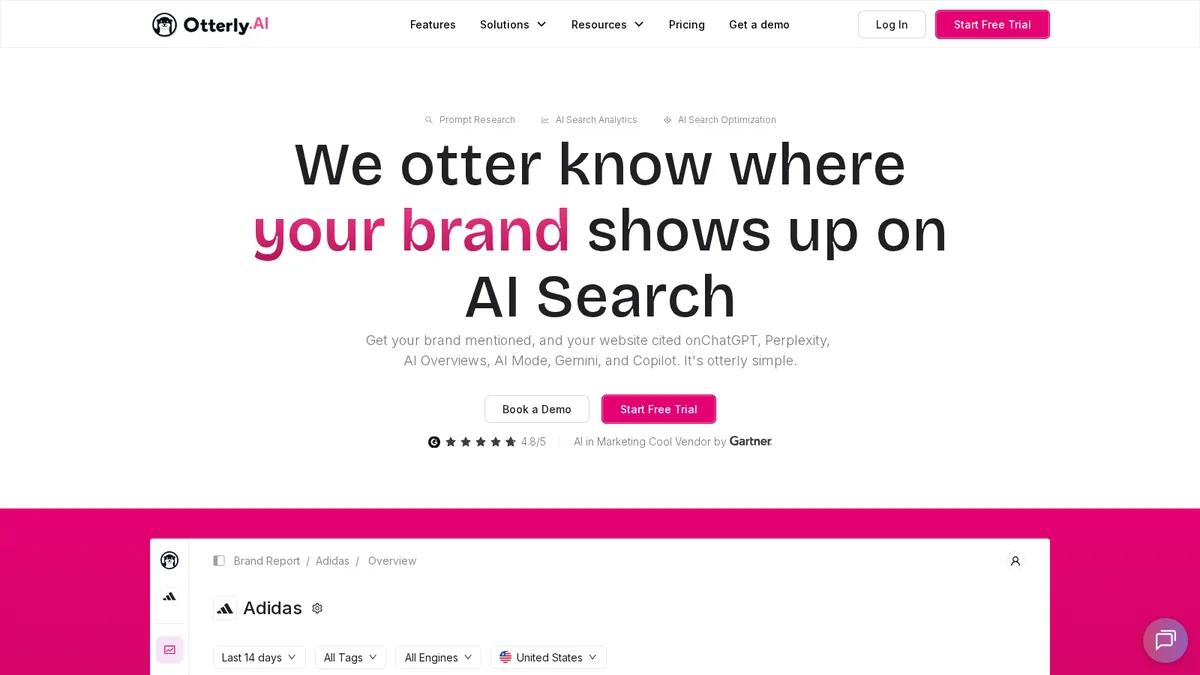
Otterly AI is one of the most affordable ways into serious AI visibility tracking. It monitors six AI search platforms with daily updates, assigns a normalised brand visibility score, and runs deep GEO audits that flag more than 25 technical and content issues per area, turning them into prioritised recommendations.
My Experience
My read on Otterly is based on its documentation, free testing and the consistent way it shows up in peer recommendations, rather than a paid client account. The reputation is that Otterly is a practical early-warning and audit tool rather than a heavy analytics suite. The GEO audit is the differentiator, since it tells you the specific next steps such as adding schema, improving content length or fixing crawl issues, which many trackers leave out. The trade-offs are a data-dense interface that can overwhelm newcomers and weekly rather than real-time updates.
Key Features
- Six-platform coverage: ChatGPT, Google AI Overviews and Mode, Perplexity, Copilot and Gemini.
- GEO Audit: Flags 25-plus technical and content issues with prioritised fixes.
- Brand Visibility Index: Normalised score to rank brands within an industry.
- Keyword and prompt research: Finds relevant prompts per target country.
Pros
- Very affordable entry point.
- Clear, actionable audit recommendations.
- Unlimited team members and brand reports.
Cons
- Data-dense interface with a learning curve.
- Weekly updates rather than real-time.
- No AI traffic estimates.
Verdict
Otterly AI punches well above its price, especially for teams that want concrete GEO fixes rather than just a score.
Choose Otterly AI if: You want affordable multi-engine tracking with a genuinely useful audit.
Skip Otterly AI if: You need real-time data or a simpler interface for non-technical users.
7. Scrunch AI
Best for: Enterprises that need detailed, multi-engine prompt-level monitoring.
Pricing: From $300/month (Starter, 350 prompts) | Free trial: Demo
Overview
Scrunch AI is a prompt-level monitoring and optimisation platform aimed at the enterprise market. It tracks every major engine, including ChatGPT, Claude, Perplexity, Gemini, Google AI Overviews and Mode, and Meta AI, and lets you label prompts by persona, location or funnel stage for granular share-of-voice and sentiment analysis.
My Experience
I have not used Scrunch on a paid client account, but it comes up repeatedly in conversations with SEO peers who do, and the platform documentation is unusually transparent for an enterprise tool. Scrunch is consistently praised for its segmentation and filtering, and unlike many trackers it gives content optimisation insights rather than only data. The trade-offs are a powerful but complex interface, an enterprise focus with no self-serve plan, and a website design that undersells the product.
Key Features
- Broad engine coverage: Tracks every major LLM and AI search platform.
- Prompt-level tracking: Manage prompts by persona, location and funnel stage.
- AI insights: Suggests how to optimise content to win more citations.
- AI site audit: Flags technical issues that hurt AI visibility, with GA4 integration.
Pros
- Comprehensive, granular data with strong filtering.
- Gives action items, not just metrics.
- Real-time feed of AI bot visits to your site.
Cons
- Enterprise focus with no self-serve option.
- Complex interface with a learning curve.
- Higher entry price than lighter tools.
Verdict
Scrunch AI suits enterprises and agencies that want deep, multi-brand monitoring and are willing to invest the time to master it.
Choose Scrunch AI if: You need granular, multi-engine monitoring with optimisation guidance.
Skip Scrunch AI if: You want a simple, self-serve tool at a low price.
8. AthenaHQ
Best for: Agencies that need unlimited seats and clear analytics.
Pricing: From $295/month (Starter) | Free trial: Free report
Overview
AthenaHQ is a GEO tracking platform that connects AI visibility to conversions, with a polished interface and a comprehensive analytics toolkit. It includes competitor setup during onboarding and offers a free shareable report before you commit.
My Experience
I have not run AthenaHQ on a paid client account, so the assessment that follows draws on the free report, the documentation and feedback from agencies that use it across multiple clients. AthenaHQ stands out for two things in that feedback: the depth of its web analytics, which is broader than most trackers, and unlimited seats on every plan, which makes it attractive for agencies managing many client accounts on a fixed cost. The guided onboarding that suggests competitors and prompts for you is a nice touch that reduces setup friction.
Key Features
- Conversion-linked tracking: Ties AI visibility to downstream conversions.
- Free shareable report: A no-cost entry point for prospects and teams.
- Unlimited seats: Included on all plans, useful for agencies.
- Guided onboarding: Suggests competitors and prompts to track.
Pros
- Strong analytics depth.
- Unlimited seats keep agency costs predictable.
- Polished, easy-to-navigate interface.
Cons
- Mid-to-high entry price.
- Credit-based plans need watching at scale.
- Documentation-based assessment only, not tested on a client account.
Verdict
AthenaHQ is a strong agency pick where unlimited seats and clean analytics matter more than the lowest price.
Choose AthenaHQ if: You run multiple client accounts and want predictable per-seat costs.
Skip AthenaHQ if: You are a solo operator who does not need the seat flexibility.
9. Hall
Best for: Startups that want a capable free plan, built in Australia.
Pricing: Free plan; paid from $239/month | Free trial: Free plan
Overview
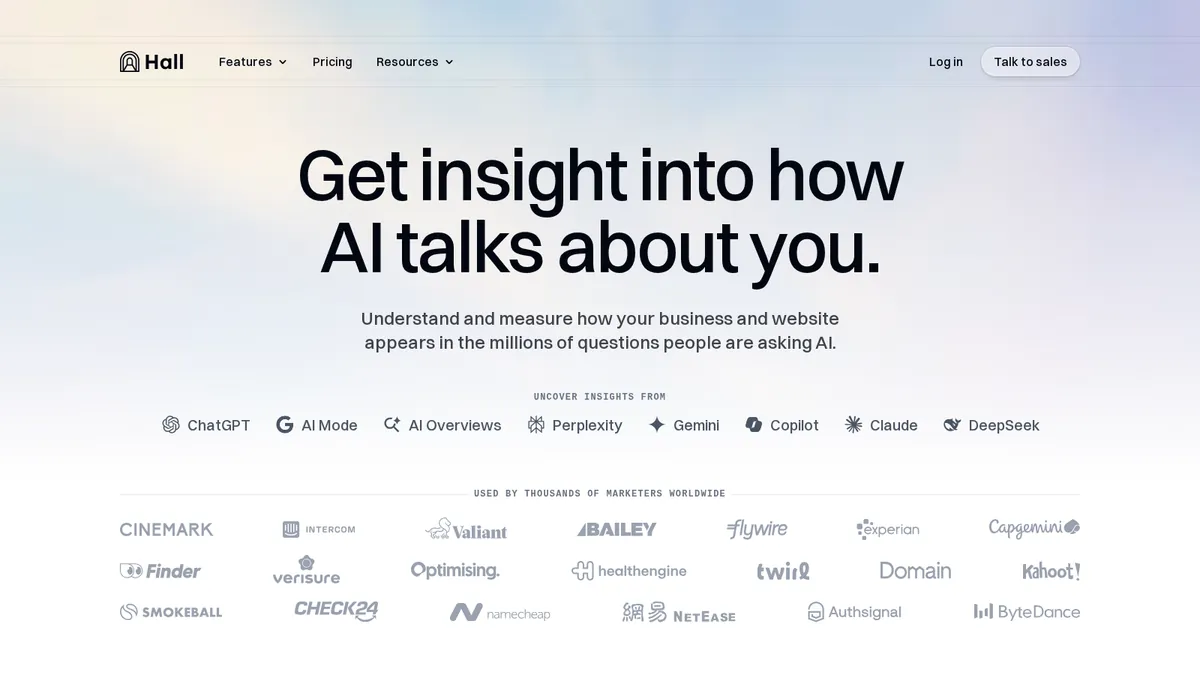
Hall is a generative engine optimisation platform built in Sydney, Australia. It analyses your domain for free, then gives you prompt templates and recommendations to track, showing mentions and citations side by side over time. Few tools in the category offer this much on a free plan.
My Experience
I have not subscribed to a paid Hall plan, but the free tier surfaces enough to form a real opinion on how the platform works in practice. The standout is how much Hall surfaces from a single topic on the free tier, automatically finding prompts and showing how you appear, which is unusual at no cost. For Australian teams testing the water on AI visibility, it is one of the easiest places to start, and the design is genuinely good. The limitation is that it is a newer tool with fewer independent reviews, so longevity and roadmap are less proven than the incumbents.
Key Features
- Free analysis and plan: A real free tier, not just a teaser.
- Prompt templates: Generates prompts from a single topic input.
- Mentions and citations: Shows both side by side over time.
- Clean, fast onboarding: Among the quickest setups in the category.
Pros
- Generous free plan.
- Fast, well-designed onboarding.
- Australian built, which can help local support and timezone alignment.
Cons
- Newer tool with fewer independent reviews.
- Higher jump from free to the first paid tier.
Verdict
Hall is the easiest free way I have seen to start measuring AI visibility, and a sensible first step for startups and Australian teams.
Choose Hall if: You want to start for free with a polished, capable tool.
Skip Hall if: You need a long, proven track record and the deepest enterprise data.
10. Rankscale AI
Best for: Budget-conscious teams that want a simple AI rank tracker.
Pricing: From $20/month (Essential) | Free trial: Free plan
Start Free Trial | View Pricing
Overview
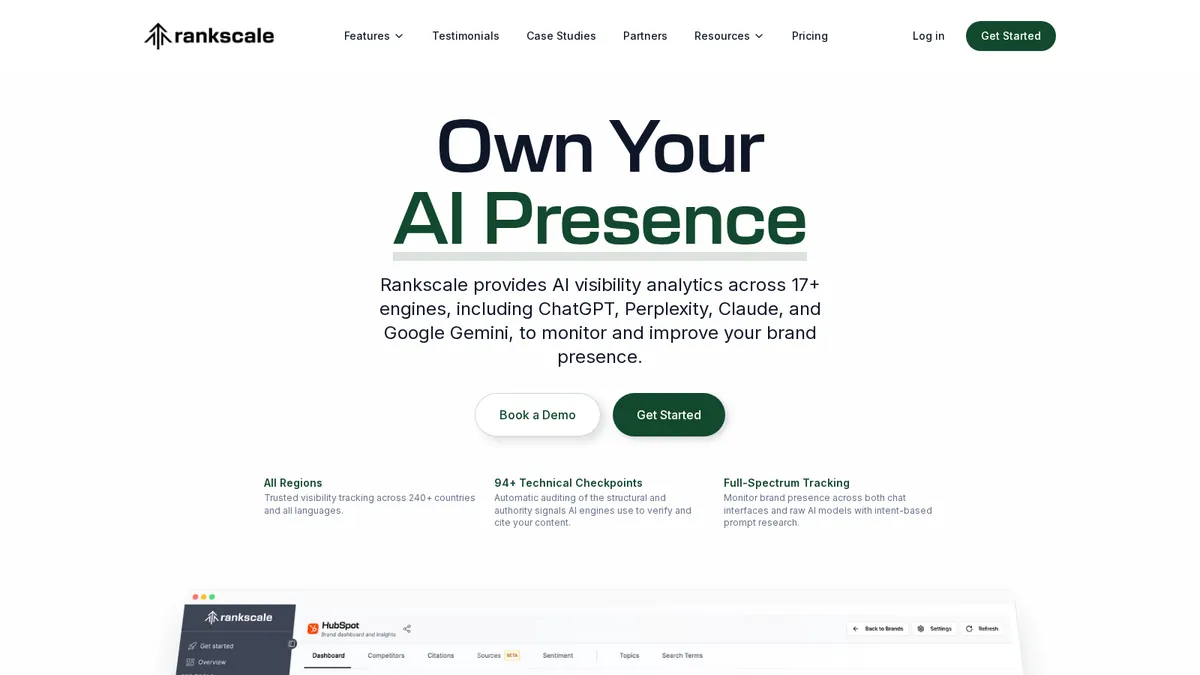
Rankscale AI is one of the most affordable AI visibility tools, built specifically for tracking. It monitors your footprint across ChatGPT, Claude, Perplexity and Google AI Overviews, and reports clear figures like visibility score and average position, with page-level citation tracking.
My Experience
I have not used Rankscale on a paid client account. What follows draws on the platform's documentation, free trial testing and the way it is reviewed by SEOs running it for specific page-level tests. Rankscale is consistently described as a strong, focused tracker for the price, with a clean interface and active development. It is especially handy for testing specific pages rather than only brand-level presence. The trade-offs are export restrictions on lower plans and a metrics-led interface that can feel technical for non-SEOs.
Key Features
- Multi-engine tracking: Covers the main answer engines and LLMs.
- Page-level citation analysis: Shows which URLs get cited most.
- Competitive benchmarking: Compares your visibility against rivals.
- Usage-based pricing: Pay for what you track.
Pros
- Very low entry price.
- Clean, focused interface.
- Actively developed with frequent updates.
Cons
- Export restrictions on lower tiers.
- Metrics-led interface can feel technical.
- Tracking only, with no content writing or deep SEO integration.
Verdict
Rankscale AI is a smart budget pick for lean teams that want multi-engine tracking without a big monthly commitment.
Choose Rankscale AI if: You want affordable, focused AI rank tracking.
Skip Rankscale AI if: You need rich exports or a beginner-friendly interface.
11. Gauge (AI Product Rankings)
Best for: A free, instant check of where you stand in AI search.
Pricing: Free | Free trial: Free
Overview
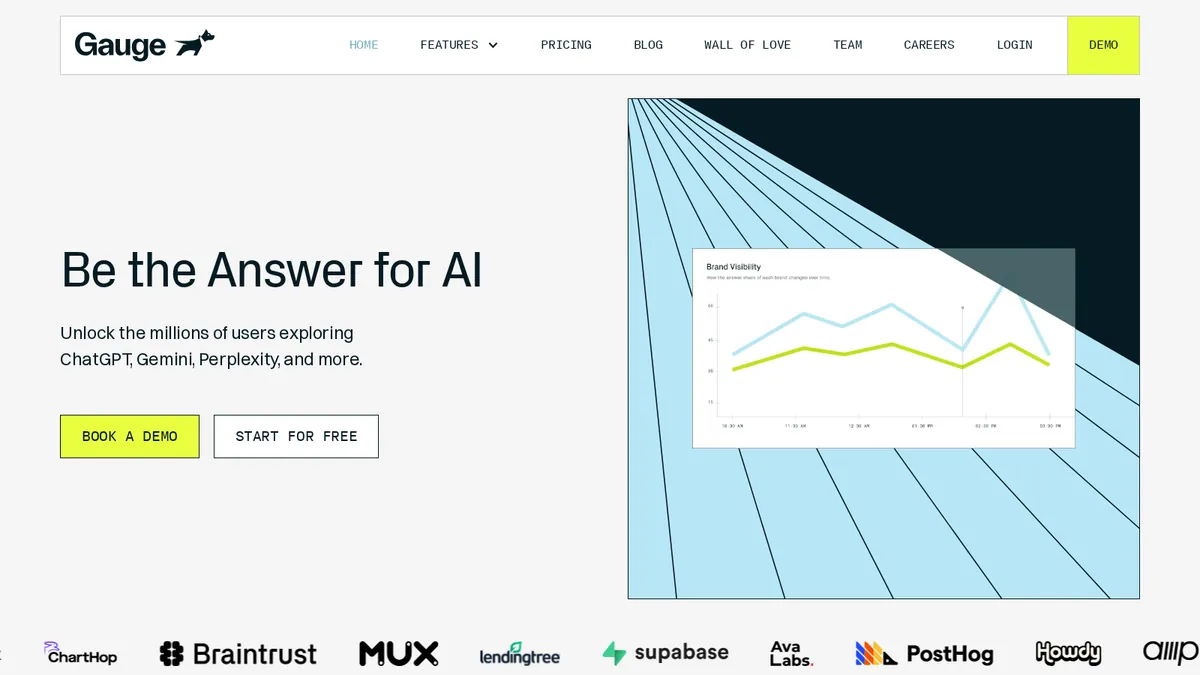
AI Product Rankings is a free tool from the team behind Gauge. Without an account or payment, you can search by category or by brand and see which brands appear in AI answers, along with the citations behind them, and share the report with your team.
My Experience
Gauge's free AI Product Rankings tool needs no subscription or account, so it is straightforward to assess what it actually delivers without paying anything. The appeal is simple: it is free, it requires no signup, and it gives you a fast read on whether AI engines recognise your brand and which publishers influence your category. It will not replace a paid tracker for ongoing monitoring, but as a first look or a quick category scan it is genuinely useful, and it is a smart way to see which publishers to target for citations.
Key Features
- Free instant report: No account needed to see brands and citations.
- Category and brand search: Check your space or your own brand.
- Citation visibility: Shows the pages aggregating brands in LLMs.
- Shareable output: Easy to send to a team or client.
Pros
- Completely free with no signup.
- Fast, useful first read on AI presence.
- Reveals influential publishers in your category.
Cons
- Not built for ongoing monitoring.
- Limited depth compared with paid tools.
Verdict
AI Product Rankings is the best zero-cost way to take a first look at your AI visibility before committing to a paid tool.
Choose Gauge if: You want a free, instant category and brand check.
Skip Gauge if: You need continuous tracking and historical trends.
12. Google Analytics 4 (LLM Referral Filter)
Best for: A free first-party baseline using data you already own.
Pricing: Free | Free trial: Already installed on most sites
Overview
The most overlooked AI visibility tool is one you almost certainly already have. Google Analytics 4 records referral traffic from AI engines, and in May 2026 Google added a dedicated AI Assistance default channel to GA4, so AI referral traffic is now surfaced natively rather than only through a custom regex filter.
My Experience
I use GA4 every day across our client work, and the most important thing it does on this list is connect AI presence to actual revenue. GA4 lets you see which goal event completions on your website came from AI-referred traffic, either through a custom LLM referral filter or through the new AI Assistance default channel rolled out in May 2026.
That is how you start putting a dollar value on the sales and leads generated by your AI SEO work. It is what justifies the spend internally, ranks the activity against the rest of what marketing is doing, and proves ROI to a board or a client.
The paid trackers on this list tell you whether you are being mentioned. GA4 tells you whether those mentions convert, which is the question that actually matters.
To set it up the manual way, create a Traffic acquisition report, add a filter on Session source or medium using a regex that matches the common LLM domains (terms like chatgpt, openai, perplexity, gemini and bard), then add Page path so you can see which pages earn AI referral traffic. With the AI Assistance default channel now live, GA4 also surfaces this view natively. Either way, pair it with Google Search Console per page to reverse engineer the prompts those pages are likely winning, and link your AI traffic segment to conversion events so you can read sales and leads directly off the dashboard.
Key Features
- AI Assistance default channel: Native GA4 channel for AI-referred traffic, added by Google in May 2026.
- Goal event attribution from AI: See which sales, leads and conversions came from AI-referred traffic, the foundation for putting a dollar value on AI SEO.
- First-party data: Real sessions from AI engines, not estimates.
- Page-level view: See which pages earn AI referral traffic and conversions.
- Pairs with Search Console: Reverse engineer winning prompts per page.
Pros
- Free and uses data you already own.
- Connects AI presence to revenue, which no paid tracker on this list does as well.
- The new AI Assistance default channel removes the regex setup step.
- Works alongside any paid tracker as the ROI layer.
Cons
- Does not track prompt-level mentions or share of voice.
- Attribution windows and channel definitions still need careful setup.
Verdict
GA4 is the free baseline every team should set up first, then layer a paid tracker on top for prompt-level visibility. The combination of AI mentions tracked in a paid tool and AI conversions tracked in GA4 is how you measure both the activity and the outcome.
Choose GA4 if: You want to measure real AI-driven traffic before paying for anything.
Skip GA4 if: You need prompt-level mention tracking, which GA4 does not provide on its own.
One More Worth Knowing: HubSpot AEO
The 12 tools above are the ones I have run hands-on across our agency's client work. HubSpot AEO is a newer entrant I have not yet put through that same client testing, so it sits outside the ranked list - but it is worth knowing if you are already inside the HubSpot ecosystem, so I have included it here on capability and positioning.
Best for: Integrating AI optimisation into existing HubSpot marketing workflows.
Pricing: From $45/mo (standalone AEO tools); from $800/mo (AEO + Marketing Hub bundle) | Free trial: 28-day free trial
Overview
HubSpot AEO is an answer engine optimisation platform that works either as a standalone product or bundled with HubSpot Marketing Hub Professional and Enterprise. For teams already running HubSpot, it folds AI search visibility into the same workspace as the CRM, email, social and traditional search, rather than adding another standalone dashboard to the stack. A useful touch is that its prompt discovery draws on HubSpot CRM data, so the prompts it surfaces are anchored to your actual audience segments and buyer-journey stages.
Key Features
- Prompt discovery: Generates prompts from HubSpot CRM data, filtered by ideal customer profile and buyer-journey stage.
- Competitor landscape: Quick overviews of competitor share of voice.
- Sentiment and citation analysis: Tracks overall sentiment and side-by-side citation performance across supported engines.
- Optimisation suggestions: Personalised recommendations with reasoning and potential impact.
Where It Fits
The pull here is consolidation. If your team already lives in HubSpot, running AI visibility inside the same platform as the rest of your marketing is a real convenience, and the interface has little learning curve. The trade-off is coverage: it currently tracks ChatGPT, Perplexity and Gemini, and there are no dedicated GEO audit tools, so brands that need the widest engine coverage or deep audits will still want one of the specialist trackers above alongside it.
Verdict
A sensible option for HubSpot-native teams who value one connected platform over best-of-breed depth.
Choose HubSpot AEO if: You already use HubSpot and want AI optimisation inside your existing marketing workflows.
Skip HubSpot AEO if: Your AI visibility needs go beyond ChatGPT, Perplexity and Gemini.
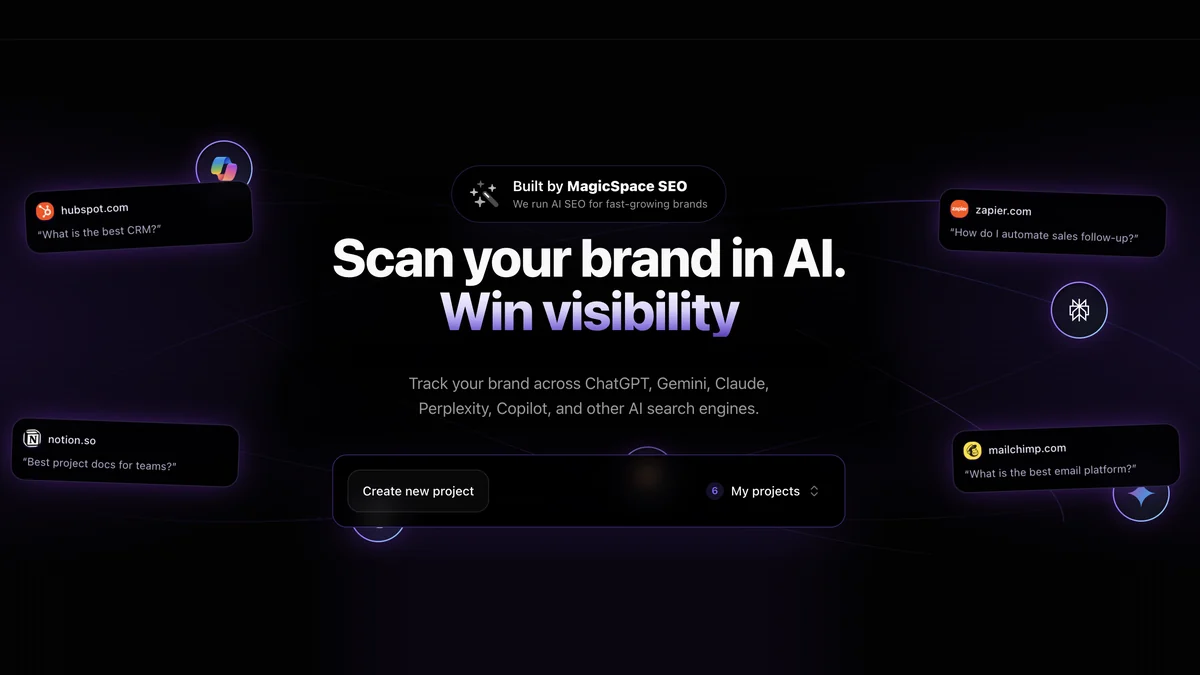
Also Worth Knowing: AI SEO Tracker
AI SEO Tracker approached me and this listing came about through a reciprocal content partnership rather than my own testing shortlist, so I am flagging that up front. Like HubSpot AEO above, I have not run it on a paid client account, so it sits outside the ranked list and the notes below are based on the product documentation rather than campaign data. The assessment is mine.
Best for: SaaS teams and founders who want page-level fixes, not just a visibility score.
Pricing: From $79/month (Basic); Professional $199/month | Free trial: Yes (free AI SEO scan plus 14 days)
Start Free Trial | View Pricing
Overview
AI SEO Tracker monitors how a brand appears across ChatGPT, Perplexity, Gemini and Claude, then goes a step further than most trackers by telling you what to change. It pairs prompt tracking, competitor benchmarking and sentiment analysis with a Page Inspector that scans any URL the way an LLM reads it, flagging content issues that block citations. It also ships an MCP integration, so visibility data can feed into Cursor, Claude Code and other AI agent stacks.
Key Features
- Page Inspector: Scans any URL as an LLM sees it and flags citation-blocking issues.
- Prompt and citation tracking: Monitors brand mentions across ChatGPT, Perplexity, Gemini and Claude.
- Competitor gap analysis: Side-by-side visibility scores showing where rivals win on your prompts.
- MCP integration: Pipes visibility data into Cursor, Claude Code and other agent stacks.
Where It Fits
On paper the Page Inspector is the differentiator. It reads a URL the way a model does and surfaces what quietly blocks a citation, pricing hidden behind a demo form or structured data the engines cannot parse, then turns it into a ranked fix list. That is the gap across most of this category: you get a score, not a route to a better one. The MCP support is also ahead of the field at this price, which matters for teams already working inside agent stacks rather than dashboards. The limitations I would want to test before committing client budget are the engine coverage, four major LLMs rather than the longest list, and how much of the heavier technical remediation still lands on a developer.
Verdict
Worth a look for teams that want to move from measuring AI visibility to fixing it, particularly SaaS brands already working in agentic workflows. I would run the free scan before committing to a paid plan, and I will update this entry if we put it through client testing.
How I Chose These AI Visibility Tools
I weighted five criteria when ranking these tools, based on how we actually use AI visibility data for client work.
Platform Coverage (25%)
The first question is which AI engines a tool tracks. ChatGPT, Google AI Overviews, Gemini and Perplexity are the ones that move the needle for most brands, so I valued tools that include the important engines over tools that lock them behind premium tiers.
Actionable Insight (25%)
A visibility score on its own changes nothing. I rated tools higher when they show you what to fix, whether that is a citation gap against a competitor or a specific GEO audit recommendation.
Competitive Intelligence (20%)
The strategy lives in the gaps. Tools that surface where competitors get cited and you do not, like the citation gap analysis in Semrush, earned more weight because that is where I find the next move.
Value for Money (20%)
I looked at what you get at each price point, and whether AI visibility is bundled in or charged as an expensive add-on. A tool that includes AI tracking from the entry plan beats one that doubles your bill for the same coverage.
Fit for the Job (10%)
A solo operator, an in-house team, an agency and an enterprise have different needs. I rated each tool on how well it suits the people most likely to use it, rather than against a single ideal.
How to Choose the Right AI Visibility Tool
The best tool depends on your use case, your budget and the kind of business you run. Use the guidance below to narrow the field.
Choose by Use Case
- SEO and AI visibility in one platform: Semrush is the most complete option, with AI tracking alongside full SEO tooling in one platform.
- Brand-level tracking inside Ahrefs: Brand Radar if you already pay for Ahrefs and want AI presence without leaving the platform.
- Enterprise depth: Profound or Scrunch AI for the deepest data and granular, multi-engine monitoring.
- GEO audits and fixes: Otterly AI for prioritised, actionable recommendations.
- A free first look: Gauge or your own GA4 data to measure before you pay.
Choose by Budget
- Free: Google Analytics 4, Gauge (AI Product Rankings) and Hall's free plan.
- Under $100 a month: Rankscale AI ($20), Otterly AI ($29) and Peec AI (EUR89).
- $100 to $300 a month: Semrush (from $139/mo), SE Ranking with the AI add-on, AthenaHQ ($295) and Scrunch AI ($300).
- $300 a month and up: Semrush (Advanced plan), Profound and Ahrefs with the Brand Radar bundle.
Choose by Business Type
- Solo operators and startups: Start with GA4 and a free plan like Hall, then add Rankscale or Otterly as you grow.
- In-house marketing teams: Semrush or SE Ranking give you SEO and AI visibility in one subscription.
- Agencies: Semrush for multi-client work, or AthenaHQ where unlimited seats keep costs predictable.
- Enterprises: Profound or Scrunch AI for depth, scale and compliance.
Frequently Asked Questions
What Is AI Visibility?
AI visibility is how often and how prominently your brand and pages are cited when people ask AI search tools like ChatGPT, Google AI Overviews, Gemini and Perplexity for recommendations. It is the AI-era equivalent of ranking on Google, and AI visibility tools measure it so you can improve it.
How Is GEO and AEO Different From Traditional SEO?
Generative engine optimisation (GEO) and answer engine optimisation (AEO) focus on getting your content cited inside AI-generated answers, rather than ranking as a blue link. The foundations overlap heavily with traditional SEO, since strong content, authority and technical health help in both. The difference is that AI engines fuse multiple sources into one answer, so the goal shifts from owning a position to being one of the sources the model trusts. We cover this in depth in our guide to how AI search works.
How Many AI Platforms Should an AI Visibility Tool Track?
At a minimum, look for coverage of ChatGPT, Google AI Overviews, Gemini and Perplexity, since those drive most AI referral traffic for the brands we work with. More platforms can be useful, but coverage of the engines your audience actually uses matters more than a long list. Always check which engines are included in the plan you are buying rather than the headline number.
Are AI Visibility Tools Worth It for Small Businesses?
For most small businesses, the honest answer is to start free. Set up the GA4 LLM referral view and run a free scan with Gauge or Hall before paying for anything. If AI search is already sending you traffic or your competitors are clearly being recommended and you are not, then a paid tracker like Rankscale or Otterly is worth the spend.
Do AI Visibility Tools Improve SEO?
Not directly. The tools measure and diagnose, they do not optimise for you. What improves both your SEO and your AI visibility is the same underlying work: original, genuinely helpful content, clear structure, strong authority and a technically healthy site. The tools simply show you where the gaps are so you can prioritise that work.
How Accurate Are AI Visibility Metrics?
Treat them as directional rather than precise. AI answers vary between users and sessions, and a tool querying an engine through an API can return different results from what you see in your own browser. That is why I anchor every paid tool against first-party GA4 referral data, so I am tracking real visits alongside reported mentions rather than chasing a vanity score.
What Is the Best Free AI Visibility Tool?
For a one-off check, Gauge (AI Product Rankings) gives you brands and citations with no signup. For ongoing measurement, your own Google Analytics 4 is the strongest free option because it shows real traffic from AI engines, and Hall offers a capable free plan for prompt-level tracking.
Where I Would Put My Money in 2026
If you want one platform to do the job, Semrush is my pick, and it is the tool I run across our entire client portfolio. If you are watching the budget, start free with GA4 and a scan from Gauge or Hall, then add Otterly or Rankscale once AI search is clearly worth the spend. The category is moving fast, so the smartest move is to start measuring now and refine as the tools mature. Whichever you choose, the brands that win AI search in 2026 will be the ones tracking it today.
Ready to Win the AI Search Results?
Your customers are already asking AI tools who to trust, and the brands that show up are the ones treating AI visibility as a strategy, not an afterthought. Rankmax is the only Australian AI SEO agency with more than $26 million in attributed client revenue across Google and the major AI platforms. Book a 45-minute call directly with James Banks, Founder of Rankmax, to see how AI SEO can put you in those answers.
About the Author
James Banks is the Founder of Rankmax, Australia's AI SEO agency. With 18+ years of SEO experience, James has generated more than $26 million in attributed revenue for clients across B2B, eCommerce and professional services. He built one of the first AI SEO writing tools in mid-2023 and is a Semrush Search Awards finalist.
Read James's full bio | Connect on LinkedIn
Related Guides
- AI SEO: The Complete Guide to Optimising for Google AI Overviews, ChatGPT and Generative Search
- How AI Search Works: The Complete Technical Guide
- LLM SEO: How to Optimise Content for AI Search in 2026
Related Services
About the Author
Want Insights Like This Fortnightly?

Our AI SEO strategies and tactics delivered fortnightly, including bonus trade secrets not shared anywhere else. No fluff. Just what's working right now. 5-minute read.


