
B2C AI SEO Case Study: $14.6M Organic Revenue Over 21 Months
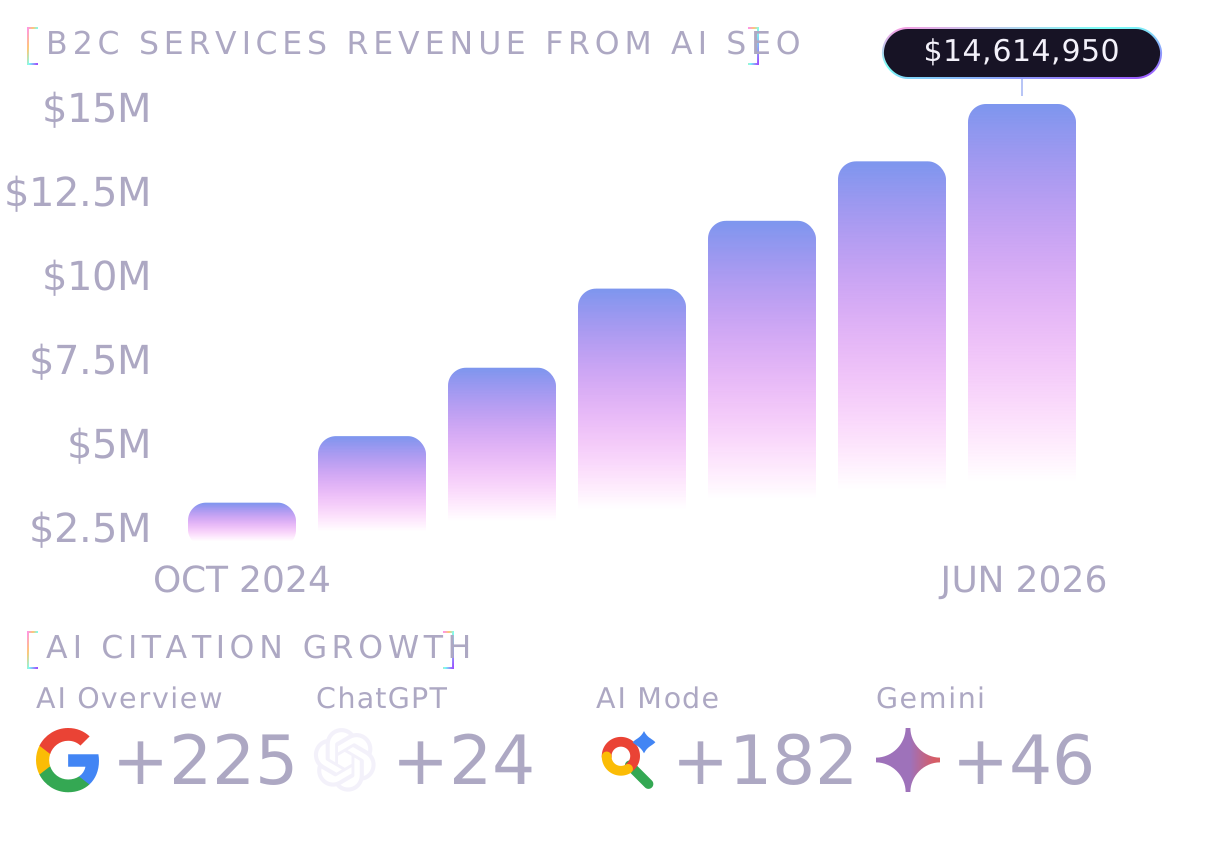
This Australian veterans' claims advocacy client started with a single-page website that ranked only for its brand name. From October 2024 through June 2026 - 21 months and counting - dual Google and AI SEO has attributed about $14.6 million in organic and AI-referred revenue and roughly 471 new clients, with four-figure monthly ROI held throughout. In June 2026 the programme still delivered 185 consultation form submissions, $860,250 attributed revenue and 19,017% ROI. This B2C AI SEO case study reviews that ongoing dual Google-plus-AI programme.
A Quick Overview of This B2C AI SEO Case Study
This is a first-party look at a B2C professional services engagement in Australian Department of Veterans' Affairs (DVA) claims support. The work combined technical cleanup, journey-mapped educational content, EEAT for a high-trust category, and passage-level structure for blue links and assistant answers. Commercial tracking uses client-approved form-to-client economics on organic and AI LLM consultation bookings.
Campaign snapshot (October 2024 to June 2026 - ongoing):
- Attributed organic-and-AI revenue: $14,614,950 across 21 months of continuous measurement
- New clients: about 471 (3,143 consultation form submissions at a 15% lead-to-client rate)
- Campaign ROI: 14,663% across the window so far (average monthly ROI 14,738%)
- June 2026 (latest full month): 185 form submissions, $860,250 attributed revenue, 19,017% ROI
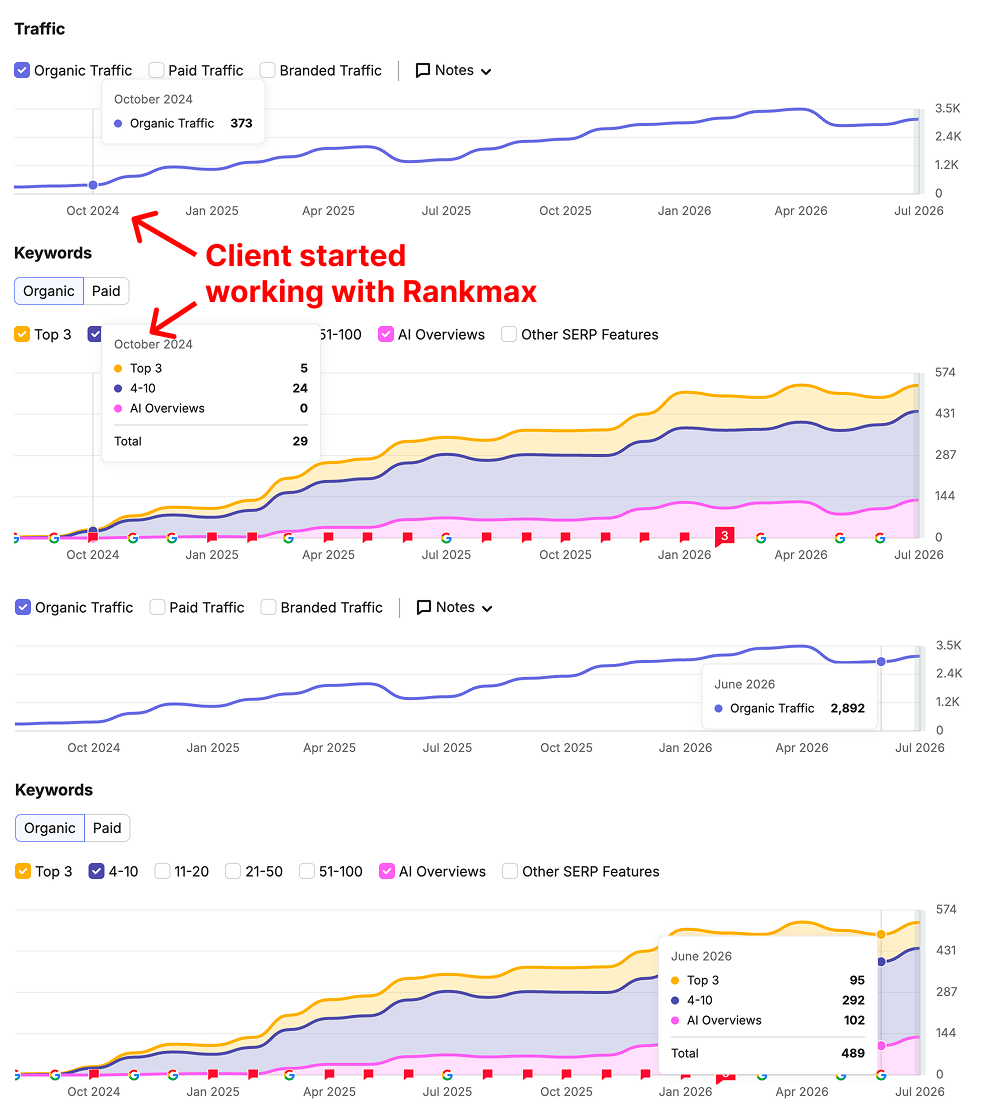
- Organic traffic (Semrush): 373 monthly visits in October 2024 at kickoff to 2,892 in June 2026
- Keyword footprint (Semrush): 29 ranking keywords in October 2024 (5 top-three, 24 in positions 4-10, 0 in AI Overviews) to 489 in June 2026 (95 top-three, 292 in positions 4-10, 102 in AI Overviews)
- Live-verified position 1 (June 2026): 16 keywords in the condition-payout cluster on live Google AU checks
- AI visibility (Semrush, June 2026): 477 cited pages and 45 mentions across ChatGPT, Google AI Overviews, AI Mode and Gemini
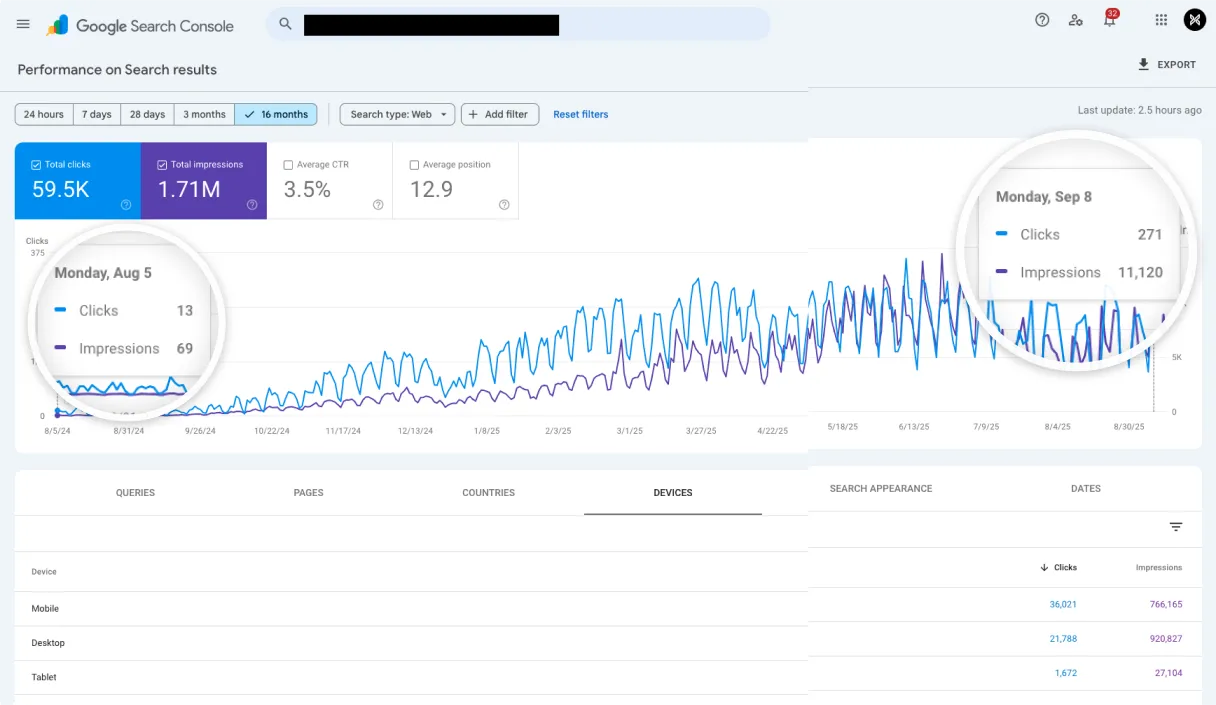
- Search Console into June 2026 (YoY): impressions about 323K (+15.4%); average position 14.1 to 9.4; clicks -13.4% under AI Overview CTR pressure while enquiry volume stayed commercially strong
- Site health: held in the high 90s early; 95/100 in the latest review window
- Early public milestone (first 11 months to August 2025): $7,714,350 - the figure on the previous version of this page; the series has continued since
Revenue figures are incremental organic-and-AI attribution from consultation tracking and average revenue per client, reviewed with the client monthly. We publish revenue and ROI percentage. We do not publish client fee schedules.
The Challenge: Building Organic Demand From Near Zero
This was not a polish job on a mature SEO programme. the client already won work through referrals and paid media, but organic search was effectively missing as a client-acquisition channel.
Single-Page, Brand-Only Visibility
Before work started in October 2024, the site was essentially a single page ranking for the business name. Veterans and serving members already searched for claims-process guidance, condition-specific questions and advocacy pathways - those queries were owned by other domains.
Paid Dependence Without an Organic Asset Base
High-intent informational and commercial queries sat with competitors. That left acquisition dependent on ads and referrals, with little compounding equity in content or rankings.
No Meaningful AI Search Presence
Assistants were already answering DVA-process and entitlements questions. At kickoff the client appeared in effectively zero tracked AI responses for the target themes.
Leadership Needed Proof, Not Theory
Directors had scaled paid channels successfully. Organic needed a measurement system that connected rankings and AI visibility to consultations and revenue - not vanity traffic alone.
Share-of-Voice Gap
Early tracked organic share of voice sat around 2.4% against a stronger incumbent near 3.9% (prior public competitive chart). Without a deliberate SEO system, that gap was likely to widen.
The Solution: Dual Google and AI SEO for Professional Services
We ran Rankmax's dual-channel approach: win the rankings that still drive consultations, and structure the same pages so answer engines can cite them. Independent studies of real user search behaviour keep showing more searches end without a click to a website.5%, and their 2026 update (Similarweb panel, Jan-Apr) put US zero-click near 68% (SparkToro 2024; SparkToro 2026).
The system sat on an AI SEO strategy spine: research, technical health, EEAT, content architecture and revenue attribution - the same methodology we document across how AI search works and EEAT.
Strategic Keyword Targeting
We prioritised high-intent, lower-competition process and condition queries over generic head terms the site could not win yet. Examples of the demand shape (not a promise of legal outcomes): permanent impairment process questions, condition-specific payout guidance searches, and other DVA pathway queries veterans already type.
Average keyword difficulty on the initial target set was about 3.64, which meant quality content and technical hygiene could move rankings without a heavy paid-link programme.

AI-Ready Content Architecture
Pages used clear hierarchy, FAQ blocks, concise answer passages and short openings so both users and models could extract accurate statements. The durable win pattern by mid-2026 was answer-first condition and process content - especially condition-payout guides - not thin keyword variations.
EEAT for a High-Trust Category
Claims-support content sits next to financial and wellbeing decisions. We strengthened Experience, Expertise, Authoritativeness and Trust signals:
- Author profiles and article schema on educational posts
- About and team pages with real credentials
- Organisation schema and consistent business identity
- Footer trust details (business presence, copyright currency)
Those signals help Google and AI systems treat the publisher as a real advocacy practice, not a thin affiliate layer.
The Implementation: Build, Then Defend Quality Under SERP Change

Months 1-2: Technical Foundation
Early work removed crawl and quality friction:
- Duplicate meta descriptions cleaned up
- Single, intentional H1 per template
- Leaner font and CSS weight
- Image compression and WebP delivery
- Explicit image dimensions to limit layout shift
- Descriptive alt text
By October 2024 the site held a 98/100 technical health score on the audit tool in use - and stayed strong as the content footprint grew.
Months 2-5: Content Transformation
We built a claims-journey content hub:
- Awareness - cards, eligibility concepts and "what is this benefit?" explainers
- Interest - how claims processes work end to end
- Consideration - calculators, averages and condition-specific guides people use before booking help
- Commercial - service pages aligned to distinct claim types the client actually supports
Layouts used tables of contents, short summaries, FAQs and visible authorship so the same URL could rank, earn snippets and convert.
Months 6+: AI Structure, Scale and Honest Measurement
Once foundations held, we scaled guides built for SERP features and assistant-readable answers, then kept publishing while measurement got stricter:
- Passage-level answers to real user questions
- Natural language that matches how veterans ask for help
- Comprehensive topic coverage instead of thin variations
- Live SERP verification before client-facing position claims (tool rankers alone overstate)
- Compliance-aware content direction as industry advertising rules tightened in 2026 (wellbeing and entitlements guidance, not outcome-guarantee marketing)
Google AI Overviews began citing client content during the first year, with the first AI-attributed client conversions recorded by March 2025 on the earlier public narrative. By 2026 the commercial scoreboard stayed on consultations and revenue, while ranking claims were live-checked rather than taken from dashboards alone.
The Results: Twenty-One Months of Compounding Demand - And Counting
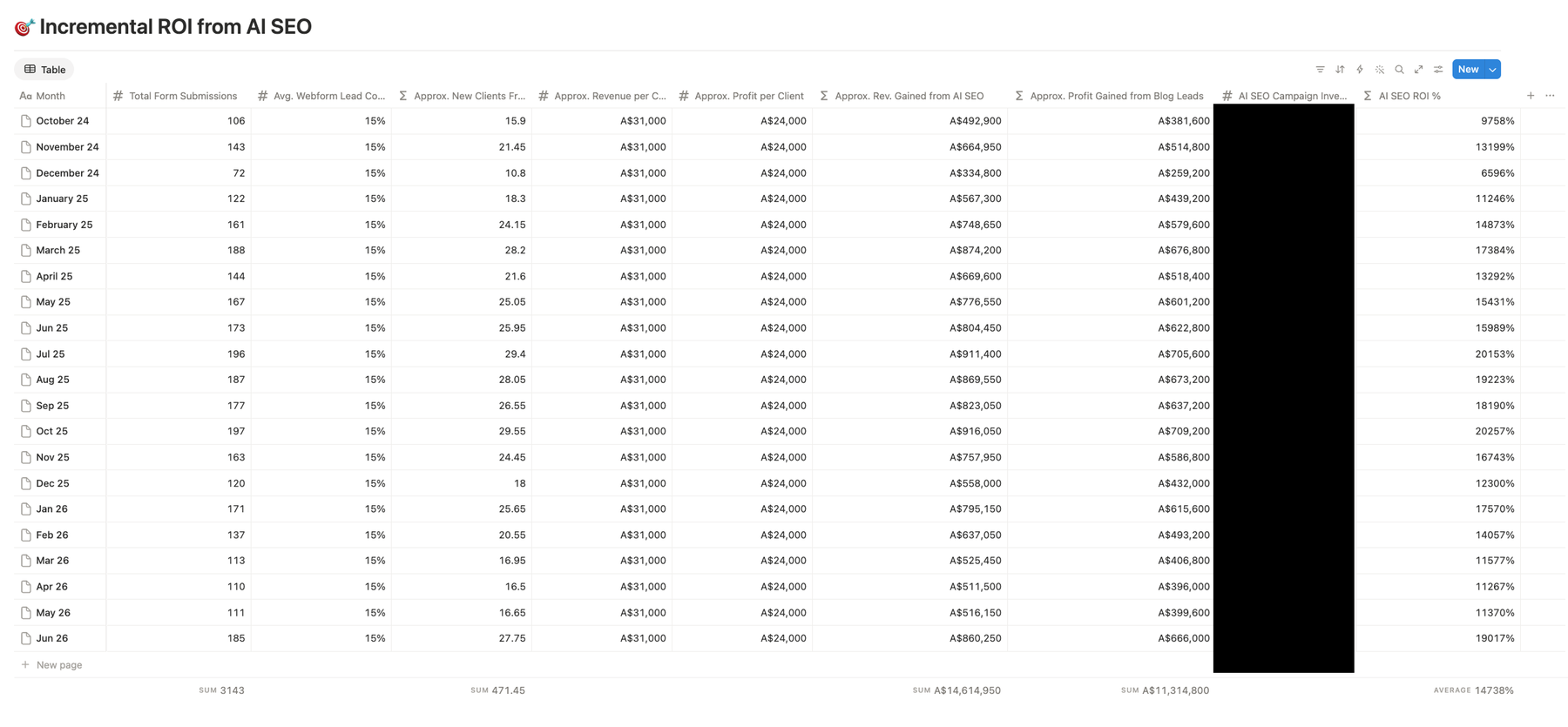
The figures below come from the continuous client-approved ROI series (organic search + AI LLM consultation submissions).
Revenue and Client Acquisition
| Metric | Result | Window |
|---|---|---|
| Total attributed organic-and-AI revenue | $14,614,950 | Oct 2024-Jun 2026 (21 months so far) |
| New clients | 471 | Same window |
| Consultation form submissions | 3,143 | Same window |
| Campaign ROI | 14,663% | Same window |
| Average monthly ROI | 14,738% | Same window |
| Latest full month revenue | $860,250 | June 2026 |
| Latest full month ROI | 19,017% | June 2026 |
| Early public milestone revenue | $7,714,350 | First 11 months to Aug 2025 |
Commercial tracking is still running month by month. June 2026 is the latest full month in this review - not the end of the programme.
Search Visibility Through June 2026
As of the June 2026 review (campaign ongoing):
- 16 keywords verified at position 1 on live Google Australia in the condition-payout cluster (not tool-only claims)
- Semrush keywords: 29 at October 2024 kickoff (5 top-three, 24 in positions 4-10, 0 in AI Overviews) to 489 in June 2026 (95 top-three, 292 in positions 4-10, 102 in AI Overviews)
- Organic traffic (Semrush): 373 monthly visits in October 2024 to 2,892 in June 2026
- Year-on-year Search Console into June: impressions 323K (+15.4%), average position 14.1 to 9.4, clicks -13.4%
That clicks-down / enquiries-strong pattern is the AI-era professional services story: AI Overviews and zero-click behaviour suppress some click volume while decision-ready visitors and form demand can still rise.
Competitive Position
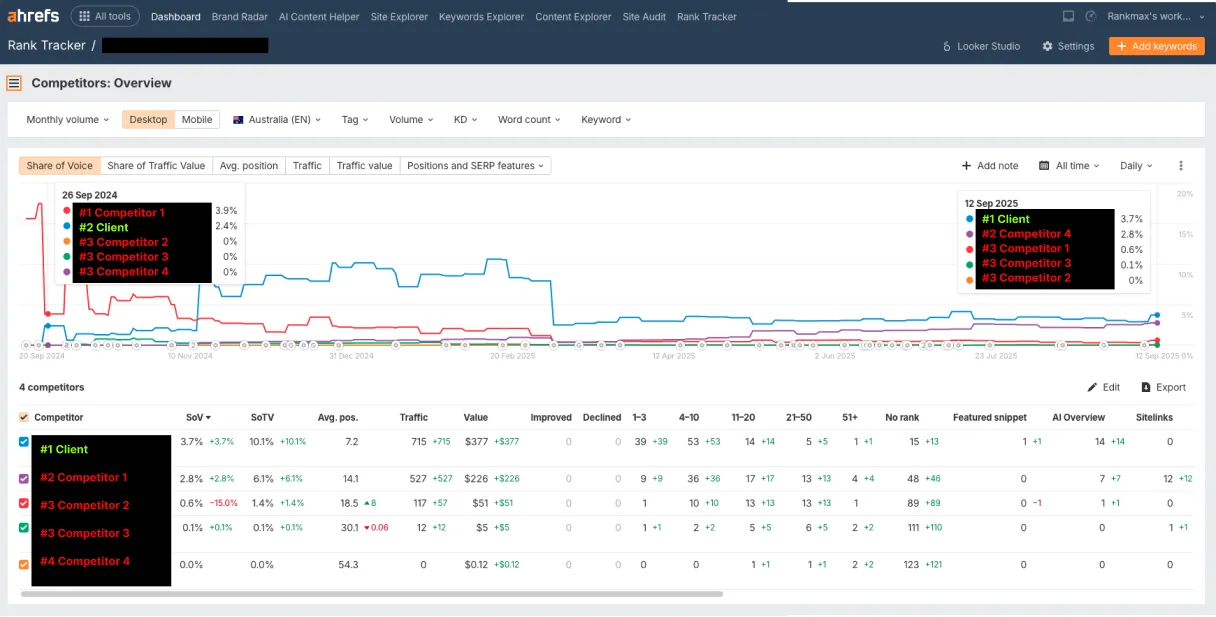
At latest review window the competitive job is twofold: defend the condition-payout cluster against specialist rivals, and avoid wasting energy on definitional terms the government domain will always own.
AI Visibility Notes
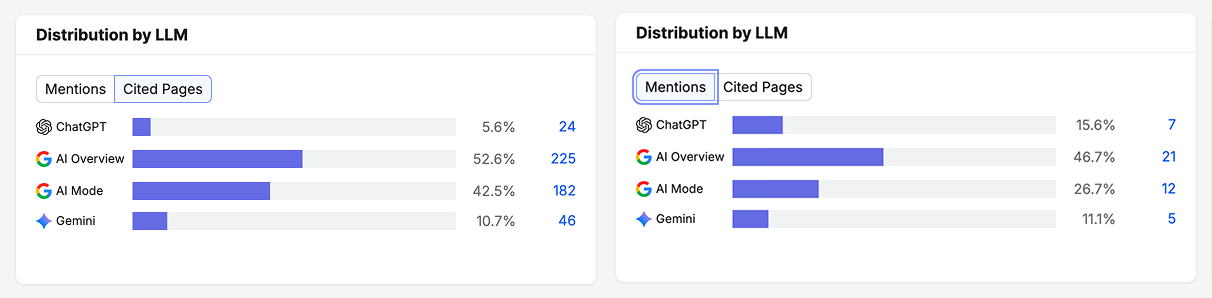
AI visibility was tracked in Semrush AI Visibility alongside commercial form-submission attribution.
We treat AI citations as a visibility KPI alongside rankings - not a substitute for rankings and not a standalone revenue metric. June 2026 Semrush AI Visibility shows 477 cited pages (ChatGPT 24, AI Overviews 225, AI Mode 182, Gemini 46) and 45 mentions (ChatGPT 7, AI Overviews 21, AI Mode 12, Gemini 5). The commercial spine remains consultations, clients and attributed revenue.
Conversion Quality
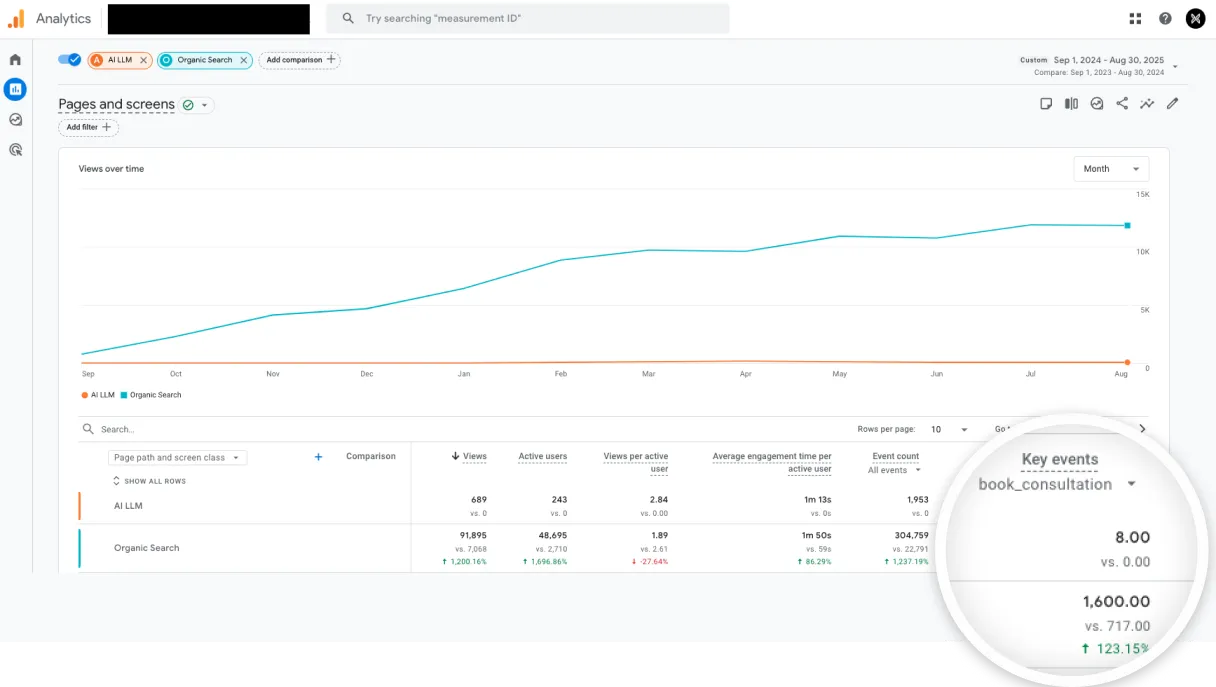
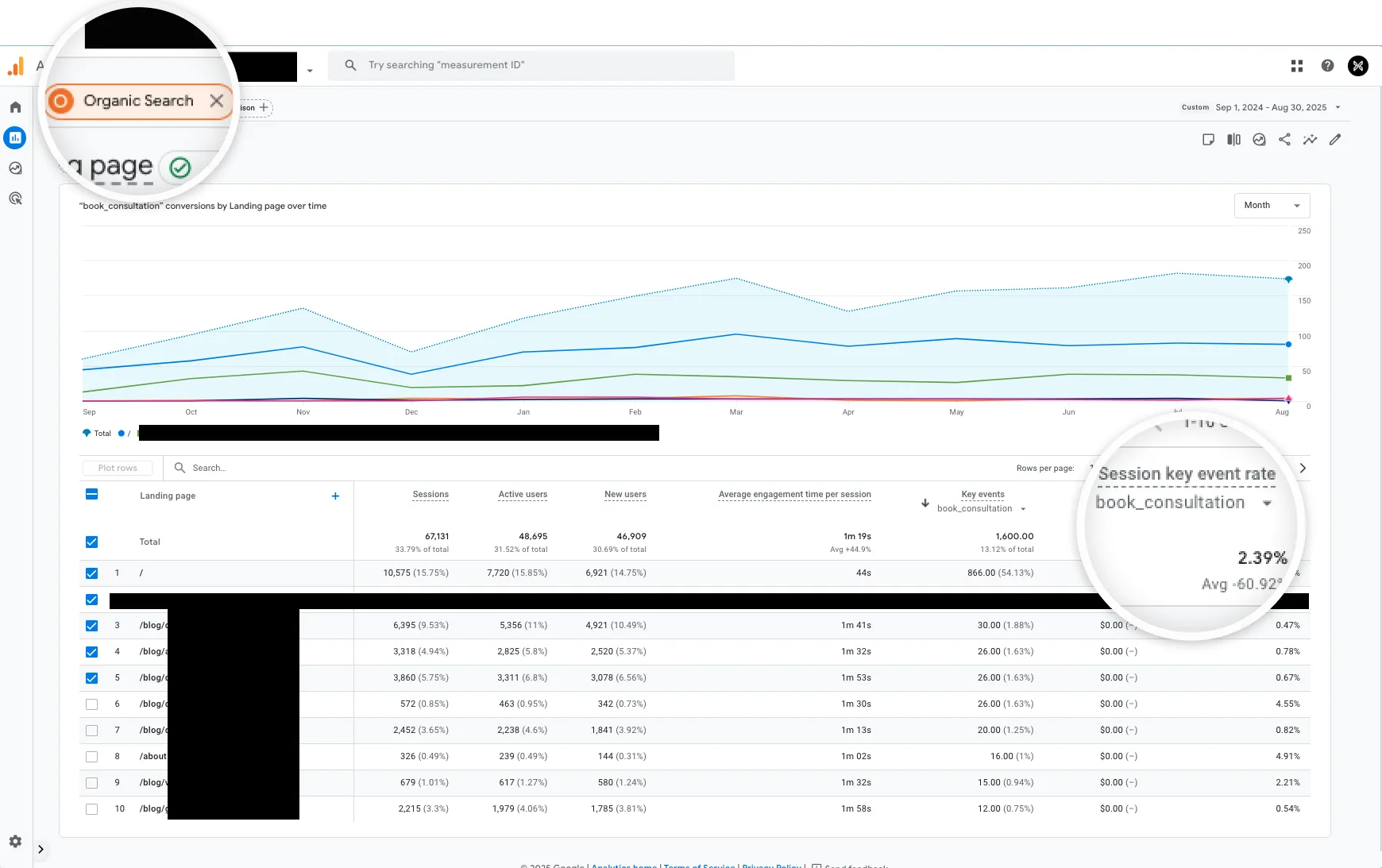

In June 2026, the site recorded 1,108 key events under data-driven attribution, with organic remaining a high-quality path even when clicks were structurally suppressed. Educational URLs still do triple duty: rankings, citable answers, and consultation pathways.
What We Learned
- Start from technical truth. A single-page, brand-only site cannot compound. Health-score work in the first weeks unlocked everything that followed.
- Depth beats thin keyword variations. Journey-mapped hubs outperformed fleets of near-duplicate posts. By year two, the condition-payout cluster was the clearest commercial moat.
- Live SERP beats dashboard rank claims. Tool rankers systematically overstated position-1 counts in later months. Client-facing proof now prefers live verification for headline ranking claims.
- EEAT is non-negotiable in claims-adjacent categories. Credentials, organisation identity and author visibility are ranking and trust infrastructure - not optional brand polish.
- Measure consultations and revenue when clicks soften. Search Console clicks can fall while attributed revenue stays strong. That is not a failure if the scoreboard is enquiries and clients.
- Compliance and category rules are part of SEO. As industry advertising guidance tightened in 2026, content direction had to stay on process, entitlements and wellbeing framing - not outcome-guarantee marketing. That is both risk control and differentiation.
- Early dual-channel work still compounds. Waiting until competitors own assistant answers and payout SERPs means a harder catch-up. Twenty-one months of continuous publishing and measurement built a durable portfolio, not a one-quarter spike - and the work is still running.
Frequently Asked Questions
How long does it take to see professional services SEO results like these?
Early technical and indexing movement often shows inside 8-12 weeks. This engagement produced strong commercial months inside the first half-year, $7.7M by month eleven, and about $14.6M across 21 months. Timelines still depend on starting authority, competition, publishing capacity and conversion design.
Can these strategies work for other B2C professional services firms?
Yes in principle - legal-adjacent, financial, health-adjacent and specialist advisory firms often have the expertise advantage search and AI systems reward. Execution still has to match the vertical's compliance rules, sales cycle and proof standards.
How should professional services firms think about SEO investment?
Budgets vary with competition, content volume and technical debt. Public industry write-ups place serious SEO content programmes across a wide monthly range once strategy, production and specialist time are included - for example Siege Media's content marketing cost overview. We do not publish what any named or anonymised client paid. If you want a scope fit check, use a discovery call.
How do you measure professional services SEO ROI without vanity metrics?
Connect organic (and AI-referred) sessions to consultation bookings, qualified clients and attributed revenue the business already trusts. In this case study the client reviewed the monthly revenue series. We report revenue and ROI %; we do not publish fee schedules. Rankings and AI visibility stay on the visibility scoreboard beside the commercial numbers - and ranking headlines should be live-checked.
Should professional services firms prioritise SEO or paid advertising?
They solve different jobs. Paid can buy immediate demand; SEO builds durable assets that keep working when ad budgets tighten. Most mature teams run both, with organic as the compounding layer.
How important is AI search optimisation for professional services now?
It is already material. Gartner forecast work from February 2024 projected a meaningful shift of traditional search volume toward AI agents by 2026, and independent studies of real user search behaviour keep showing more searches ending without a click to a website. Build answer-first pages for both blue links and assistants - and keep commercial KPIs honest when clicks compress.
Can you replicate these exact numbers for every business?
No honest agency should promise identical revenue or ROI. The playbook - technical foundation, journey content, EEAT, dual Google/AI structure, revenue attribution, live ranking verification - transfers. Starting point, category competitiveness, sales process and compliance constraints change the slope.
Conclusion
This is still an active engagement. Across 21 months from October 2024 through June 2026, the client has moved from a brand-only single-page site to about $14.6 million in attributed organic-and-AI revenue, roughly 471 new clients, and a 14,663% campaign ROI so far - with June 2026 still delivering $860,250 at 19,017% ROI.
Visibility growth matches the commercial story. Organic traffic rose from 373 to 2,892 monthly visits on Semrush. Ranking keywords expanded from 29 at kickoff to 489 by June 2026, including a large jump in top-three and page-one coverage and 102 keywords in AI Overviews. AI visibility now spans hundreds of cited pages across major assistants, tracked alongside rankings rather than instead of them.
The work is technical cleanup, trust infrastructure, journey-mapped publishing, dual optimisation for Google and AI answers, and measurement that stays commercial when SERP features change how clicks show up. If your professional services business still buys almost all growth through ads, while your buyers are already researching processes and shortlisting providers in Google and AI tools, you are leaving organic demand on the table every month.
For teams that want the full system - research, technical, content and AI visibility - see our AI SEO strategy overview or content marketing services.
What The Client Had To Say:
"We started with a single-page website that ranked for nothing but our brand name while our competitors dominated the organic search space and made us look less comprehensive by comparison. We also didn't have a clear and reliable way to know what organic search was actually delivering.
Within 11 months, the Rankmax team grew our site to over 100 high-quality pages and increased our keyword rankings from 15 to over 1,100. We now hold 425 page one positions and have overtaken all of our competitors to claim the #1 organic search position in our market. We've also secured 54 Google AI Overview citations, with ChatGPT, Gemini and Copilot appearances gaining momentum.
The GA4 tracking and reporting system they implemented means we can finally attribute leads, revenue and ROI directly to organic and AI search - and what we're seeing is record months for both. The team's detailed strategic thinking, mastery of organic and AI search, clear execution, reliable reporting and prompt communication have completely changed how we plan for growth. We've gone from unsure whether SEO could work for us to having complete certainty in our growth trajectory."
- Tom, Co-Founder & Director | ⭐⭐⭐⭐⭐ (5/5) | ✓ Verified Google Review
About the Author


Want Help Putting This into Practice?

Everything we publish comes from the same methodology we run for clients every day. Book a discovery call and we will show you how it applies to your business.


