
Google My Business SEO: The 2026 Local Pack Playbook


Your next customer is searching for a business like yours right now, and the result they tap is decided by your Google Business Profile long before they reach your website. Google My Business SEO is the work of optimising that profile so it appears in the Local 3-Pack and on Google Maps for the searches that bring in revenue. Most guides hand you a generic checklist and stop there. We have spent 18 years running local SEO campaigns that have generated more than $26 million in attributed client revenue across Google, AI Overviews and platforms like ChatGPT. This playbook covers what actually moves rankings, what quietly gets profiles suspended and how the same profile now feeds AI search. It is written for Australian businesses that want the Local 3-Pack to become a measured acquisition channel, not a box they ticked once.
What Google My Business SEO Delivers
Google My Business SEO is the practice of optimising your Google Business Profile so it ranks in the Local 3-Pack and Google Maps for location-based searches. It works by strengthening the three signals Google uses to rank local results, relevance, distance and prominence, across your profile, your reviews and your website. Done well, it puts your business in front of high-intent searchers at the exact moment they are ready to call or visit.
Want Your Local SEO Run as a Revenue Channel?
We have spent 18 years turning local search into attributed revenue for clients across Australia. Our local SEO services handle your Google Business Profile, citations and reviews so the Local 3-Pack works while you run the business.
Explore Local SEO ServicesWhat Google My Business SEO Actually Means in 2026
The first thing to clear up is the name. Google My Business is now Google Business Profile. Google renamed the product in late 2021 and retired the standalone Google My Business app in 2022, moving management into Google Search and Google Maps. People still search "google my business seo" out of habit, and the old links still redirect, so the keyword is alive even though the product name has moved on. Throughout this guide we use Google Business Profile, or GBP, for the product and treat "Google My Business SEO" as the job you are here to do.
Where you manage the profile now depends on your size:
- Single-location owners: Manage the profile directly in Google Search. Sign in and search your own business name, and the edit controls appear in the results.
- On the move: Use the Google Maps app, which exposes the same profile controls.
- Multi-location businesses: Use the web-based Business Profile Manager for bulk edits, user permissions and reporting across every location.
This matters for SEO because the profile, not your website, is what appears in the Local 3-Pack, those three map-backed results that sit above the standard blue links. For a local search, that block is the most valuable real estate on the page, and your profile is the only thing that can occupy it.
How Google Decides Which Profiles Rank
Google has publicly named three factors behind local rankings, and every optimisation below maps to one of them. Understanding these stops you chasing tactics that do not move the needle.
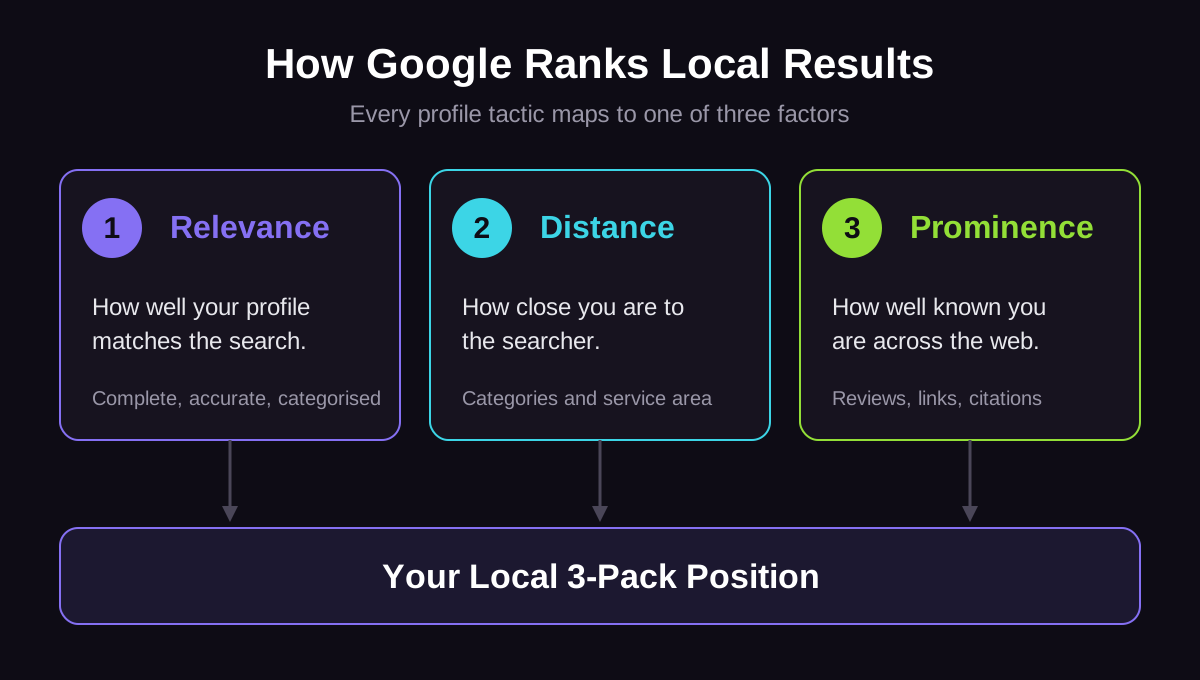
- Relevance: How well your profile matches the search. A complete, accurate, specifically categorised profile gives Google more to match against.
- Distance: How far your business is from the searcher or the location in their query. You cannot move your premises, but you can shape which searches you are eligible for through categories and service areas.
- Prominence: How well-known your business is, judged from reviews, links, citations and mentions across the web. This is where sustained work compounds.
Google's own guidance on improving your local ranking is the primary source here, and it is refreshingly blunt that there is no way to pay for a better local position. The independent Whitespark Local Search Ranking Factors survey puts numbers on the mix. Google Business Profile signals drive roughly 32% of Local 3-Pack ranking influence, the single biggest lever, while on-page signals, links and reviews carry most of the rest. In practice, when we open a new local audit the profile is always where we look first, because it is the highest-leverage surface and the one most businesses under-build.
Claim and Verify Your Google Business Profile
Nothing ranks until the profile is claimed and verified, and there are three starting positions:
- No profile exists: Create one in Google Search or the Business Profile Manager and enter your details.
- A profile exists but you do not control it: Request access from the current manager. Google emails the existing owner and gives you a path to claim it if they do not respond.
- Google auto-created a listing: Google sometimes generates a basic listing from web data. Claim it rather than making a duplicate, which is a common and avoidable cause of ranking problems.
Verification usually happens by video, phone, email or postcard depending on the business type, and until it completes your edits will not show publicly. Verify before you invest hours in optimisation, because an unverified profile is invisible to the ranking system.
Optimise Every Part of Your Profile
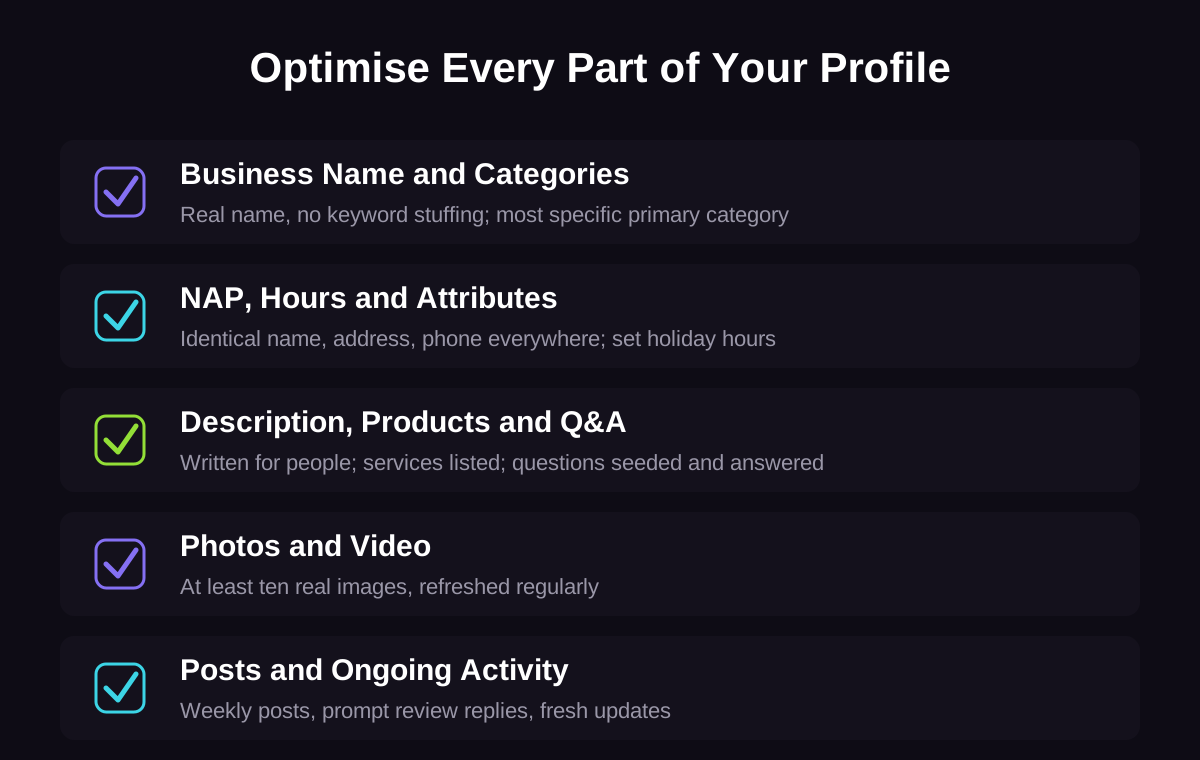
This is the core of Google My Business SEO. Each field below is a relevance signal, and the profile that fills them all thoughtfully beats the one that treats them as optional.
Business Name and Categories
Enter your real business name exactly as it appears on your signage, and resist the urge to bolt keywords onto it. This is the most expensive mistake we see. In our campaigns we have watched a business lose weeks of visibility after stuffing keywords into the name field, triggering a manual reverification and a temporary profile lockout that cost far more than the keyword ever returned. Your primary category does the heavy lifting instead: choose the most specific one that describes your core business, so a plumber selects "Plumber" rather than "Home Services". Add secondary categories for genuine additional services, because each category widens the set of searches you are eligible for.
NAP, Hours and Attributes
Your Name, Address and Phone number, the NAP, must be identical everywhere they appear online. Consistent NAP is a top-five local ranking factor because inconsistent details tell Google it cannot trust which record is correct. Keep opening hours accurate and set special hours for public holidays, since Google favours businesses that are open when someone searches and penalises the frustration of a wrong "open now". Attributes, from wheelchair access to payment options and "women-led", help Google match you to filtered and specific searches.
Description, Products and Services
Write the business description for a person first, covering what you do, who you serve and where, with your services named naturally rather than stuffed. Populate the Products and Services sections in full, because they add relevant terms to your profile and give searchers reasons to choose you. The Q&A section is public and often overlooked: seed it with the real questions customers ask and answer them, before a competitor or a bot fills the space with something unhelpful.
Photos and Video
Photos are not decoration, they are an engagement and relevance signal. Google reports that businesses with photos receive 42% more requests for directions and 35% more website clicks than those without, so upload real images of your location, team, products and work. Aim for at least ten of them and add new ones regularly to show Google the profile is active. Fresh, genuine visuals also give AI search something concrete to surface when it answers local queries.
Reviews: The Trust Signal That Moves Local Rankings
Reviews feed the prominence factor directly, and Google weighs their quantity, velocity and diversity, not just the star average. A steady stream of recent, detailed reviews signals a live, trusted business far more than a burst of five-star ratings from three years ago. The practical habits that work:
- Ask consistently: Build a simple, repeatable request into the end of every job or sale, because review velocity matters more than a one-off push.
- Respond to all of them: Reply to positive and negative reviews alike. A calm, specific response to a bad review is a trust signal that both customers and AI models read.
- Never buy or fake them: Google detects and penalises manufactured reviews, and a filtered profile loses more than it gained.
You cannot simply delete a bad review, but you can flag ones that break Google's policies for removal, and you can dilute the odd unfair one with a healthy flow of genuine feedback. Reviews are the clearest example of local SEO and reputation being the same job.
Google Posts and Ongoing Activity
A Google Business Profile is not a set-and-forget listing. Google Posts let you publish updates, offers and events straight to your profile, and while each post surfaces for a limited window, a weekly posting habit keeps the profile fresh and gives returning searchers a reason to act. Regular activity, new photos, answered questions, fresh posts and prompt review replies, is a prominence signal in its own right and one most competitors abandon within a month.
The Off-Profile Signals Google Still Counts
Your profile does not rank in isolation. Two website-side jobs decide how far it climbs:
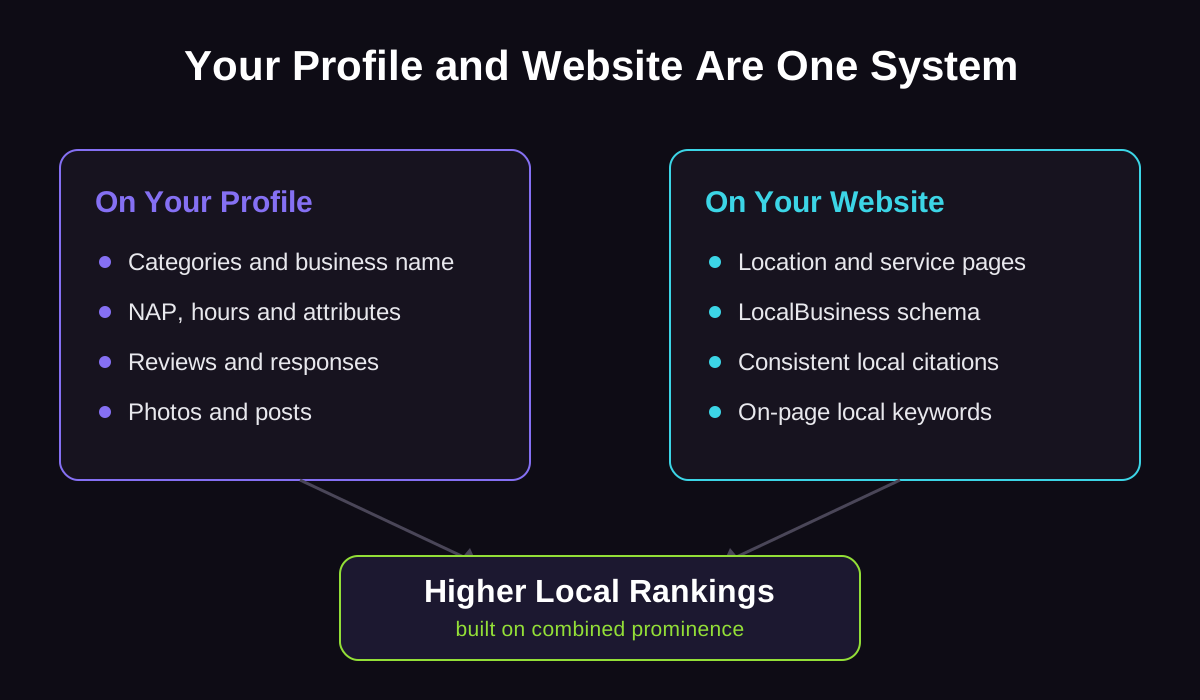
- Local on-page SEO and schema: Your website should carry location-specific pages and LocalBusiness structured data so Google and AI platforms can connect the site to the profile. Schema marks up the name, address, phone, hours and reviews you already show, making the whole entity easier to parse.
- Citations and NAP consistency: Consistent listings across directories build prominence. In Australia that means the big aggregators plus local and industry directories, all carrying the exact same NAP. A local SEO tool such as Semrush or a dedicated citation platform makes finding and fixing inconsistent citations far less painful than doing it by hand.
Treat the profile and the website as one system. When both point at the same accurate business identity, prominence builds faster than either can manage alone.
Measuring Google Business Profile Performance
If you do not measure it, you are guessing. The GBP Performance dashboard shows how people find you, the searches that surfaced your profile, and the actions they took:
- Calls
- Direction requests
- Website clicks
- Messages
Track those actions monthly, because they connect the profile to real enquiries rather than vanity impressions.
Two measurement realities most guides skip, both of which matter more in Australia:
- Rank varies by location, so a single rank is a fiction: Local results change with the searcher's position, so a geo-grid tool like Local Falcon that samples rankings across a map of points around your premises tells you the truth a single check never will.
- Google is not the whole map: In our campaigns we account for the fact that more than 20% of consumers default to Apple Maps because they use iPhones, so Google-only tracking misses a measurable slice of real local visibility, particularly for retail, hospitality and professional services in Australian capital cities. A profile optimisation tool such as Localo can help keep the broader local presence in view.
How to Show Up in AI Overviews and AI Search for Local Queries
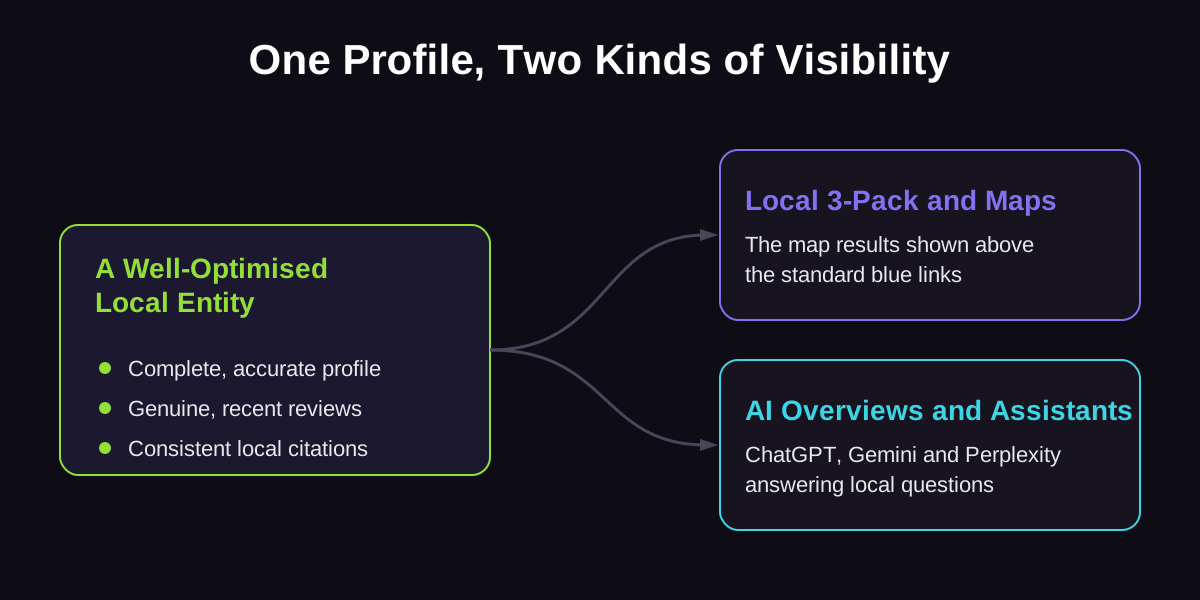
Local discovery is no longer only Google's ten blue links and a map. AI Overviews, ChatGPT and other assistants now answer "best [service] near me" style questions directly, and they lean on the same signals that power the Local 3-Pack:
- A complete profile
- Consistent citations
- A steady base of genuine reviews
The good news is that the profile work above is most of the job.
This is where the compounding shows up. On one B2B local-services engagement we have earned 598 AI cited pages across Google AI Overview, AI Mode, ChatGPT and Gemini over 27 months (ongoing) while direct competitors held zero for the same queries, and on a high-consideration local engagement AI-referred visitors converted 23 times higher than organic search visitors. We treat AI citations as a visibility KPI tracked alongside rankings, a leading indicator that revenue is coming, never a replacement for them. The durable move is not to chase any single platform but to make your business the clearly-described, well-reviewed, consistently-cited local entity that every AI system finds easy to trust. That is the same generative engine optimisation work we do at national scale, applied to a local footprint.
Troubleshooting: Suspensions, Duplicates and Profile Edits
Local SEO includes defending the profile you built. The three problems we field most often:
- Suspensions: Usually triggered by keyword-stuffed names, a mismatched address or ineligible business models. Fix the underlying issue, then submit a reinstatement request through Google with evidence the business is legitimate.
- Duplicate listings: Two profiles for one business split your ranking signals and confuse searchers. Identify duplicates and ask Google to merge or remove them.
- Unwanted edits: Google lets the public and Google itself "suggest an edit" to your profile. Check the profile regularly, because a competitor or a well-meaning stranger can change your hours or category without you noticing.
None of this is glamorous, but a suspended or duplicated profile ranks nowhere, so the maintenance is the SEO.
Frequently Asked Questions
Can you do SEO on Google My Business?
Yes. Google My Business SEO means optimising your Google Business Profile, its categories, NAP, reviews, photos and posts, plus your website's local signals, so the profile ranks in the Local 3-Pack and Google Maps. It is one of the highest-return forms of SEO for any business with local customers, because the profile itself drives roughly a third of local ranking influence.
How long does Google Business Profile SEO take?
Basic wins like a completed profile and correct categories can shift visibility within a few weeks, while prominence signals such as reviews and citations compound over months. In our campaigns the meaningful movement in competitive local markets typically builds over three to six months, faster for underserved niches and slower where established competitors already hold the 3-Pack.
Do Google Business Profile posts help SEO?
Posts are not a direct ranking factor, but the activity they represent supports the prominence signal, and they keep your profile fresh for both searchers and AI platforms. A weekly posting habit also gives potential customers timely reasons to choose you, so the benefit is part ranking signal and part conversion.
Why is my business not showing up on Google?
The usual causes are an unverified profile, an incomplete or wrongly categorised profile, NAP inconsistencies across the web or a suspension. Distance also plays a role, because you will not appear for searches far outside your service area. Work through verification, profile completeness and citation consistency first, since those fix the majority of visibility problems.
How do I rank higher on Google Maps?
Complete every profile field, choose the most specific primary category, build a steady flow of genuine reviews, keep your NAP identical everywhere and add fresh photos and posts. Then support the profile with location pages and LocalBusiness schema on your website. Google Maps rankings follow the same relevance, distance and prominence signals as the Local 3-Pack.
How do I remove a bad Google review?
You cannot delete a review yourself, but you can flag reviews that break Google's content policies, such as spam, fake reviews or off-topic content, and request removal. For a genuine but negative review, respond calmly and professionally, then keep earning fresh reviews so one poor experience does not define your average.
Is a Google Business Profile free?
Yes. Creating, verifying and managing a Google Business Profile costs nothing, and there is no way to pay Google for a better local ranking. Your only investment is the time or help required to optimise and maintain it, plus any tools you choose for tracking and citation management.
Turning the Local 3-Pack Into a Channel
Google My Business SEO rewards the businesses that treat the profile as a living asset rather than a listing. The winners keep it verified, complete and specifically categorised, backed by consistent citations and a steady stream of genuine reviews. They measure it properly across both Google and Apple and increasingly earn citations from the AI systems that now answer local questions. None of the individual steps are complicated, but doing all of them consistently, in the right order, is what separates the profiles that own the 3-Pack from the ones that never appear. Get those foundations right and local search becomes one of the most measurable acquisition channels your business has.
About the Author
Want Insights Like This Fortnightly?

Our AI SEO strategies and tactics delivered fortnightly, including bonus trade secrets not shared anywhere else. No fluff. Just what's working right now. 5-minute read.


