
Link Building in 2026: How to Earn Links for Google and AI Search

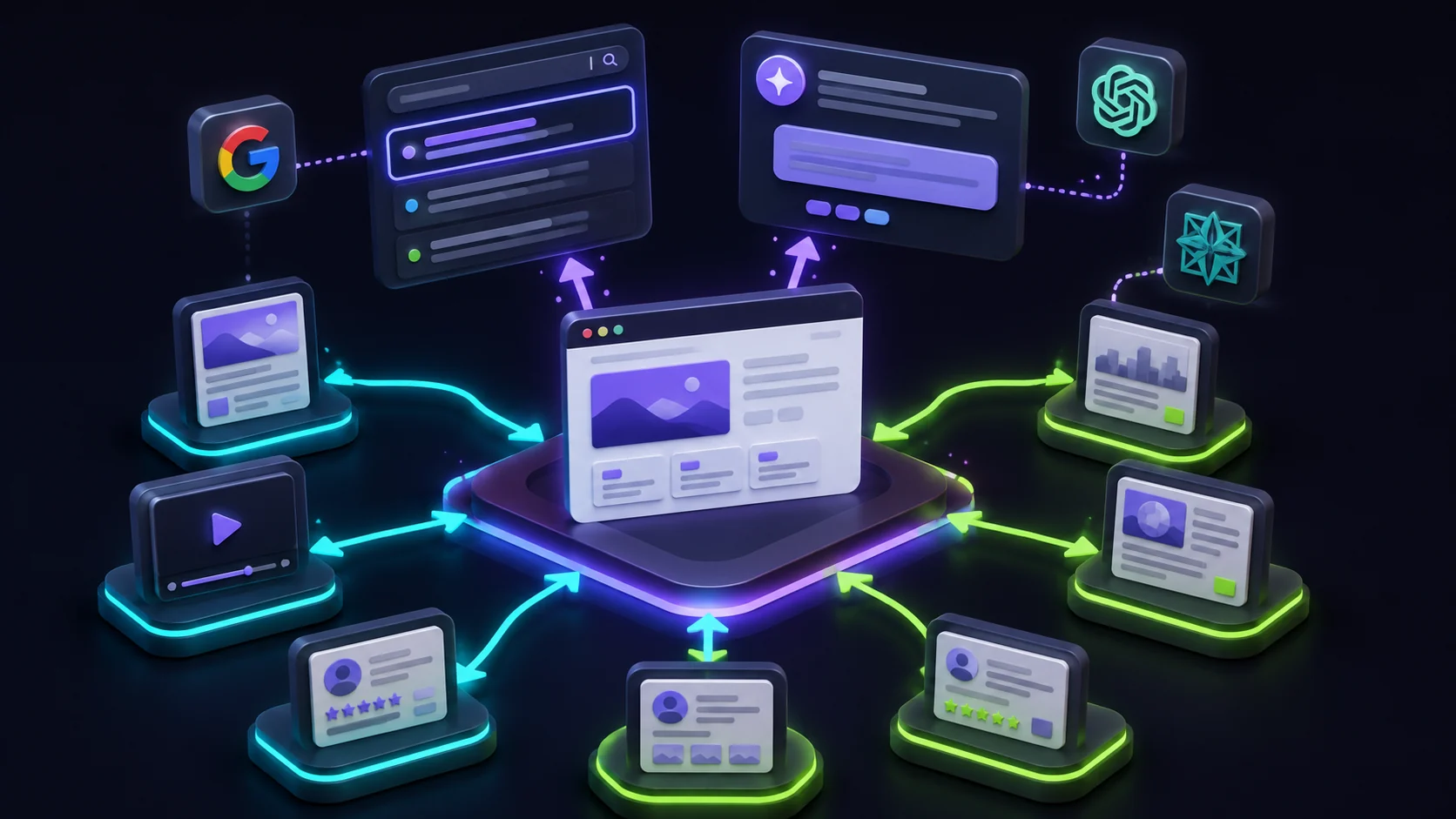
Most businesses know they need more authority to rank, but few know how to earn it without tripping Google's spam filters or wasting budget on links that do nothing. Link building is still one of the strongest signals you can influence, yet the rules have shifted: quality now beats volume, and the same authority that lifts your Google rankings increasingly shapes whether ChatGPT, Perplexity and Google AI Overviews cite you at all. Over the past decade we have run these campaigns across SaaS, eCommerce, B2B and professional-services clients (see our case studies), and the pattern that works has stayed consistent. This guide is the practical playbook we use: the methods that earn links, the campaign process end to end, how we measure the results against revenue and where AI search adds a new dimension. If you want authority that compounds rather than a cleanup bill, this is where to start.
What Is Link Building?
Link building is the practice of earning hyperlinks from other websites to your own, so that search engines and AI platforms treat your pages as more credible and worth surfacing. Each quality link acts like a vote of confidence: the more relevant, authoritative sites that point to you, the stronger the signal that your content deserves to rank and be cited. It is one part of the broader off-page SEO engine, and the highest-leverage part when you do it by earning links rather than manufacturing them.
Build Authority That Moves Rankings and AI Citations
We earn editorial links and brand mentions that lift authority for Google and AI search, with a minimum of 10 editorial placements per campaign. See how our link building agency runs the work.
Explore Link BuildingWhy Link Building Still Matters for Google and AI Search
Links are not the only ranking factor, but they remain one of the few that sit outside your own website and are hard for a competitor to fake. A Backlinko analysis of 11.8 million Google search results found the number one result has, on average, 3.8 times more backlinks than the pages ranking second to tenth. Ahrefs reached the same conclusion in its own study of one million results, where top-ranking pages consistently had more referring domains than the pages below them. That is a correlation rather than proof, but it holds up in practice. In crowded Australian markets, that gap is often the reason a well-built site sits on page two while a rival with a stronger profile holds page one. Authority is the one signal you cannot switch on overnight, which is exactly why it rewards building deliberately.
What has changed is the second audience. AI search platforms like ChatGPT, Perplexity and Google AI Overviews decide which sources to trust and cite, and the authority signals you build through links feed the same reputation these systems read. A page nobody references is a page that neither Google nor an AI assistant has much reason to surface. Links are how the rest of the web vouches for you, and that endorsement is what both systems weigh.
What Makes a Link Worth Building
Not every link helps, and some can hurt. When we assess a prospective link, we weigh a short list of factors that separate a real signal from noise. We cover the underlying data in depth in our guide to backlinks; here is the working version we apply on live campaigns:
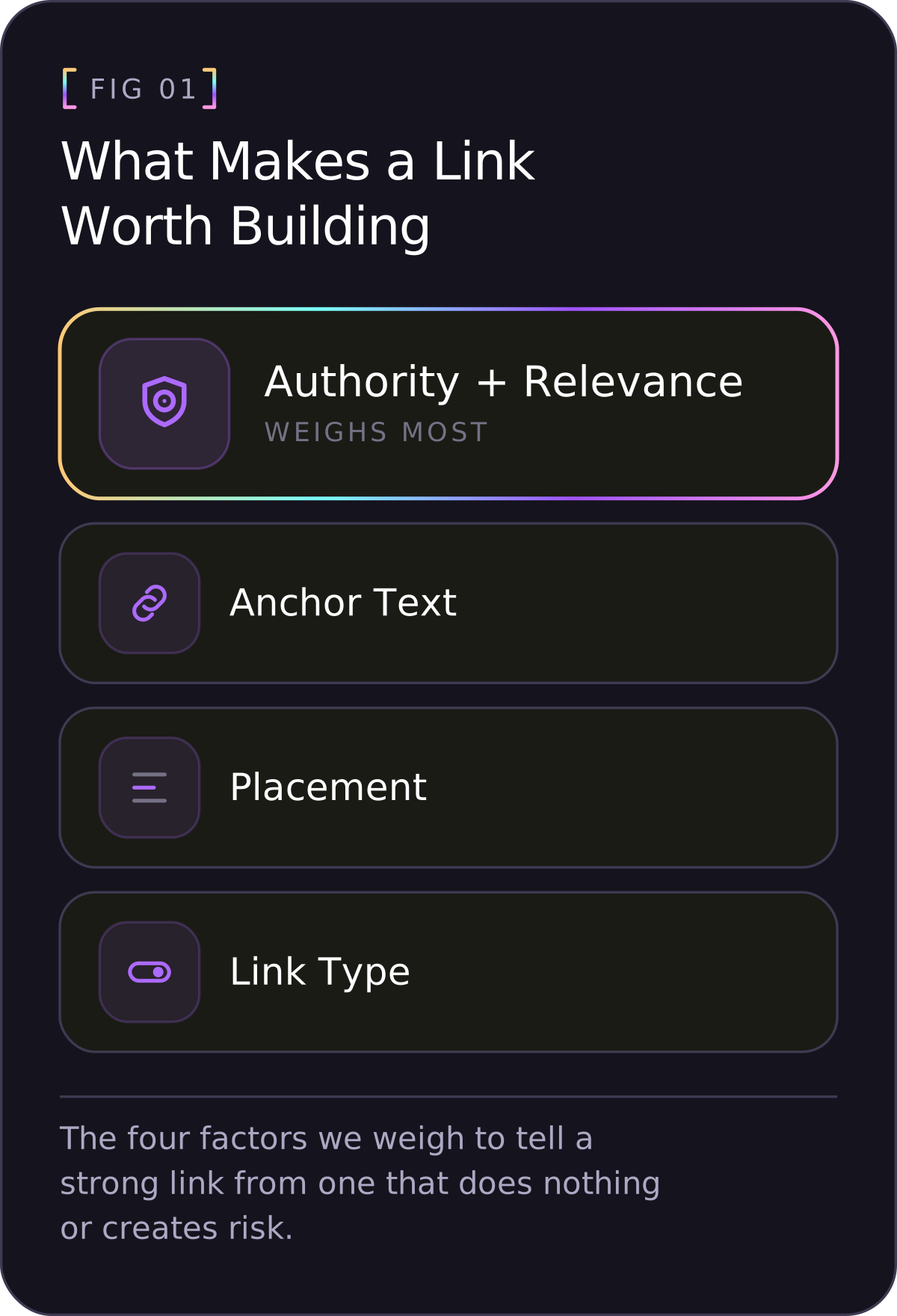
- Domain authority and relevance: A link from a trusted site in your industry does more than dozens from unrelated, low-authority pages. Relevance is the multiplier, because a topically aligned site passes a stronger signal than a bigger but unrelated one.
- Anchor text: The clickable words help engines understand what your page is about, so a natural mix of branded, partial-match and generic anchors is healthy. Repeating the same exact-match keyword across external links reads as manipulation, not a shortcut.
- Placement: A link inside the body of a real article carries more weight than one buried in a footer, sidebar or author bio.
- Link type: Since 2019 Google has treated nofollow, sponsored and ugc as hints rather than strict directives. Most high-value editorial links are standard followed links, but a natural profile still shows a mix.
The quick test we use on any prospect is simple: would this link still be worth having if it sent zero direct traffic and Google ignored it entirely? If the answer is yes, because the audience is genuinely right for you, it is usually a link worth earning.
Underneath all of this sits trust. The same editorial links that move rankings also build the experience, expertise, authoritativeness and trust signals that Google and AI systems read when they decide whose content to believe.
The Link Building Methods That Actually Work
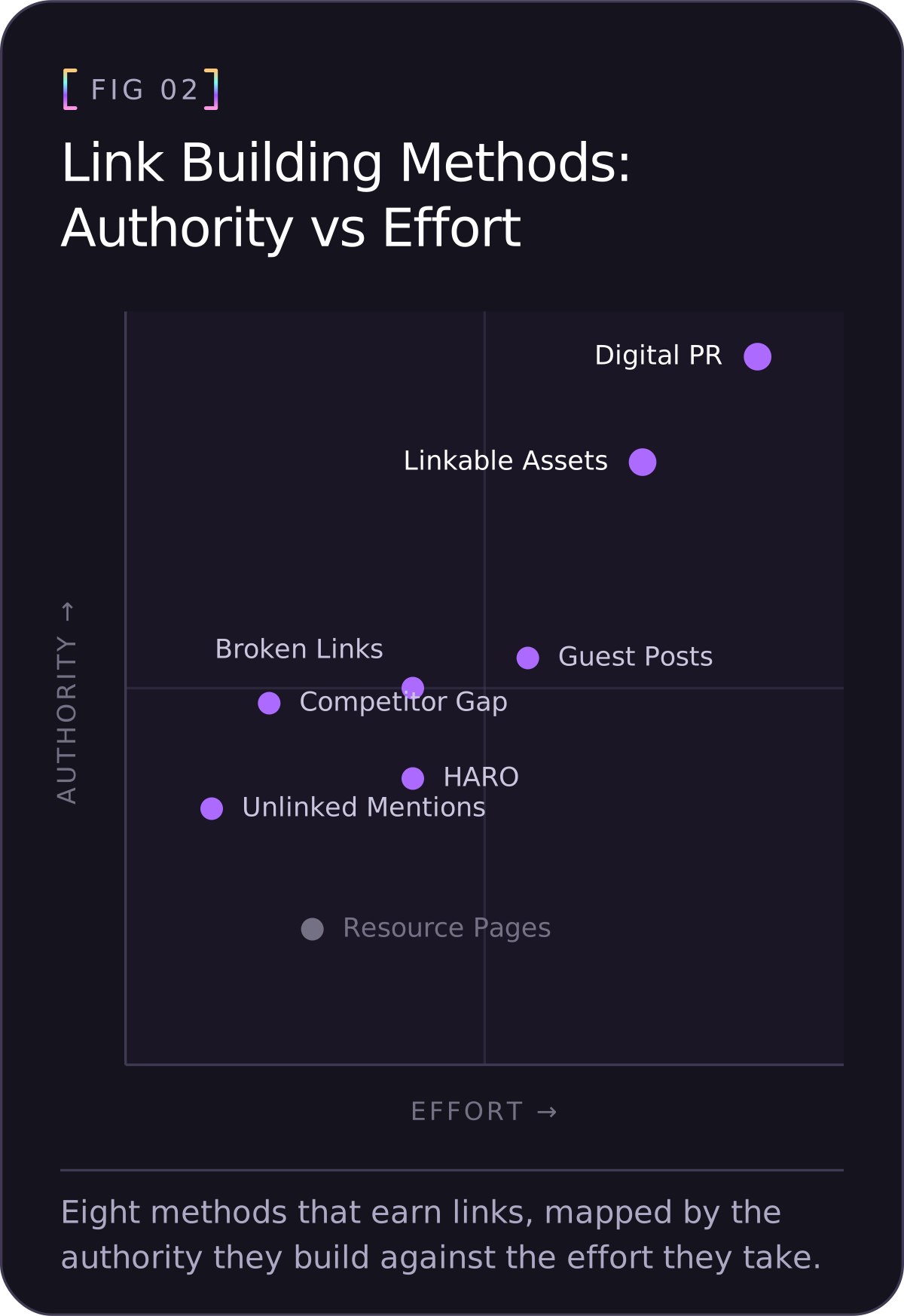
There is no single way to earn a link, and the right mix depends on your market, your budget and how competitive your keywords are. These are the methods we reach for most, roughly in order of the authority they earn against the effort they take.
Digital PR
Digital PR is the highest-authority tactic we run. It means creating something a journalist actually wants to cover, original research, a data study, expert commentary or a genuinely newsworthy story, then pitching it to relevant publications to earn editorial coverage and links. When a campaign lands, it can secure placements that routine outreach never reaches. The angles that work tend to fall into a few types: a data story built on numbers only you have, reactive commentary on a live news moment or a genuinely useful piece of original research, and we match the angle to your market and the publications worth earning. Because these placements sit on sites with their own authority, the links keep passing value long after the story runs. Our published service standard is a minimum of 10 editorial links per campaign, with two placements on publications that have a Domain Rating of 70 or above and over one million monthly visitors.
Guest Posting
Guest posting means writing a valuable article for another site in your industry with a contextual link back to a relevant page. Done properly, on editorially credible sites with a real audience, it builds links at a controlled pace. We treat it as a secondary tactic to digital PR and target a Domain Rating sweet spot of roughly 20 to 65, strong enough to move the needle and realistic enough to pitch. A single relevant placement beats a pile of low-quality ones every time. We also vet the site's own outbound links, because a page that will link to anything for a fee passes little value and tends to sit in bad company.
Broken Link Building
Broken link building finds dead links on authoritative pages, then offers your content as the replacement. It works because you are solving a problem for the site owner rather than asking for a favour. We crawl target sites for broken outbound links with a tool like Screaming Frog, match each dead link to a relevant asset on your site and pitch the swap. The conversion rate is modest, but the links are clean and contextual. It scales best on resource-heavy topics, where pages accumulate outbound links over years and inevitably let some rot.
Competitor Link Gap Analysis
Your competitors have already done some of your prospecting for you. A link gap analysis compares your backlink profile against the sites ranking above you and surfaces the domains that link to them but not to you. We build these lists in Ahrefs or Semrush, then prioritise the relevant, reachable targets into an acquisition list. We prioritise that list by relevance first, then by how reachable each target is, so the campaign opens with links that are both winnable and worth winning. It turns a vague goal into a concrete, ranked to-do list.
Content-Driven Outreach and Linkable Assets
Some content earns links because it is genuinely useful to reference. Original research, practical guides, free tools and calculators all give other sites a reason to cite you without any exchange. We call these linkable assets, and we build outreach campaigns around them because a strong asset does the persuading for you. The best assets answer a question your market keeps asking, which is why we scope them from real search demand rather than a hunch. The asset is the pitch, the outreach just puts it in front of the right people.
Expert Sourcing and HARO-Style Requests
Journalists constantly need expert quotes, and answering their requests can earn links from major publications. The original HARO service (Help a Reporter Out) was discontinued in December 2024, and the tactic now runs through source-request platforms like Featured (which has since revived the HARO brand) and Qwoted, where reporters post what they need and vetted experts respond. The key is a fast, specific and genuinely useful answer, because journalists reward substance over self-promotion.
Unlinked Brand-Mention Reclamation
Not every mention of your brand online comes with a clickable link. When a site names you without linking, that is a warm opportunity: the writer already knows you and simply left the link out. We monitor for these mentions, then reach out and ask for a link attribution. We prioritise mentions on higher-authority pages, since those are the attributions worth the outreach. Converting even a fraction of unlinked mentions into followed links is one of the lowest-effort wins in link building.
Resource Pages and Directories
Resource pages are curated lists of recommended tools, guides or services in a niche, and a placement on a well-maintained one delivers a clean contextual link. Genuine industry directories with real editorial standards serve a similar purpose. These rarely move rankings on their own, but they round out a natural link profile and can send qualified referral traffic. We use them to support a campaign, never as its foundation.
How to Run a Link Building Campaign
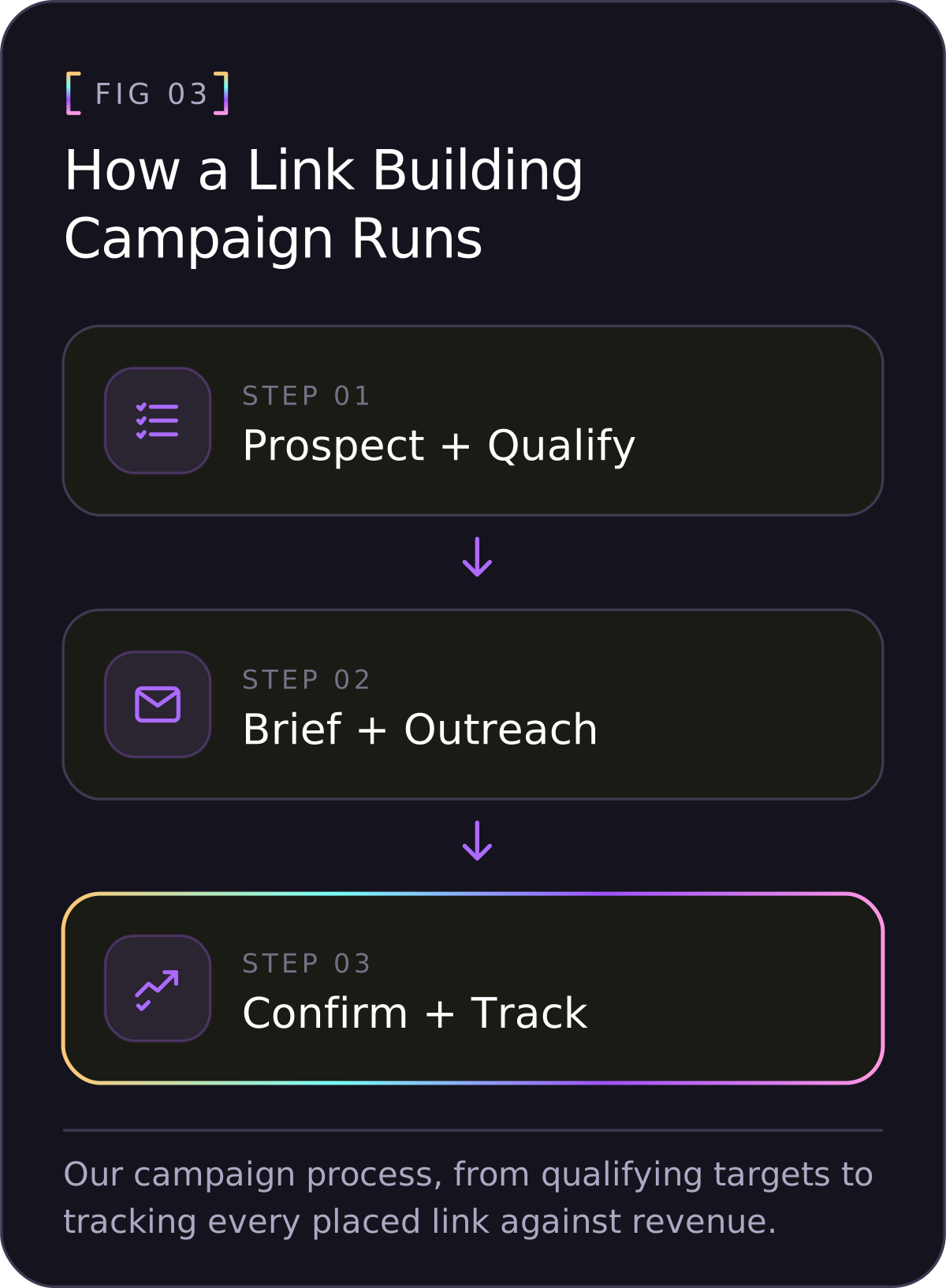
A campaign is where these methods become a repeatable process. This is roughly how we work, mirroring the Discovery, Strategy and Execution flow we run for every client, so nothing depends on a single placement. The discipline matters more than any single tactic, because a mediocre method run consistently beats a brilliant one run once.
1. Prospect and Qualify Your Target Sites
The first thing we look for is a list of sites that are both relevant to your market and strong enough to matter. We build the prospect list from competitor link gaps, digital PR angles and topical resource pages, then qualify each site on relevance, genuine traffic and editorial standards before it earns a place on the shortlist. A big Domain Rating means little if the site has no real audience or no topical connection to you. We also cap how many links we chase from any single domain, because the tenth link from the same site adds far less than the first.
2. Brief the Asset Then Run Outreach and Follow-Up
Once targets are qualified, we brief the content the link will point to and the angle each publisher cares about. We then run personalised outreach rather than bulk email, and we follow up politely a small number of times, because most placements are won on the second or third contact rather than the first. We manage the whole pipeline in a tool like BuzzStream so no conversation goes cold.
3. Confirm Placement and Track Every Link
When a publisher agrees, we confirm the link is live, followed where it should be and placed in the body of the piece rather than a footer. Every placement is then logged and tracked so it can be measured against rankings, traffic and revenue instead of being filed away and forgotten. A link you cannot find again is a link you cannot learn from.
How to Measure Link Building
A link you cannot tie to an outcome is a vanity metric. We track link building on two levels: the leading indicators that show authority is growing and the business results that show it is actually working. Kept together, they stop a campaign from drifting into activity for its own sake.
- Referring domains and Domain Rating: The count of unique sites linking to you, and your Domain Rating trend, are the clearest signs that authority is building. We track both in Ahrefs and in Google Search Console's Links report.
- Rankings and organic traffic: Growth in referring domains should show up as movement on your target keywords and rising organic sessions to the pages you are supporting.
- Revenue and pipeline: Every authority gain is mapped back to the organic revenue and pipeline it influences, because that is the number your leadership actually cares about.
- Competitor white-space: We watch the gap between your link profile and the sites ranking above you, so we can see it closing month over month.
Two habits keep the measurement honest. We watch referring domains rather than raw backlink totals, because one hundred links from a single site say far less than ten links from ten relevant ones. We also treat correlation with care: a ranking rise that lines up with new links is encouraging, but we confirm it against traffic and revenue before calling it a win, because seasonality and content updates move the same numbers.
We map each of these to a revenue figure rather than a raw link count, the approach we set out in our guide to SEO KPIs. For one B2B SaaS client, that discipline showed up in the results: $1.31M in attributed organic revenue, a 1,909% return and 4,118 page-one rankings over twelve months. Referring domains were the leading indicator that moved months before the revenue caught up. Authority was the input, revenue was the scoreboard.
The Risks: Google's Guidelines and Toxic Links
The fastest way to undo a year of good work is to buy your way to authority. Google's link spam policies are explicit, and the tactics that break them are the ones still sold hardest:
- Private blog networks and shortcut links: PBNs, link farms and bulk directory submissions promise fast results and deliver risk. They can trigger a spam action and leave you with cleanup work that stalls future progress.
- Buying links that pass ranking credit: Paying for links is fine for advertising, but only when they are marked with sponsored or nofollow. Paid links that pass ranking credit are a direct policy breach.
- Over-optimised exact-match anchors: A backlink profile stuffed with the same exact-match keyword looks manufactured. A natural profile leans on branded and partial-match anchors instead.
- Toxic links: Spammy, irrelevant or automated links pointing at your site can drag on your profile, whether you built them or a competitor did.
Some penalties are manual actions a reviewer applies by hand, others are algorithmic, where the system quietly stops trusting the links. Either way the effect is the same: the authority you paid for stops counting, and can start counting against you. When harmful links appear, the first step is usually manual review and removal outreach. A disavow file should only be considered in limited cases, such as unnatural links that have caused, or are likely to cause, a manual action, which is why we treat disavow as a last resort rather than routine housekeeping. Our campaigns include ongoing Toxic Link Monitoring for exactly this reason. A healthy profile even looks a little messy on purpose: a spread of followed and nofollow links, branded and generic anchors and a range of domain strengths, because that is what genuine popularity looks like to Google. The safer path is also the one that lasts: earn links rather than manufacture them, and there is nothing to clean up.
Link Building in the AI Search Era
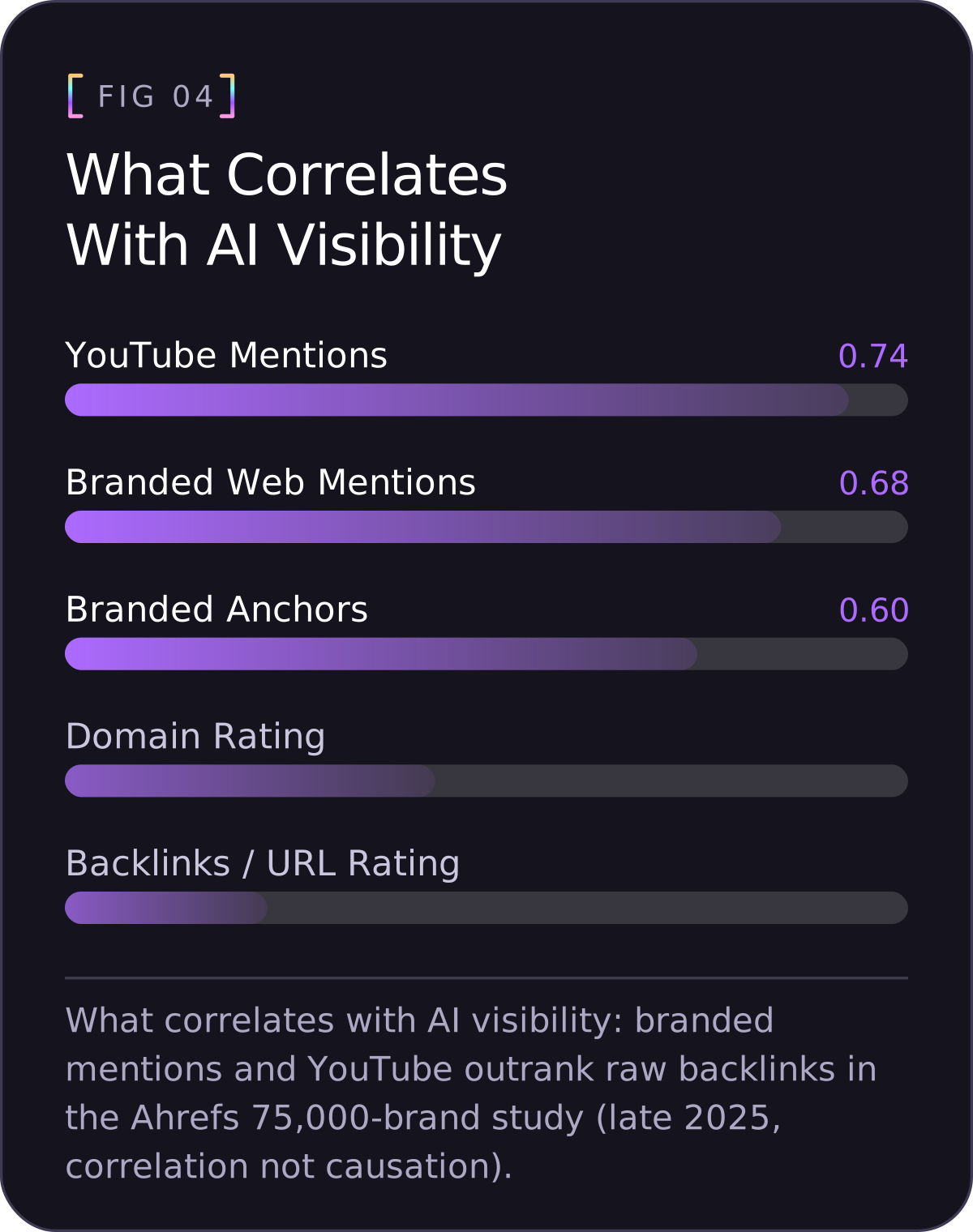
The newest question we get is whether links still matter now that buyers ask ChatGPT instead of Google. The honest answer is that links still help, but they are no longer the whole story. An Ahrefs study of 75,000 brands, published in December 2025, found that branded web mentions and branded anchors correlated more strongly with visibility across ChatGPT, Google AI Mode and AI Overviews than classic metrics like backlinks or URL Rating. Mentions of a brand on YouTube were the single strongest signal in the data set. That is a correlation, not proof of causation, and these platforms change quickly, so treat it as a snapshot of late 2025 rather than a permanent rule.
The practical takeaway is not to game the model. It is to earn a genuine presence across the web: coverage that mentions your brand, profiles on the third-party sources people trust, video and the kind of editorial links that also lift your Google rankings. How these systems choose which sources to cite is something we break down in our guide to how AI search works.
The logic is not mysterious. When an AI system assembles an answer, it draws on what the web collectively says about a topic and a brand, rather than only who links to whom. A brand mentioned often, in relevant contexts and across many independent sources, reads as established, and established brands are safer to cite. In practice, that means building presence in the places these systems read most:
- Editorial coverage and mentions: Earned coverage that names your brand, linked or not, is the closest thing to a universal signal across Google and AI search.
- Video, especially YouTube: Ahrefs found YouTube mentions to be the strongest single correlate of AI visibility, so a presence there is worth more than it first looks.
- Trusted third-party profiles: Review sites, industry directories and Q&A platforms are where people, and increasingly AI systems, go to sanity-check a brand.
- Original data and commentary: Being the source others quote is what turns a single mention into repeated citations.
We track AI citations as a visibility KPI in their own right, alongside rankings and revenue rather than in place of them. For one B2B property-management client, that visibility reached 138 AI citations across platforms (115 in Google AI Overviews, 12 in ChatGPT, 10 in Gemini and 1 in Perplexity), while the wider campaign contributed to about $8.7M in attributed revenue over 27 months (ongoing) and referring domains grew from 19 to 85, earned through content and coverage rather than manufactured links. The links that made them visible to AI were the same ones building their authority in Google. That is the pattern we see repeatedly: the work that earns Google authority and the work that earns AI visibility are mostly the same work, done once and measured on both surfaces.
Frequently Asked Questions
What Is Meant by Link Building?
Link building is the process of getting other websites to link to yours, ideally because your content is worth referencing. Those links act as credibility signals that help search engines and AI platforms decide which pages to rank and cite. The goal is to earn relevant, authoritative links rather than to accumulate as many as possible.
Is Link Building Hard?
It is more work than most people expect, mainly because the best links are earned rather than bought. Digital PR, useful content and real relationships with publishers all take time and skill to do well. The tactics themselves are learnable, but doing them consistently and at quality is where most in-house efforts stall.
Is Link Building Still Important in 2026?
Yes. Referring domains still correlate with higher rankings in competitive search results, and the authority you earn now also feeds how AI platforms judge whether to cite you. If anything, links matter across more surfaces than they used to, because Google and AI search both read the same reputation signals.
What Makes a High-Quality Backlink?
The strongest links come from sites that are relevant to your industry, have genuine traffic and editorial standards and place your link inside the body of a real article. A followed editorial link from a trusted, on-topic publication beats a large volume of low-authority directory or comment links. Relevance and placement usually matter more than raw Domain Rating alone.
What Is the Difference Between Link Building and Digital PR?
Link building is the broad discipline of earning links through any legitimate method. Digital PR is one method within it, focused on earning editorial coverage and links from journalists and high-authority publications through newsworthy content or original research. All digital PR is link building, but not all link building is digital PR.
Does Link Building Help You Get Cited by ChatGPT and Google AI Overviews?
It can help, though indirectly. Research suggests that branded mentions and broad third-party presence correlate more strongly with AI visibility than raw backlink counts, and editorial links are one way to build that presence. Treat it as a supporting factor rather than a guarantee, because AI citations still depend on the query, the platform and the quality of your content.
Is Buying Backlinks Against Google's Guidelines?
Buying links that pass ranking credit breaches Google's link spam policies and can lead to a manual action. Paid links are only acceptable when they are marked with the sponsored or nofollow attribute so they do not pass ranking credit. The risk of low-quality paid links usually outweighs any short-term gain.
How Long Does Link Building Take to Show Results?
Link building compounds, so it is a medium-term investment rather than a quick win. Early authority gains can appear within a few months, but meaningful ranking and revenue movement in competitive markets typically builds over two to three quarters of consistent work. The upside is that earned authority tends to hold rather than evaporate.
How Much Does Link Building Cost in Australia?
Cost varies widely by method and by how competitive your market is. Link building is usually priced one of three ways: a monthly retainer for an ongoing programme, a per-placement fee for individual links or a fixed project rate for a defined campaign, and digital PR sits at the higher end because high-authority placements are harder to earn than guest posts. Be cautious of low-cost bulk link packages, which often rely on the exact tactics that create risk. The better question is not what a link costs but what quality and relevance you are getting for the spend.
Authority You Earn Is Authority You Keep
The businesses that win at link building in 2026 are not the ones with the most links, they are the ones with the most relevant, genuinely earned authority. Build it through digital PR, useful content and real relationships, measure it against revenue rather than link counts, and you create a moat competitors cannot copy with a chequebook. The same authority that lifts you in Google is what makes ChatGPT, Perplexity and AI Overviews comfortable citing you. Do it the shortcut way and you inherit a cleanup bill. Do it the earned way and the results compound for years.
About the Author
Want Insights Like This Fortnightly?

Our AI SEO strategies and tactics delivered fortnightly, including bonus trade secrets not shared anywhere else. No fluff. Just what's working right now. 5-minute read.


