
Microsoft Copilot SEO: How We Get Clients Cited in Copilot in 2026


Most businesses optimise for Google, a few now think about ChatGPT, and almost nobody plans for Microsoft Copilot. That is a mistake, because Copilot is built into Windows, Edge, Bing and Microsoft 365, which puts it in front of hundreds of millions of everyday and enterprise users who are asking it the exact buying questions you want to answer. When Copilot answers one of those questions it pulls live information from the web and cites its sources, so if it cannot find you, you are invisible to all of those people at once. Microsoft Copilot SEO is the work that gets your business surfaced and cited in those answers, and the good news is that it runs on foundations you may already be building. This guide covers how Copilot actually finds and cites content in 2026, why it is not the same as optimising for ChatGPT or Google, and the playbook we use to earn those citations for clients.
Microsoft Copilot SEO at a Glance
Microsoft Copilot SEO is the practice of optimising your content so Copilot can find it, trust it and cite it in its answers. Because Copilot grounds its web answers in Bing's index and runs on OpenAI's current model (GPT-5.5 at the time of writing, though the version changes often), getting cited comes down to two things working together: being indexed and ranked in Bing, and structuring your content so an AI assistant can lift a clear, accurate answer straight out of it. Get both right and you become eligible to appear in front of Copilot's users across Windows, Edge, Bing and Microsoft 365.
Get Cited Across Every AI Assistant, Not Just One
Copilot, ChatGPT and Google's AI answers all reward the same foundations, so the smart move is to build them once and point them at every surface. Our AI SEO strategy work does exactly that, end to end, and it is the same approach that gets clients cited across AI search. See how the pieces fit together.
See Our AI SEO StrategyWhere Microsoft Copilot Actually Shows Up
Part of why Copilot is easy to overlook is that there is no single "Copilot website" most people picture. It is a layer woven through Microsoft's products, and each surface reaches a different audience. As of mid-2026 the places your content can be cited include:
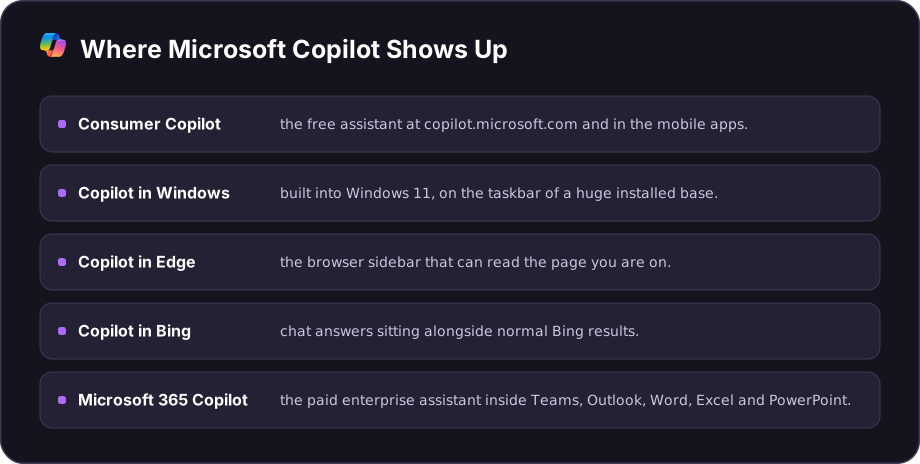
- Consumer Copilot at copilot.microsoft.com and in the Copilot mobile apps, the free assistant anyone can use.
- Copilot in Windows, built into Windows 11 and reachable from the taskbar on a huge installed base of machines.
- Copilot in Edge, the sidebar assistant that can read the page you are on and answer questions about the open web.
- Copilot in Bing, the chat answers that sit alongside and on top of normal Bing results.
- Microsoft 365 Copilot, the paid enterprise assistant inside Teams, Outlook, Word, Excel and PowerPoint that businesses pay for per user.
None of those surfaces show up in the search-share figures people use to dismiss Bing. Across all devices Bing holds only around 5% of the global search market according to StatCounter, and that low single-digit figure is what sceptics quote. It misses the point. Copilot and the AI answers it powers sit on top of Bing's index, so the real reach of that index is far wider than the raw percentage suggests, and the work to be visible in it is modest relative to the audience it unlocks.
How Microsoft Copilot Finds and Cites Your Content
To earn Copilot citations you need to know what is happening under the hood, because it changes where you put your effort.
The Model and the Index
Copilot is two parts working together: a language model that writes the answer, and a search index that feeds it facts. On the model side, the GPT-5.5 family Microsoft 365 Copilot runs on today will not be the latest for long, and that churn is the point for content owners: there is no longer a single model to optimise for, and chasing each new version is wasted effort, because it is the index feeding the model, not the model itself, that decides whether you get cited. On the index side, the part that matters for visibility, Copilot grounds its web answers in Bing's index through Microsoft's Grounding with Bing Search service. Copilot does not crawl the live web at the moment you ask it a question. It reaches into content Bing has already crawled, indexed and ranked, which means your Bing presence is the lever, not the model.
What Happens When You Ask Copilot a Question
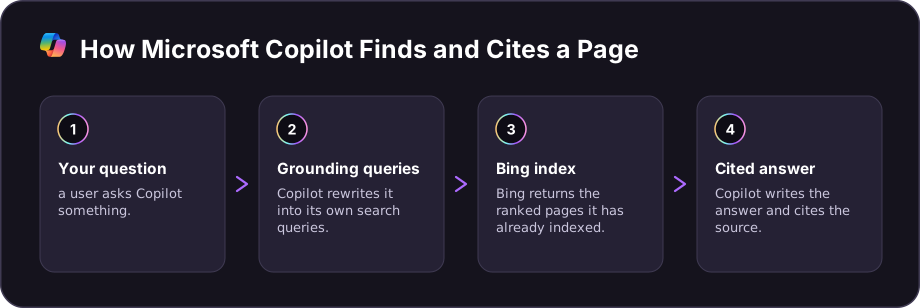
When someone asks Copilot something that needs current information, a predictable sequence runs behind the scenes:
- Copilot interprets the question and breaks it into the pieces of information it needs.
- It generates its own internal search phrases, called grounding queries, which are written for retrieval rather than for a human to read.
- Those queries hit Bing's index, and Bing returns the most relevant pages, snippets and citations.
- The model reads those results and composes a single summarised answer, attributing the sources it used.
In 2026 Microsoft rebuilt this grounding layer with a project it calls Web IQ, an AI-native retrieval system that reasons about how to search rather than just matching keywords. The mechanics will keep shifting, but the principle has been stable for years and is unlikely to change soon: if Bing has not crawled and indexed your page, Copilot has nothing to retrieve, and you cannot be cited. Bing's crawler, bingbot, is what does that indexing, and there is no separate Copilot crawler or index sitting beside it.
Why Copilot SEO Is Not the Same as ChatGPT or Google AI Overviews SEO
It is tempting to lump every AI assistant together and optimise once. The foundations do overlap, but the retrieval plumbing differs enough to change your priorities:
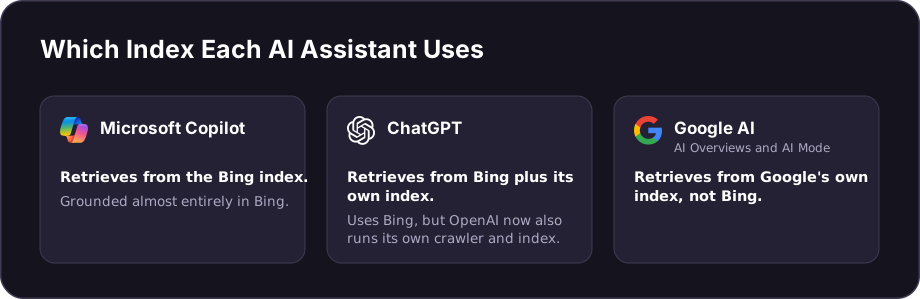
- Copilot leans hardest on Bing: As of mid-2026 its web answers are grounded almost entirely in Bing's index, which makes a strong Bing presence the most direct path to Copilot citations. The practical Bing setup work is its own topic, and we cover it in our companion Bing SEO guide.
- ChatGPT uses Bing too, but no longer only Bing: OpenAI now runs its own crawler and is building its own index alongside the search providers it draws on, so a Bing presence helps but is not the whole story. We break down what that means in our ChatGPT SEO guide.
- Google's AI features run on Google's own index, not Bing's: AI Overviews and AI Mode retrieve from Google, so the work that wins you Copilot citations does not automatically win you Google's, and the two behave differently. We compare them in our piece on AI Overviews versus AI Mode.
The reassuring part is that underneath these differences the job is the same one. The content engine that earns citations in ChatGPT, Perplexity and Google's AI features is the same engine that earns Bing and Copilot visibility, because every one of them is reading and ranking the open web. You are not building four strategies. You are building one and pointing it at several surfaces, and Copilot is one of the easiest to add.
The Microsoft Copilot SEO Playbook
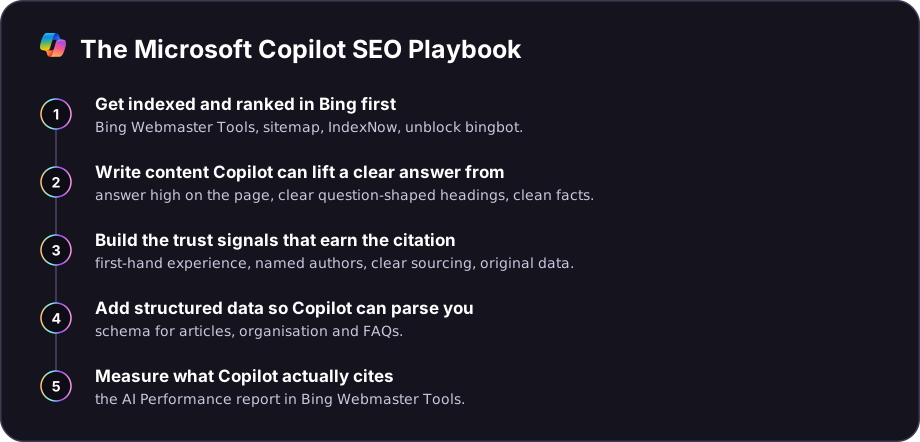
Here is the sequence we actually work through when we want a client cited by Copilot. It moves from "can Copilot find you at all" to "can it lift a clean answer from you" to "can you prove it is working".
Get Indexed and Ranked in Bing First
Nothing else matters until Bing has your pages. Verify your site in Bing Webmaster Tools, submit your sitemap, and use the IndexNow protocol so new and updated pages are pushed to Bing the moment they change rather than waiting for a crawl. Make sure nothing in your robots rules is blocking bingbot. The deeper Bing ranking work, on-page signals, authority and the differences from Google, is the same job we lay out in our Bing SEO guide, so treat that as the companion to this step rather than repeating it here.
Write Content Copilot Can Lift a Clear Answer From
Copilot is trying to pull a self-contained answer out of your page and hand it to a user. The pages that win citations make that easy without being written for a machine. In practice that means:
- Answer the question directly, high on the page, before the long explanation.
- Use clear headings that match how people actually phrase questions.
- Keep the key facts in clean prose, short paragraphs and lists rather than buried in marketing copy.
- Be specific and accurate, because an assistant that has to choose one source to quote favours the one it can trust at a glance.
The order there is deliberate. You write for the human reader first, and the structure that helps a reader skim is the same structure that lets an assistant extract a passage. If you want the mechanics of how AI systems read and pull from a page, we go deep on it in how AI search works.
Build the Trust Signals That Earn the Citation
When several pages can answer a question, Copilot has to pick one to cite, and trust is the tie-breaker. First-hand experience, named authors with real credentials, clear sourcing and genuine original data all push you up that list. This is where most thin, generic content quietly loses: it is technically relevant but there is no reason to trust it over anyone else. Demonstrable expertise is the single biggest lever we pull to move a client from "indexed" to "cited".
Add Structured Data So Copilot Can Parse You
Schema markup describes what is already on your page in a format machines read cleanly. It is not a magic trick and it never substitutes for the body content, but non-Google assistants like Copilot lean on structured data more than Google does when they parse a page, so it is worth doing properly. Mark up your articles, your organisation and your FAQs, and never describe content in schema that a reader cannot also see on the page.
Measure What Copilot Actually Cites
Until recently you were guessing about AI citations. That changed when Microsoft launched the AI Performance report in Bing Webmaster Tools as a public preview in February 2026, the first dashboard that shows which of your pages get cited in Copilot answers. In June 2026 Microsoft expanded it with intent labels, topic groups, citation share and comparison tools. It only covers Microsoft surfaces for now, but for Copilot specifically it turns citation tracking from a guess into a number you can watch. To track visibility across the other assistants at the same time, a dedicated tracker helps, and we compare the options in our review of the best AI visibility tools.
Microsoft 365 Copilot: The Enterprise Layer Most Guides Miss
Almost every Copilot SEO article stops at the consumer assistant. If you sell to businesses, the enterprise layer is where the money is, and it works differently. Microsoft 365 Copilot is grounded first on the Microsoft Graph, the private data inside a company's own tenant: its SharePoint sites, OneDrive files, Teams chats and Exchange mailboxes. Web content only enters the picture when an administrator turns on web grounding, at which point Copilot can also reach the public web through Bing, exactly as the consumer version does.
For a business trying to be found, two things follow from that:
- Inside your own organisation, the content that surfaces in Copilot is your internal material, so well-structured intranet pages, documentation and policies decide what your own staff get cited back to them.
- Inside your buyers' organisations, your public website only appears in their enterprise Copilot when web grounding is enabled and your page ranks in Bing for the query. The same Bing-first foundation applies, it just has an extra gate in front of it.
Microsoft also lets companies extend Copilot to outside systems through Copilot Connectors for tools like Salesforce, ServiceNow and Confluence, which matters if your buyers live in those platforms. The takeaway is simple: B2B visibility in Copilot is still won by ranking your public content in Bing, with the enterprise grounding rules sitting on top.
What We Have Learned Getting Clients Cited by AI
The reason we are confident about this playbook is that we have run it. For one B2B property management client we took AI citations from zero to 138 over an engagement that drove $5.9 million in attributed revenue, and making sure every AI surface, Copilot included, could crawl and trust the content was part of that work. The lesson we give every client afterwards is the same: AI citations are a KPI in their own right, a leading indicator that revenue is coming, and we track them alongside rankings rather than instead of them.
The other lesson is that Copilot is not a side project. The foundation that earns a citation in Copilot, indexable pages, clear answers, real trust signals, is the same foundation that earns one in ChatGPT, Perplexity and Google's AI features. Get it right once and you get found in several places at once. That is the whole basis of how we build an AI SEO strategy: get the foundations right, then point them at every surface your buyers use.
Frequently Asked Questions
Does Microsoft Copilot Use Bing?
Yes. Copilot grounds its web answers in Bing's search index rather than crawling the web live, so when it needs current information it retrieves and cites pages Bing has already indexed. That is why a strong Bing presence is the most direct route to being cited by Copilot.
How Do I Get My Business to Show Up in Microsoft Copilot?
Start by getting your site indexed and ranked in Bing through Bing Webmaster Tools and the IndexNow protocol, since Copilot can only cite pages Bing has indexed. Then structure your content so an assistant can lift a clear, accurate answer from it, and build the trust signals, real expertise, named authors and clean sourcing, that make Copilot choose your page over a competitor's.
Is Microsoft Copilot SEO Different From ChatGPT SEO?
They share the same foundations but differ in retrieval. Copilot grounds almost entirely in Bing's index, while ChatGPT leans on Bing yet also runs its own crawler and index, so a Bing presence helps both but is the whole game for Copilot and only part of it for ChatGPT. The underlying content work, indexable pages and citable answers, is the same for both.
Does Microsoft Copilot Cite Its Sources?
Yes. When Copilot answers a question using live web information, it attributes the pages it drew from, which is exactly why being in Bing's index and being the most trustworthy answer matters. You can now see which of your pages get cited using the AI Performance report in Bing Webmaster Tools.
What Is the Difference Between Microsoft 365 Copilot and Consumer Copilot for SEO?
Consumer Copilot answers from the public web via Bing, so ranking your public pages in Bing is what gets you cited. Microsoft 365 Copilot is grounded first on a company's own internal data in the Microsoft Graph and only reaches the public web when an administrator enables web grounding, so your external content still needs to rank in Bing to appear inside a buyer's enterprise Copilot.
How Is Copilot SEO Different From Google AI Overviews SEO?
The key difference is the index behind each one. Copilot retrieves from Bing's index, while Google's AI Overviews and AI Mode retrieve from Google's own index, so optimising for one does not automatically win you the other. The content foundations overlap, but you need a presence in both Bing and Google to be cited across both.
What Is the Bing Webmaster Tools AI Performance Report?
It is a free dashboard Microsoft launched in public preview in February 2026 that shows which of your pages are cited in Copilot and Bing AI answers, and how that changes over time. A June 2026 update added intent labels, topic groups, citation share and comparison views. It currently covers Microsoft surfaces only, so it is the most direct way to measure Copilot visibility specifically.
How Long Does It Take to Get Cited by Microsoft Copilot?
There is no fixed timeline, but the first dependency is Bing indexing, which can happen within days of submitting pages through Bing Webmaster Tools and IndexNow. Earning consistent citations then depends on ranking well in Bing and building the trust signals that make Copilot choose your page, which is an ongoing effort rather than a one-off switch.
The Easiest Door Into AI Search
Microsoft Copilot is not a niche curiosity, it is a mainstream assistant sitting inside the software hundreds of millions of people already use, and it answers their questions by citing the open web through Bing. That makes Copilot SEO one of the easiest, least competitive ways to get in front of AI users in 2026, because the setup work is modest and most of your competitors are not doing it yet. Get indexed in Bing, write content an assistant can trust and quote, prove it with the AI Performance report, and you turn an overlooked channel into a steady source of visibility.
If you want help turning Copilot, ChatGPT and Google's AI answers into a single visibility engine rather than four separate scrambles, our team builds and runs that strategy end to end. See how our AI SEO strategy work fits together.
About the Author
Want Insights Like This Fortnightly?

Our AI SEO strategies and tactics delivered fortnightly, including bonus trade secrets not shared anywhere else. No fluff. Just what's working right now. 5-minute read.


