
Authority Score Explained: What It Is, What Counts as Good and Whether It Actually Affects Rankings


Open any SEO tool and you will see a single number scoring your website's authority, and it is hard not to fixate on it. The trouble starts when people treat their authority score as a Google ranking factor and start chasing it, pouring budget into lifting a number that Google does not actually read. An authority score is a useful diagnostic, but only once you understand what it measures and how to read it. This guide explains what an authority score is, what counts as a good one and whether it genuinely affects your rankings and AI visibility. By the end you will know which number to watch, which to ignore and where to spend your effort instead.
What Is an Authority Score?
An authority score is a 0 to 100 rating that an SEO tool assigns to a website to estimate how strong its backlink profile and overall authority are. The best-known version is Semrush's Authority Score, though Moz, Ahrefs and Majestic each publish their own equivalent. None of these scores is a Google metric or a direct ranking factor, so they are best read as third-party diagnostics, compared against the pages already ranking for your query.
Build the Authority These Scores Only Measure
Every authority score is really trying to estimate one thing: whether the rest of the web treats your site as credible. Our link building agency earns the relevant, high-quality backlinks and brand mentions that build exactly that, so you lift the number by strengthening the authority underneath it rather than chasing the score itself.
Build Your Site's AuthorityWhat Authority Score Actually Measures
"Authority Score" is a proper noun. It is the name Semrush gives its own 0 to 100 metric, and much of the confusion around the term comes from people using it as a generic label for a group of scores that are calculated differently and owned by different companies. Getting the names straight is the first step to reading them properly.
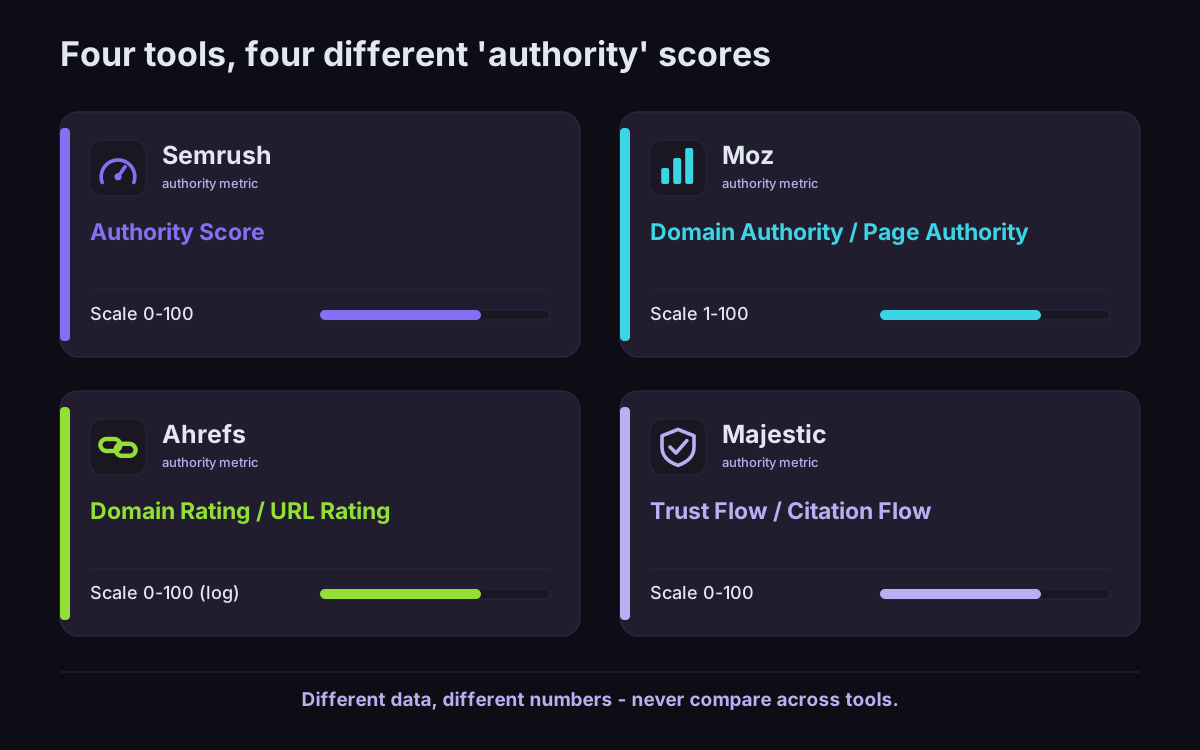
The scores people mix up come from four separate tools, each built on that tool's own web index:
- Authority Score: Semrush's 0 to 100 metric, and the one people usually mean when they say "authority score"
- Domain Authority and Page Authority: Moz's scores for a whole domain and an individual page
- Domain Rating and URL Rating: Ahrefs' scores for a domain and a single URL
- Trust Flow and Citation Flow: Majestic's paired scores for link quality and link quantity
You will also see people search for a "Google authority score." There is no such thing. Google has never published a public authority number for your website, and its representatives have said plainly that no single "authority" score sits inside the ranking systems. The four scores above exist precisely because Google does not hand you one, so each tool built its own estimate from the link data it can see.
How Authority Score Is Calculated
Each tool guards its exact formula, but the broad inputs are known, and they differ enough to explain why the same website can score 45 in one tool and 62 in another. Semrush is the most transparent about its method, so it is the clearest place to start.
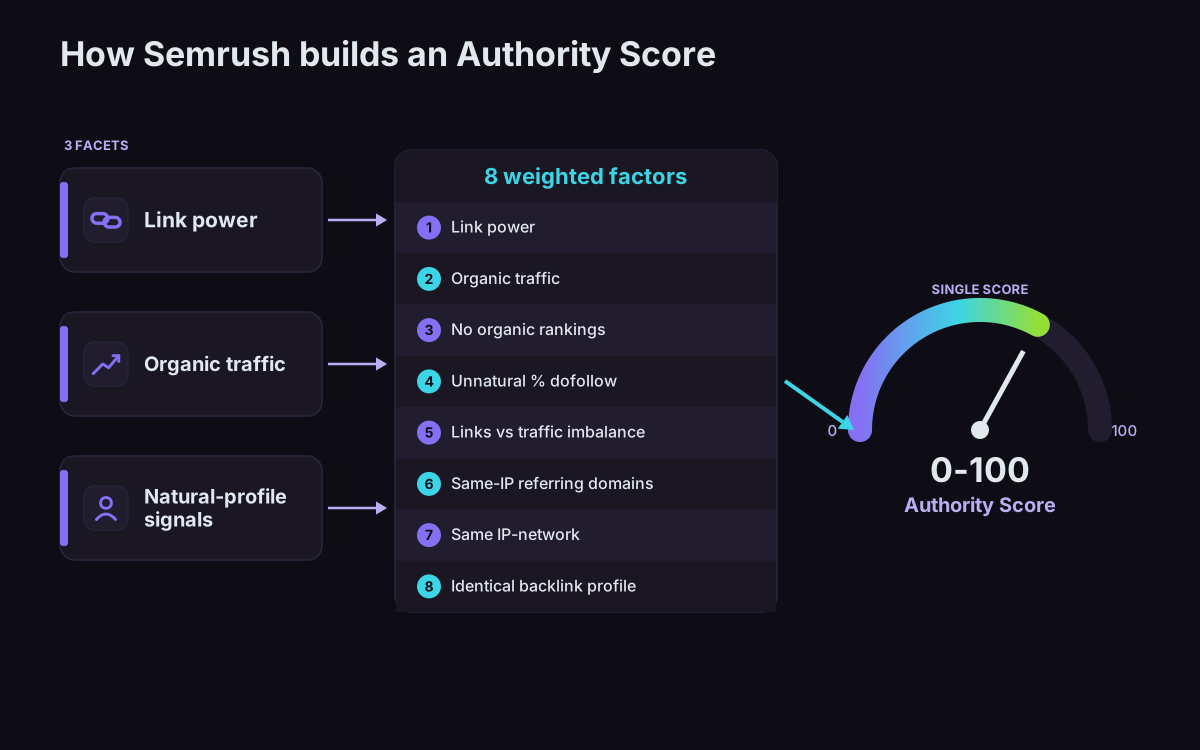
Semrush builds its Authority Score from three facets. It weighs your link power (the quality and quantity of your backlinks) and your organic search traffic, then layers on signals that judge how natural your link profile looks. Those three facets expand into eight weighted factors that the score rewards or penalises:
- Link power, from the quality and quantity of referring domains
- Estimated organic search traffic
- A domain with no organic rankings, which looks weaker
- An unnaturally high percentage of followed (dofollow) referring domains
- An imbalance between the number of links and the amount of organic traffic
- Too many referring domains on the same IP address
- Too many referring domains on the same IP network
- Another domain with an identical backlink profile, a common sign of manipulation
Semrush recalculates the Authority Score roughly every two weeks. The other tools weigh the web differently:
- Moz Domain Authority: A machine-learning model trained on Moz's link index to predict how well a site could rank, expressed on a 1 to 100 scale where new sites start at 1
- Ahrefs Domain Rating: A purely link-based, logarithmic score that measures the strength of your backlink profile and deliberately ignores traffic and spam
- Majestic Trust Flow and Citation Flow: Trust Flow rates how close your links sit to a manually reviewed set of trusted seed sites, while Citation Flow measures raw link volume
Authority Score vs Domain Authority vs Domain Rating
Reading the scores side by side makes the differences obvious, and it shows why you should never compare a Semrush number against a Moz or Ahrefs number directly. The table below lines up all four metric families on the things that actually matter.
What Counts as a Good Authority Score
There is no universal cut-off for a "good" score, and any tool owner will tell you the same. The bands below are a rough, directional orientation only, not an official scale from Semrush, Moz, Ahrefs or Majestic:
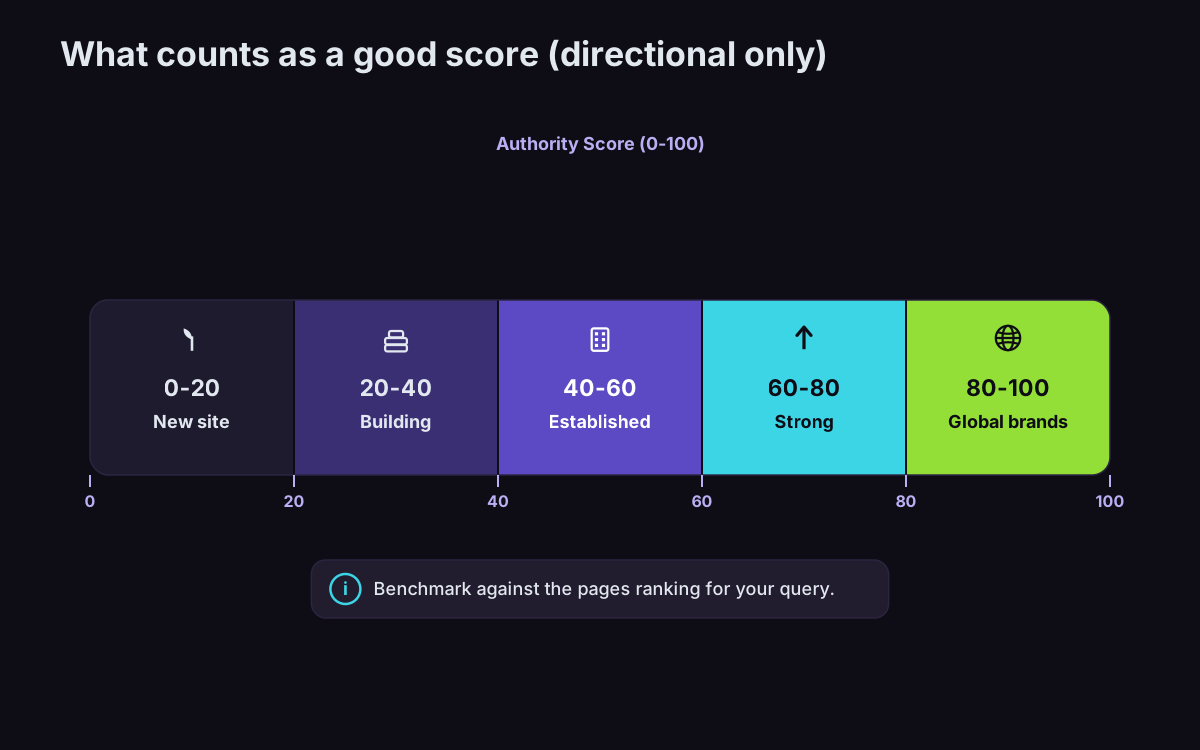
- 0 to 20: New or low-authority sites
- 20 to 40: Sites still building a link profile
- 40 to 60: Established sites that compete in many niches
- 60 to 80: Strong, well-linked sites
- 80 to 100: The largest global brands
Treat those numbers loosely, because the only score that matters is yours measured against the sites already ranking for your target query. The practical way to benchmark is simple. Pull the top ten results for the keyword you want, check their scores in your tool of choice and read off the range. If those pages sit at 30 to 40 and you are at 45, authority is not what is holding you back. If they sit at 70 and you are at 25, you know the gap you need to close.
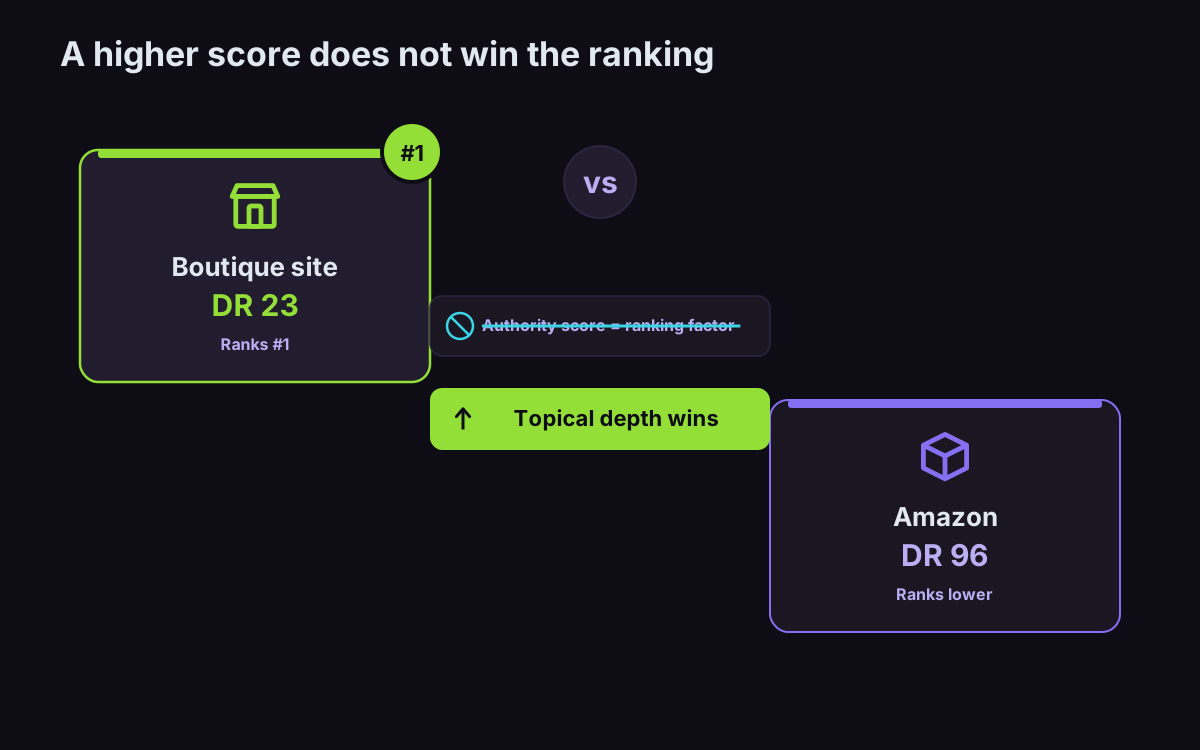
The number is also not destiny. In our own topical authority work, a boutique retailer with a domain rating of 23 outranks Amazon, which carries a domain rating of 96, for a product query, because the smaller site covers the topic in far greater depth. Relevance and topical depth routinely beat a bigger authority number, which is exactly why the score is a starting point for analysis, not a target.
How to Check Your Authority Score
Every tool that publishes an authority metric lets you look one up, and most offer a free check for a single domain before you hit a paywall. The main options are:
- Semrush Website Authority Checker: Returns the Authority Score for any domain for free, with the full backlink breakdown on a paid plan
- Moz Link Explorer: Shows Domain Authority and Page Authority, with a limited number of free lookups
- Ahrefs: Reports Domain Rating and URL Rating in Site Explorer, plus a free Website Authority Checker
- Majestic: Reports Trust Flow and Citation Flow, with some data available free
Because each tool uses its own index, the numbers will disagree, so pick one and track it over time rather than reading across tools.
How to Improve Your Authority Score
You cannot edit an authority score directly. You lift it by improving what the score measures, and the work that moves it falls into four areas. Focus your effort here, not on the number itself.
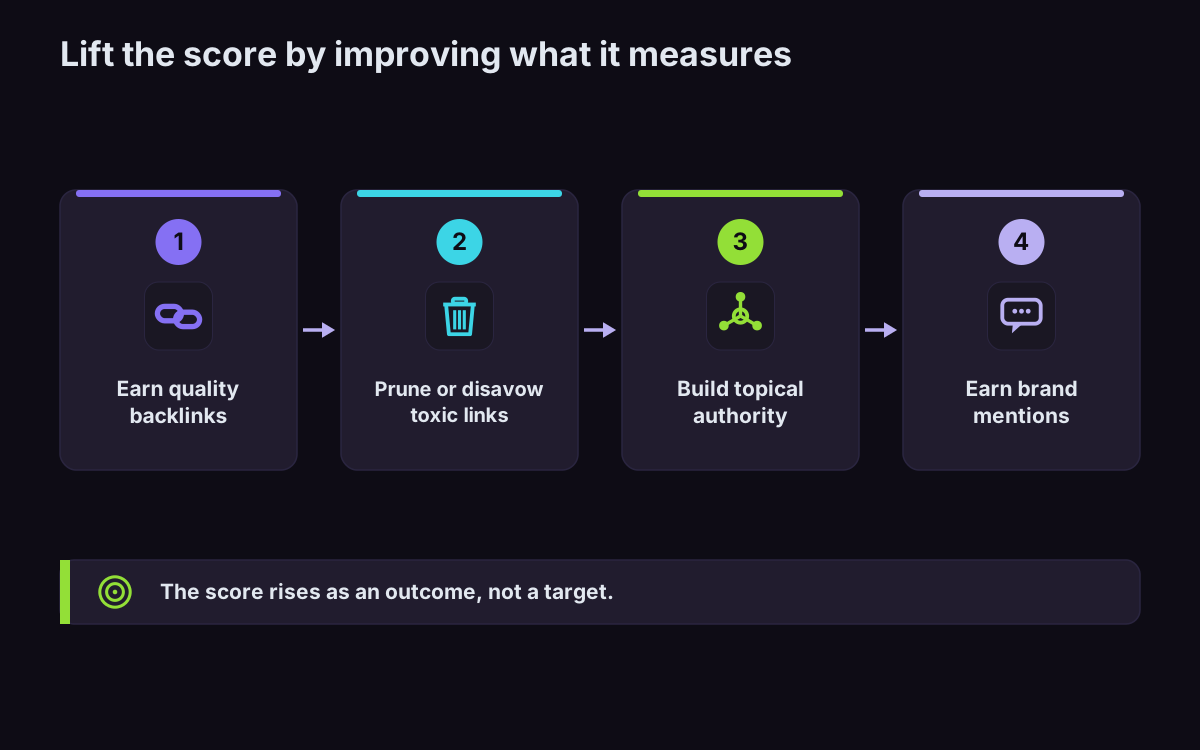
Earn Quality, Relevant Backlinks
The biggest driver of every authority score is your backlink profile, so earn links from relevant, credible sites rather than chasing volume. Backlinko's analysis of 11.8 million search results found that the number one result has, on average, 3.8 times more backlinks than the pages ranking below it, so quality links still move competitive rankings. Editorial links, digital PR and genuinely useful resources are the tactics that hold up, and our guide to building backlinks breaks down which ones are worth your time.
Prune or Disavow Toxic Links
A profile stuffed with spammy, irrelevant links can weigh some scores down, so audit your backlinks and disavow the genuinely toxic ones. Use your tool's toxicity view to find them, and only reach for Google's disavow tool when you have links you cannot get removed, since misusing it can do more harm than good.
Build Topical Authority Through Content
Publish interconnected content that covers your subject in depth, because thorough topic coverage is what earns links and citations at the same time. Depth is also what let that boutique retailer outrank Amazon, and it compounds in a way that buying links never will.
Earn Brand Mentions
Work to get your brand named across the web, because mentions and citations feed the same reputation these scores try to estimate. Reviews, unlinked mentions, podcasts and coverage on relevant sites all count, and our off-page SEO playbook shows how to build that external footprint deliberately.
One warning on wasted effort. Semrush is clear that several common tactics do not raise your Authority Score:
- Adding more pages: Publishing extra URLs does nothing for the score on its own
- More links from the same domain: Additional links from a site that already links to you add very little
- Low-quality directories: Bulk directory submissions do not help and can invite trouble
Does Authority Score Affect Google Rankings?
No, not directly. An authority score is a third-party estimate of your link strength, and Google does not read it, feed it into its systems or reward you for a higher number. The people who build these scores are usually the first to say so:
- Google: John Mueller has stated, "We don't use domain authority at all in our algorithms," and has repeated the point for years
- Moz: The owner of Domain Authority says plainly that it is not a Google ranking factor and has no effect on the search results
- Ahrefs: Its help documentation states there is "no evidence that search engines use Domain Rating (or similar scores such as Domain Authority) as a ranking factor at all"
So treat every authority score as a diagnostic and a leading indicator, tracked alongside your rankings and revenue, never as a target in its own right. The authority that actually pays is the kind that compounds into pipeline. For one B2B property management client, building genuine authority produced about $8.7M in attributed organic-and-AI revenue over 27 months (ongoing), and their referring domains grew from 19 to 85 with no paid link building at all. The score followed the work, not the other way around.
Does Authority Score Matter for AI Search?
Third-party authority scores are no more a ranking factor for AI search than they are for Google. ChatGPT, Perplexity, Gemini and Google's AI Overviews do not check your Domain Rating before citing you. They pull answers from sources they can find, parse and trust, which means the levers are different from the ones a single score tracks.
What actually earns AI citations is not a score at all:
- Topical authority: Deep, interconnected coverage that answers the adjacent questions AI systems ask
- Citation-worthy content: Original data, clear structure and answers a model can lift cleanly
- Brand mentions: Being named across the web, so AI systems keep meeting you as a source
The data backs this up. Ahrefs' study of 75,000 brands found that branded web mentions and branded anchors correlated more strongly with AI Overview visibility than backlinks or Domain Rating did. Authority scores try to estimate the same underlying reputation, but the way to get cited is to build that reputation directly, not to grind a number upward.
Frequently Asked Questions
Is authority score a Google ranking factor?
No. Authority scores are built by third-party tools like Semrush, Moz and Ahrefs, and Google does not use them in its ranking systems. Google's John Mueller has said Google does not use domain authority at all, and both Moz and Ahrefs confirm the same about their own metrics.
What is a good authority score?
There is no fixed threshold. As a rough guide, scores above 40 to 50 suggest an established site and 60-plus suggests a strong one, but those bands are directional. The score that matters is yours compared with the pages currently ranking for the query you want.
What is the difference between authority score and domain authority?
Authority Score is Semrush's metric and Domain Authority is Moz's, and they are calculated from different data, so their numbers are not comparable. Semrush factors in organic traffic and profile quality alongside links, while Moz uses a machine-learning model trained on its own link index.
Is there a Google authority score?
No. Google has never published a public authority score for your website, and its representatives say no single authority number sits inside the ranking systems. Any "authority score" you see comes from a third-party tool estimating strength from the link data it can access.
Why did my authority score drop?
Scores move whenever the tool refreshes its index, so a drop can reflect lost backlinks, a competitor gaining links, a recalculation of the underlying model or simply cleaner data. A small dip is usually noise. Look at the trend over several months and at your rankings and traffic before you act.
Can a site with a low authority score outrank a higher-scored one?
Yes, and it happens constantly. Relevance, search intent and topical depth often outweigh a bigger authority number, so a focused niche site can beat a broad, high-scored one on the topics it covers best. A low score is a reason to investigate, not a verdict.
How often does an authority score update?
It depends on the tool. Semrush recalculates Authority Score roughly every two weeks, Ahrefs updates Domain Rating continuously as it refreshes its index and Moz and Majestic update with their own index cycles. Judge progress over months, not days.
Does authority score help me get cited by AI search?
Not directly. AI platforms do not read your authority score when deciding what to cite. Topical authority, genuinely useful content and brand mentions are what earn citations, and branded mentions in particular correlate more strongly with AI visibility than link-based scores do.
Read the Score, Build the Authority
An authority score is a helpful mirror and a poor master: it reflects how the web sees your site, but Google and AI platforms never read the number itself, so chasing it in isolation is wasted budget. Use it the way we do, as a diagnostic to benchmark against the pages you want to beat, then put your effort into the links, depth and mentions that move it for real. Do that and the score climbs on its own, because you have built the authority underneath it. That is the version of authority that shows up in rankings, in AI citations and, in the end, in revenue.
About the Author
Want Insights Like This Fortnightly?

Our AI SEO strategies and tactics delivered fortnightly, including bonus trade secrets not shared anywhere else. No fluff. Just what's working right now. 5-minute read.


