
9 Best Enterprise SEO Tools in 2026 (Tested and Ranked)

Quick Summary:
I’ve spent years working with enterprise SEO tools across client campaigns that have generated over $26M in revenue, and I’ve evaluated these nine platforms through a mix of hands-on use, official documentation and independent reviews to highlight the tools that actually deliver results for large-scale organisations.
- Ahrefs Enterprise: Best for all-in-one SEO intelligence and backlink analysis
- Semrush Enterprise: Best for automated workflows and customisation
- BrightEdge: Best for executive reporting and ROI attribution
- seoClarity: Best for AI-powered SEO automation at scale
- Conductor: Best for cross-team collaboration and content intelligence
- Botify: Best for technical SEO and crawl optimisation
- Lumar: Best for continuous website monitoring
- Screaming Frog SEO Spider: Best for on-demand technical audits
- Searchmetrics: Best for global and multilingual SEO campaigns
Managing SEO at the enterprise level is a fundamentally different discipline from optimising a small business website. You're dealing with hundreds of thousands of pages, multiple stakeholders across departments and the constant challenge of proving ROI to leadership teams who want hard numbers.
Standard SEO tools simply can't keep up with that level of complexity. Enterprise SEO tools are built to handle massive datasets, automate repetitive workflows at scale and deliver the kind of reporting that keeps C-suite executives aligned with your organic growth strategy. The right platform becomes your command centre for everything from technical audits to content optimisation to competitive intelligence.
I've evaluated these nine tools based on hands-on experience managing enterprise SEO campaigns across multiple client verticals. This guide cuts through the marketing noise to show you which tools actually deliver for large-scale organisations and where each one falls short.
Why Trust This Review
I've been working with enterprise SEO tools for over a decade, managing campaigns across B2B, B2C, SaaS and eCommerce verticals. My team at Rankmax has generated over $26M in attributed client revenue through organic search strategies, and we use several of these tools daily in our workflow.
For this review, I evaluated each tool based on five weighted criteria:
- Scalability and data handling (25%)
- Technical SEO capabilities (20%)
- Reporting and ROI attribution (20%)
- Content optimisation features (20%)
- Ease of collaboration (15%)
Where I have direct experience with a tool, I share specific observations from using it in live campaigns. Where my experience is limited, I clearly note that the review draws on official documentation and verified user feedback.
Each tool's "My Experience" section tells you exactly how my assessment was formed, so you can weigh my recommendations accordingly.
Enterprise SEO Tools Compared
| Tool | Best For | Starting Price | Free Trial | Key Strength | Action |
|---|---|---|---|---|---|
| Ahrefs Enterprise | All-in-one SEO intelligence | $1,499/mo | No | Industry-leading backlink index and data accuracy | Get Started |
| Semrush Enterprise | Automated workflows | Custom pricing | Yes (7-14 days) | AI-powered automation and largest keyword database | Start Free Trial |
| BrightEdge | Executive reporting | Custom (~$4,000+/mo) | No | ROI attribution and AI-powered content recommendations | Get Started |
| seoClarity | AI automation at scale | $2,500/mo | No | Bulk automation across millions of pages | Get Started |
| Conductor | Cross-team collaboration | Custom (~$12,000+/yr) | No | Content intelligence and cross-department alignment | Get Started |
| Botify | Technical SEO | Custom pricing | No | Deep crawl analysis and log file integration | Get Started |
| Lumar | Continuous monitoring | Custom pricing | No | Automated testing and scheduled crawl comparisons | Get Started |
| Screaming Frog | On-demand audits | Free / £259/yr | Yes (free version) | Fast desktop crawling with deep customisation | Start Free Trial |
| Searchmetrics | Global SEO | Custom pricing | No | Multi-market visibility and localisation support | Get Started |
1. Ahrefs Enterprise
Best for: All-in-one SEO intelligence and backlink analysis
Pricing: From $1,499/mo (annual commitment) | Free trial: No (free Webmaster Tools available)
Overview
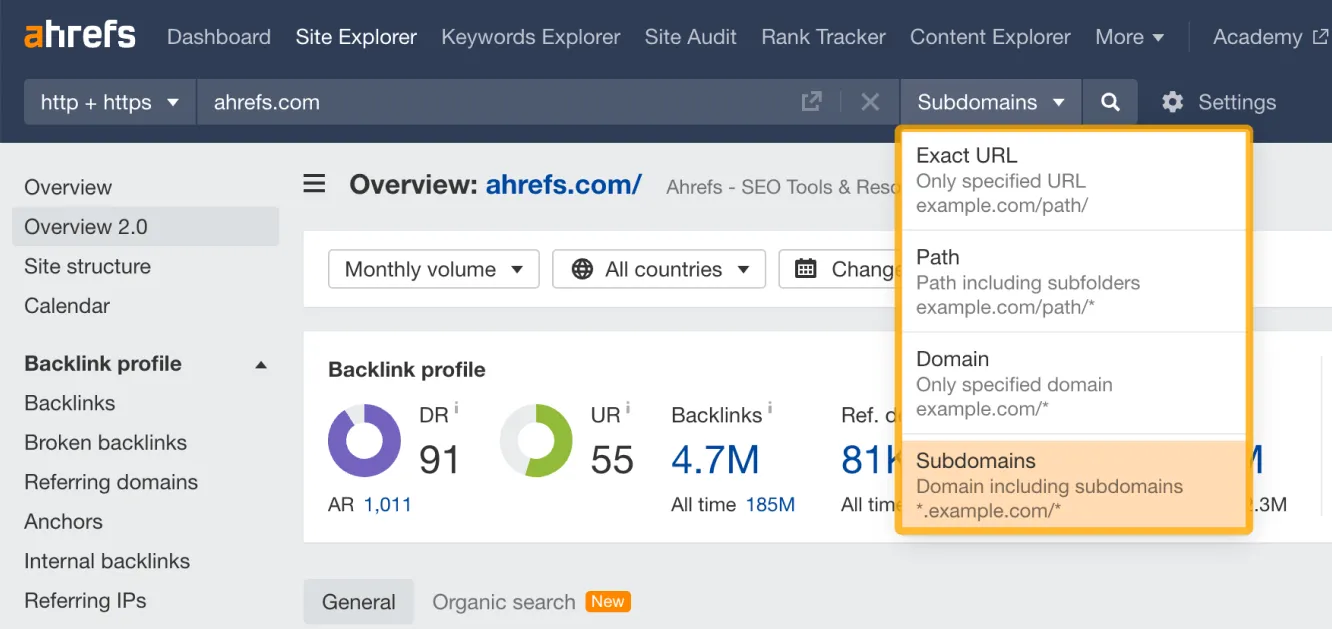
Ahrefs Enterprise is the scaled-up version of one of the most trusted SEO platforms in the industry. Powered by the world's second-most active web crawler (after Google), it provides unmatched data accuracy for backlink analysis, keyword research, competitive intelligence and site auditing. The Enterprise tier adds higher API limits and controls, advanced management tools like audit logs and SSO, and significantly higher data limits designed for large organisations managing multiple domains across regions.
My Experience
[PERSONAL EXPERIENCE PLACEHOLDER - TOOL: Ahrefs Enterprise]
For James to complete in Pass 2:
- When did you use this tool? (Currently using / Used in [year] / Haven't used personally)
- What specific tasks did you use it for?
- What worked well in your workflow?
- What limitations or frustrations did you encounter?
- Any specific results or observations?
If you haven't used this tool: Note "Documentation-based review" and I'll adjust the framing accordingly.
[END PLACEHOLDER]
Key Features
- Site Explorer: Analyse any domain’s organic traffic, backlink profile, top pages and content gaps using one of the largest backlink indexes, with over 35 trillion known links.
- Keywords Explorer: Research keyword opportunities across 10 search engines with accurate difficulty scores, click metrics and SERP analysis to inform your content strategy.
- Brand Radar: Monitor brand visibility across seven AI platforms, including Google AI Overviews, ChatGPT, Perplexity, Gemini, Copilot, AI Mode and Claude, with custom prompts on daily, weekly or monthly cadences.
- API access: Ahrefs API v3 is available from Lite upwards for custom reporting, data lake integration and automated workflows that connect with your existing tools, with Enterprise still offering the highest limits and controls.
Pros
- Industry-leading backlink index with one of the most comprehensive and reliable link datasets available, essential for competitive analysis and link building at scale
- Brand Radar provides AI citation monitoring across seven AI platforms including Claude, a capability most enterprise tools still lack
- Clean, intuitive interface that requires minimal training compared to other enterprise-grade platforms
Cons
- Enterprise plan starts around $1,499/mo with annual commitment, which is a significant investment, though competitive with dedicated enterprise platforms
- No free trial for Enterprise tier means you need to commit before fully evaluating the platform's enterprise-specific features
Verdict
Ahrefs Enterprise is ideal for organisations that need best-in-class backlink intelligence, accurate keyword data and AI search visibility monitoring in a single platform.
Choose Ahrefs Enterprise if: You want the most reliable all-in-one SEO dataset with enterprise controls and AI search monitoring built in.
Skip Ahrefs Enterprise if: You need deep CMS integrations, cross-team collaboration workflows or executive-ready ROI dashboards out of the box.
2. Semrush Enterprise
Best for: Automated workflows and customisation at scale
Pricing: Custom pricing | Free trial: Yes (7-14 days for standard plans)
Start Free Trial | View Pricing
Overview
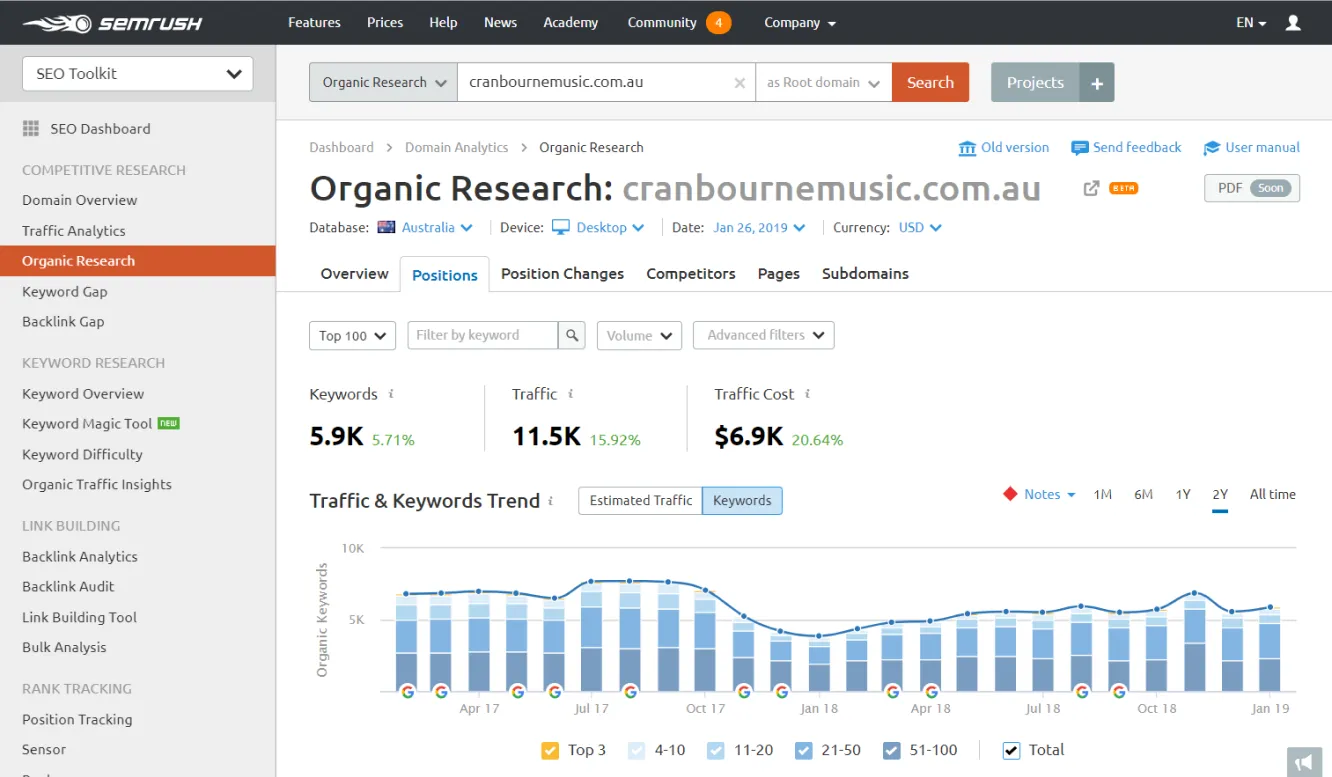
Semrush Enterprise is a purpose-built platform separate from Semrush’s standard subscription tiers. It combines one of the largest keyword databases on the market, with Semrush reporting coverage of around 21 billion keywords and 43 trillion backlinks, and AI-powered automation designed specifically for large organisations. Used by enterprise brands like Salesforce, Samsung and TikTok, it offers customised workflows, integrated data lakes and access to vetted SEO consultants through the platform.
My Experience
[PERSONAL EXPERIENCE PLACEHOLDER - TOOL: Semrush Enterprise]
For James to complete in Pass 2:
- When did you use this tool? (Currently using / Used in [year] / Haven't used personally)
- What specific tasks did you use it for?
- What worked well in your workflow?
- What limitations or frustrations did you encounter?
- Any specific results or observations?
If you haven't used this tool: Note "Documentation-based review" and I'll adjust the framing accordingly.
[END PLACEHOLDER]
Key Features
- AI-Powered Workflow Automation: Automates core SEO workflows such as technical auditing, internal linking recommendations and content optimisation using AI-assisted insights.
- Integrated Reporting Hub: Centralises data from sources like Google Search Console, Google Analytics and APIs into unified enterprise reporting dashboards.
- AI Visibility Tracking: Track visibility across AI-driven search environments such as Google AI Overviews and emerging answer engines.
- Expert Marketplace: Connect with Semrush-vetted SEO consultants and freelancers directly through the platform, skipping lengthy hiring processes for complex projects.
Pros
- The largest keyword database in the industry provides unmatched depth for competitive research and opportunity identification across markets
- AI-powered automation can reduce month-long manual SEO projects to hours, particularly for bulk internal linking and content optimisation at scale
- Semrush One bundles SEO and AI Visibility toolkits together, reducing the need for multiple platform subscriptions
Cons
- Enterprise plans from Semrush require customised onboarding and setup beyond standard subscriptions, which can temporarily disrupt established workflows during implementation.
- The sheer volume of features and toolkits can be overwhelming for new users, requiring significant onboarding time for full team adoption
Verdict
Semrush Enterprise is ideal for large organisations that need maximum data depth, AI-powered automation and a customisable platform that scales with their growth.
Choose Semrush Enterprise if: Your team needs the largest SEO dataset available with powerful automation to handle millions of pages efficiently.
Skip Semrush Enterprise if: You're primarily looking for a deep technical SEO crawler or need transparent, self-serve pricing.
3. BrightEdge
Best for: Executive reporting and ROI attribution
Pricing: Custom pricing (~$4,000+/mo) | Free trial: No (demo available)
Overview
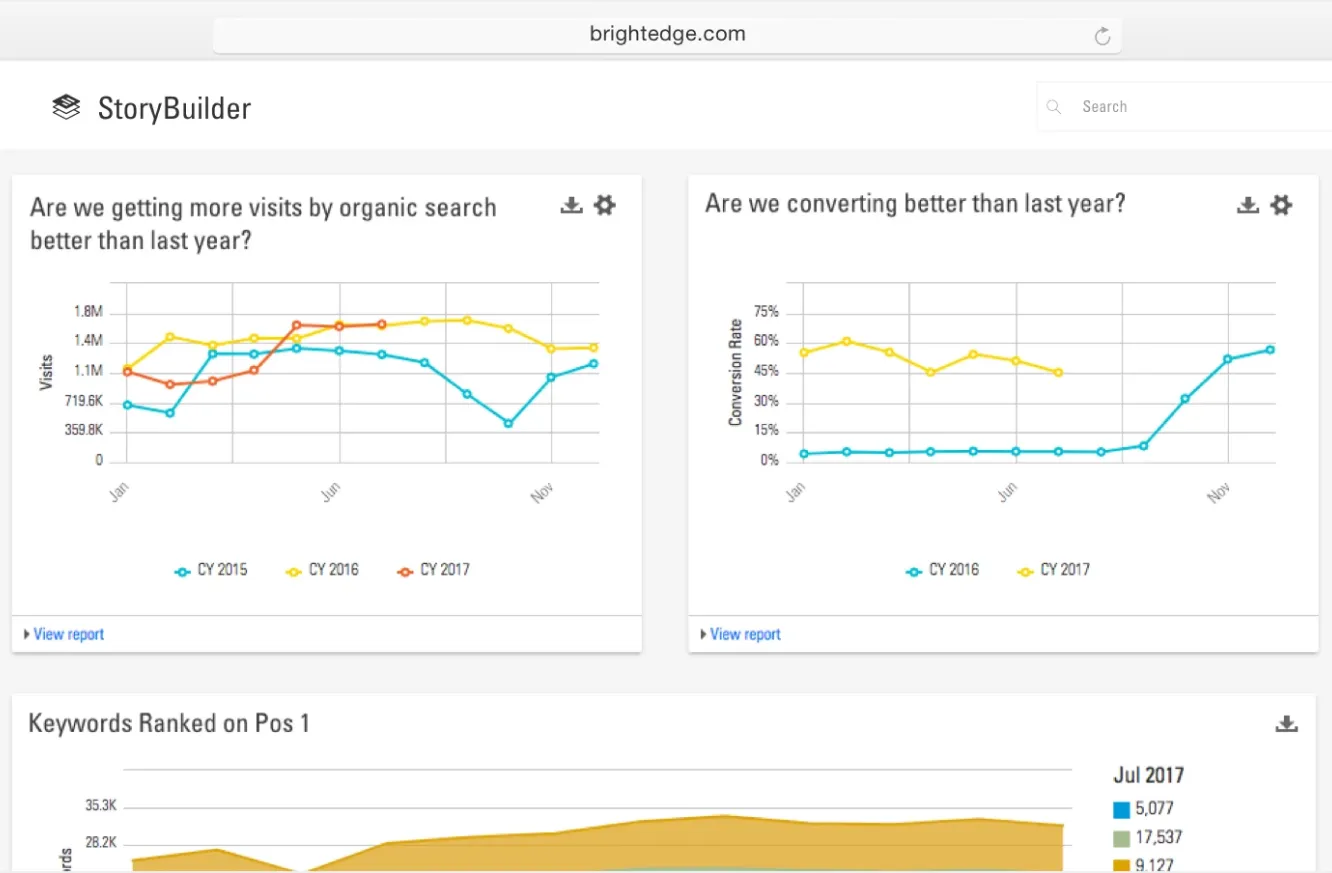
BrightEdge is an enterprise SEO platform that serves over 57% of the Fortune 100. Rather than focusing primarily on tactical SEO execution, BrightEdge positions itself as the business intelligence layer for organic search. It helps CMOs and growth leaders connect SEO performance directly to revenue, pipeline and customer acquisition costs, making it particularly valuable for organisations where proving SEO's business impact is the primary challenge.
My Experience
[PERSONAL EXPERIENCE PLACEHOLDER - TOOL: BrightEdge]
For James to complete in Pass 2:
- When did you use this tool? (Currently using / Used in [year] / Haven't used personally)
- What specific tasks did you use it for?
- What worked well in your workflow?
- What limitations or frustrations did you encounter?
- Any specific results or observations?
If you haven't used this tool: Note "Documentation-based review" and I'll adjust the framing accordingly.
[END PLACEHOLDER]
Key Features
- StoryBuilder: Create automated, visual dashboards that translate SEO data into business metrics like revenue attribution, conversion rates and pipeline impact for leadership presentations
- Data Cube: Access one of the longest-running commercial SEO datasets, covering billions of keywords with extensive historical ranking data for trend analysis
- ContentIQ: Run site-wide technical audits at enterprise scale, prioritising errors by business impact rather than just technical severity
- AI Catalyst: Track your brand’s visibility across AI-driven search experiences such as Google AI Overviews and other emerging AI-enhanced SERP features
Pros
- Strong executive reporting capabilities that connect SEO performance to business KPIs such as revenue, pipeline and customer acquisition cost
- Trusted by more than half of Fortune 100 companies, providing valuable benchmarking insights
- AI Catalyst extends visibility tracking into emerging AI search experiences alongside traditional SERP monitoring
Cons
- Pricing is not transparent and sits at the higher end of enterprise platforms, making budget planning difficult without engaging the sales team
- On-page SEO recommendations are often described as generic by users who compare them to purpose-built content optimisation tools
Verdict
BrightEdge is ideal for enterprise organisations where the primary challenge is proving SEO's business impact to C-suite stakeholders and connecting organic performance to revenue.
Choose BrightEdge if: You need to build executive buy-in for SEO investment and require dashboards that speak the language of revenue and pipeline.
Skip BrightEdge if: You need deep tactical SEO capabilities or your team prioritises hands-on technical optimisation over strategic reporting.
4. seoClarity
Best for: AI-powered SEO automation at scale
Pricing: $4,500/mo | Free trial: No (demo available)

Overview
seoClarity is an enterprise SEO operating system that covers both technical SEO and content optimisation with AI-driven insights layered throughout. Its strength lies in automation at genuine enterprise scale, handling multi-site, multi-region campaigns while giving both executives and SEO practitioners customisable dashboards. The platform's Content Fusion tool uses NLP to generate content briefs and optimisation recommendations tied directly to search performance data.
My Experience
[PERSONAL EXPERIENCE PLACEHOLDER - TOOL: seoClarity]
For James to complete in Pass 2:
- When did you use this tool? (Currently using / Used in [year] / Haven't used personally)
- What specific tasks did you use it for?
- What worked well in your workflow?
- What limitations or frustrations did you encounter?
- Any specific results or observations?
If you haven't used this tool: Note "Documentation-based review" and I'll adjust the framing accordingly.
[END PLACEHOLDER]
Key Features
- Clarity Grid: Centralised data infrastructure that monitors site-wide SEO health, tracking ranking changes, technical issues and content performance across your domain portfolio.
- Content Fusion: AI-powered content creation and optimisation tool that generates briefs, analyses competitor content and provides real-time grading as writers draft content.
- Bulk Automation: Automate large-scale SEO workflows such as schema recommendations, internal linking and on-page optimisation through bulk tools and integrations.
- Rank Intelligence: Track rankings across one of the largest enterprise keyword datasets, with filtering by SERP features including People Also Ask visibility.
Pros
- Bulk automation capabilities significantly reduce manual effort for large-scale technical SEO projects across complex sites
- Content Fusion provides AI-assisted content briefs and optimisation directly within the platform, reducing the need for separate content tools
- Dedicated Client Success Team provides hands-on support and onboarding that enterprise clients consistently praise in reviews
Cons
- Complex interface creates a steep learning curve, particularly for team members who aren't deep SEO specialists
- Enterprise pricing is customised and typically sits at the higher end of the market, which can limit accessibility for mid-market organisations
Verdict
seoClarity is ideal for large enterprises that need to automate SEO execution across millions of pages while maintaining both technical health and content quality.
Choose seoClarity if: You manage multiple large-scale websites and need a single platform that automates technical fixes and content optimisation simultaneously.
Skip seoClarity if: Your team is small, your budget is limited or you need a tool that's quick to learn without dedicated training.
5. Conductor
Best for: Cross-team collaboration and content intelligence
Pricing: Custom pricing | Free trial: No (demo available)

Overview
Conductor brands itself as the collaboration-first enterprise SEO platform. It's designed not just for SEO practitioners, but to align SEO, content marketing and demand generation teams around shared workflows, insights and performance dashboards. Conductor bridges the gap between content strategy and organic performance, making it a strong choice for organisations where cross-departmental coordination is the primary bottleneck.
My Experience
[PERSONAL EXPERIENCE PLACEHOLDER - TOOL: Conductor]
For James to complete in Pass 2:
- When did you use this tool? (Currently using / Used in [year] / Haven't used personally)
- What specific tasks did you use it for?
- What worked well in your workflow?
- What limitations or frustrations did you encounter?
- Any specific results or observations?
If you haven't used this tool: Note "Documentation-based review" and I'll adjust the framing accordingly.
[END PLACEHOLDER]
Key Features
- Explorer: Comprehensive keyword and audience research tool that surfaces customer needs, questions and content opportunities with intent-driven data.
- InsightStream: Frequent alerts and executive dashboards with change tracking that help leadership stay informed while reducing manual reporting effort.
- Content Guidance: AI-powered content analysis that compares your pages against top-ranking competitors and provides specific recommendations for improvement.
- CMS Integrations: Seamless connections with Adobe Experience Manager, Sitecore and WordPress that let teams publish optimised content directly from the platform.
Pros
- Best-in-class cross-team collaboration features that align SEO, content, marketing and leadership teams around shared performance data
- Content performance reporting designed for non-SEO marketers makes it easy to demonstrate organic impact across departments
- Strong CMS integrations with enterprise content management systems reduce friction in publishing workflows
Cons
- Pricing isn't transparent and generally sits at the higher end of enterprise platforms, with costs that can escalate as team size grows
- Limited depth in technical SEO automation compared to platforms like Botify or seoClarity, making it less suitable for dev-heavy organisations
Verdict
Conductor is ideal for enterprise organisations where the primary challenge is aligning multiple teams around a shared SEO and content strategy.
Choose Conductor if: You need to bridge the gap between SEO practitioners, content teams and marketing leadership with shared workflows and dashboards.
Skip Conductor if: Your priority is deep technical SEO capabilities or you need a platform that functions primarily as a tactical execution tool.
6. Botify
Best for: Technical SEO and crawl optimisation at scale
Pricing: Custom pricing | Free trial: No (demo available)
Get Started | Contact for Pricing
Overview
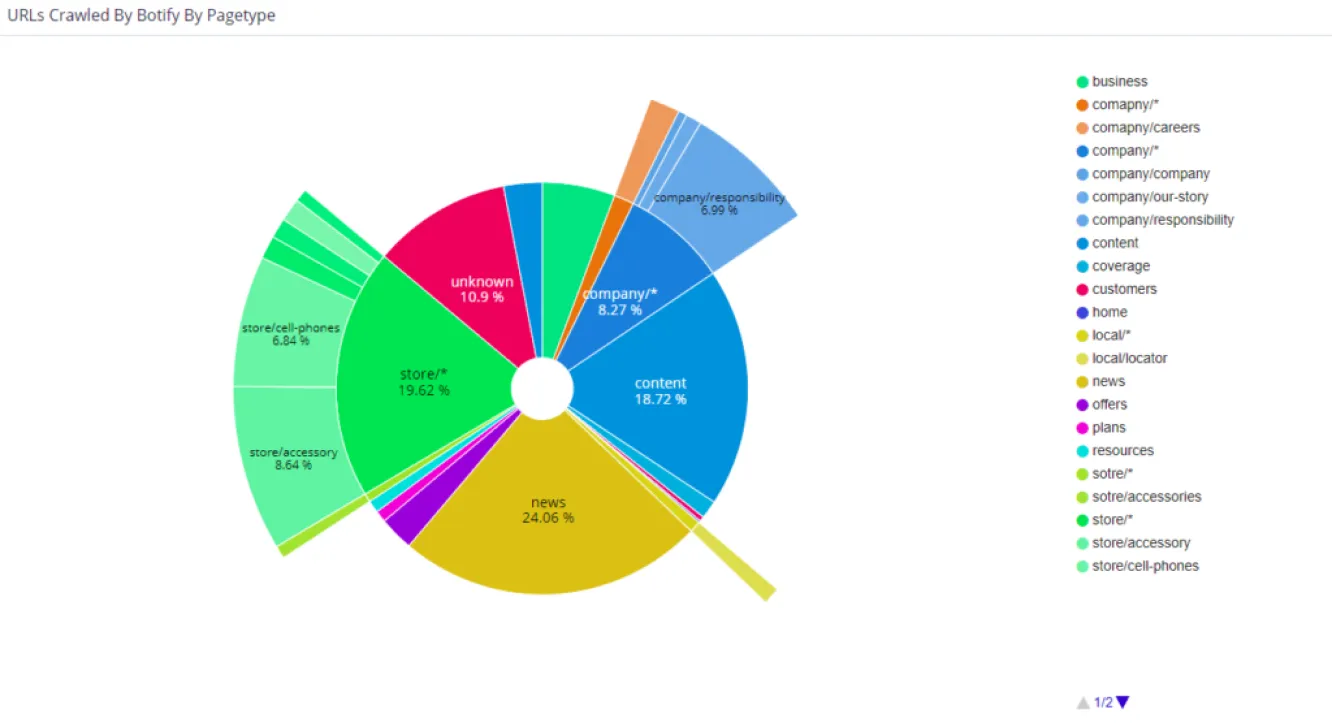
Botify is the specialist platform for enterprise technical SEO. It focuses on crawl budget optimisation, indexation strategies and rendering analysis for websites with millions of pages. The platform comprises three suites: Botify Analytics (crawler, log file analyser, keyword tracker), Botify Intelligence (AI-driven recommendations) and Botify Activation (automated implementation). For organisations with complex, JavaScript-heavy sites where indexation is a revenue concern, Botify provides visibility that general-purpose SEO tools simply cannot match.
My Experience
[PERSONAL EXPERIENCE PLACEHOLDER - TOOL: Botify]
For James to complete in Pass 2:
- When did you use this tool? (Currently using / Used in [year] / Haven't used personally)
- What specific tasks did you use it for?
- What worked well in your workflow?
- What limitations or frustrations did you encounter?
- Any specific results or observations?
If you haven't used this tool: Note "Documentation-based review" and I'll adjust the framing accordingly.
[END PLACEHOLDER]
Key Features
- Log File Analysis: Integrate server log data to understand exactly how Googlebot crawls your site, identifying wasted crawl budget and uncrawled high-value pages.
- JavaScript Rendering Analysis: Audit how search engines render JavaScript-heavy pages, identifying content that may not be fully indexed and affecting visibility.
- Botify Activation: Automate technical SEO recommendations such as canonical tags, hreflang, and structured data, with reduced dependency on development resources where supported.
- SiteCrawler: Enterprise-grade crawler capable of processing millions of URLs with configurable crawl rules, speed settings and segmentation.
Pros
- Extensive depth in crawl analysis and log file integration that reveals how search engines interact with large, complex websites
- Botify Activation automates technical implementation, reducing dependency on development teams for SEO fixes
- Clean interface for understanding crawl data that's difficult to replicate with manual log file analysis processes
Cons
- Requires dedicated technical SEO resources and development support to fully leverage the platform's insights
- Content optimisation and keyword research capabilities are limited compared to all-in-one platforms like Semrush or Ahrefs
Verdict
Botify is ideal for technical SEO teams managing large, complex websites where crawl budget optimisation and indexation are critical to organic revenue.
Choose Botify if: You manage a site with hundreds of thousands of pages and need deep visibility into how search engines crawl, render and index your content.
Skip Botify if: Your primary needs are keyword research, content optimisation or competitive analysis rather than technical infrastructure.
7. Lumar
Best for: Continuous website monitoring and technical health
Pricing: Custom pricing | Free trial: No (demo available)

Overview
Lumar (formerly DeepCrawl) is a cloud-based website optimisation and technical SEO platform built for continuous monitoring at enterprise scale. Where tools like Screaming Frog excel at point-in-time audits, Lumar's strength is ongoing automated monitoring with scheduled crawls, crawl comparisons and team collaboration features. Its Lumar Protect feature acts as an automated QA layer, testing for SEO regressions before deployments go live.
My Experience
[PERSONAL EXPERIENCE PLACEHOLDER - TOOL: Lumar]
For James to complete in Pass 2:
- When did you use this tool? (Currently using / Used in [year] / Haven't used personally)
- What specific tasks did you use it for?
- What worked well in your workflow?
- What limitations or frustrations did you encounter?
- Any specific results or observations?
If you haven't used this tool: Note "Documentation-based review" and I'll adjust the framing accordingly.
[END PLACEHOLDER]
Key Features
- Lumar Monitor: Scheduled crawls with automated comparison reports that track technical SEO health over time and highlight regressions promptly.
- Lumar Protect: Pre-deployment testing that catches SEO-breaking changes before they go live, integrating with CI/CD pipelines for automated QA.
- GEO Toolkit: Analyse your brand's visibility across AI-driven search platforms and optimise content for emerging AI search experiences.
- Team Collaboration: Role-based access, shared dashboards and customisable reporting designed for distributed enterprise teams.
Pros
- Lumar Protect provides automated SEO testing before deployments, helping reduce regressions on large enterprise sites
- Cloud-based architecture handles enterprise-scale sites without local resource constraints, unlike desktop-based crawling tools
- Lumar Monitor reduces manual effort by automatically tracking site health changes instead of requiring crawl-by-crawl comparisons
Cons
- Custom pricing with no publicly listed plans makes it difficult to budget without engaging the sales team
- Focuses primarily on technical monitoring and crawling, with limited capabilities for keyword research, content optimisation or backlink analysis
Verdict
Lumar is ideal for enterprise organisations that need continuous technical SEO monitoring with automated regression testing integrated into their deployment workflows.
Choose Lumar if: You need always-on monitoring and pre-deployment QA to prevent SEO regressions on a large, frequently updated website.
Skip Lumar if: You need a full-stack SEO platform that covers keyword research, content strategy and competitive analysis alongside technical auditing.
8. Screaming Frog SEO Spider
Best for: On-demand technical audits and site migrations
Pricing: Free (limited to 500 URLs) / £199/year (unlimited) | Free trial: Yes (free version available)
Start Free Trial | View Pricing
Overview
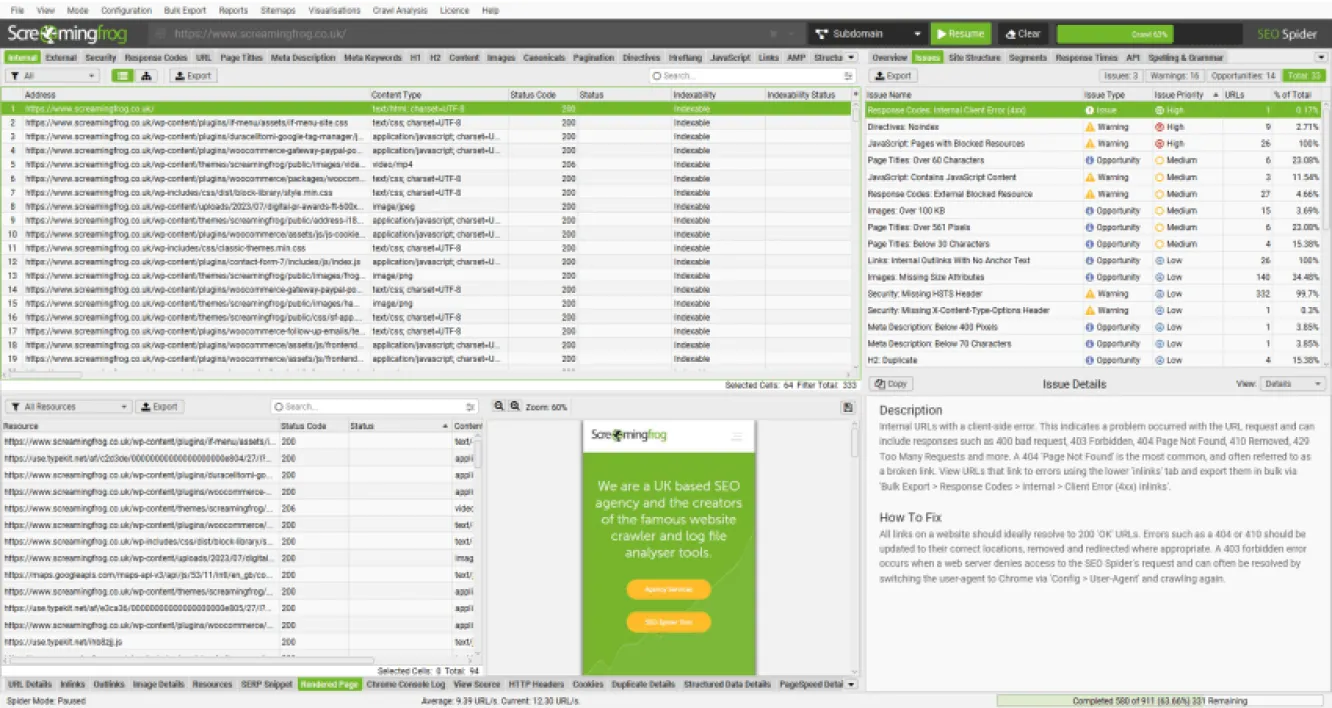
Screaming Frog SEO Spider is a desktop-based website crawler that's been an industry standard for technical SEO audits since its release. While it's not an enterprise platform in the traditional sense, it remains essential in enterprise SEO workflows for fast, targeted audits. Enterprises commonly rely on Screaming Frog for pre-launch QA, migration validation and sprint-cycle audits of high-priority site sections. At £199/year for unlimited crawling, it delivers exceptional value alongside dedicated enterprise platforms.
My Experience
[PERSONAL EXPERIENCE PLACEHOLDER - TOOL: Screaming Frog SEO Spider]
For James to complete in Pass 2:
- When did you use this tool? (Currently using / Used in [year] / Haven't used personally)
- What specific tasks did you use it for?
- What worked well in your workflow?
- What limitations or frustrations did you encounter?
- Any specific results or observations?
If you haven't used this tool: Note "Documentation-based review" and I'll adjust the framing accordingly.
[END PLACEHOLDER]
Key Features
- Configurable Crawling: Customise crawl settings including JavaScript rendering, custom extraction, robots.txt handling and speed controls for targeted audits of specific site sections.
- Integration APIs: Connect with Google Search Console, Google Analytics, PageSpeed Insights and Ahrefs to enrich crawl data with performance metrics.
- Migration Validation: Compare crawls before and after site migrations to identify redirect issues, lost pages and structural changes that could impact rankings.
- Custom Extraction: Use CSS Path, XPath or regex to extract specific data elements during crawls for schema validation, content auditing and structured data analysis.
Pros
- Exceptionally fast desktop-based crawling with deep customisation options suitable for targeted technical audits
- At £199/year, it provides a cost-effective solution that complements enterprise platform subscriptions
- API integrations with Google Search Console, Analytics, PageSpeed and Ahrefs enrich crawl data with real-world performance metrics
Cons
- Desktop-based architecture means crawl speed and capacity are limited by local machine resources, which can be restrictive for very large sites
- No built-in scheduling, monitoring or team collaboration features, requiring manual processes for ongoing technical oversight
Verdict
Screaming Frog is ideal as a complementary tool in any enterprise SEO stack, providing fast, targeted audits that enterprise platforms often handle less efficiently.
Choose Screaming Frog if: You need a fast, affordable crawler for targeted audits, migration validation and pre-deployment QA alongside your primary enterprise platform.
Skip Screaming Frog if: You need cloud-based monitoring, team collaboration or automated scheduling without manual intervention.
9. Searchmetrics
Best for: Global and multilingual SEO campaigns
Pricing: Custom pricing | Free trial: No (demo available)
Overview
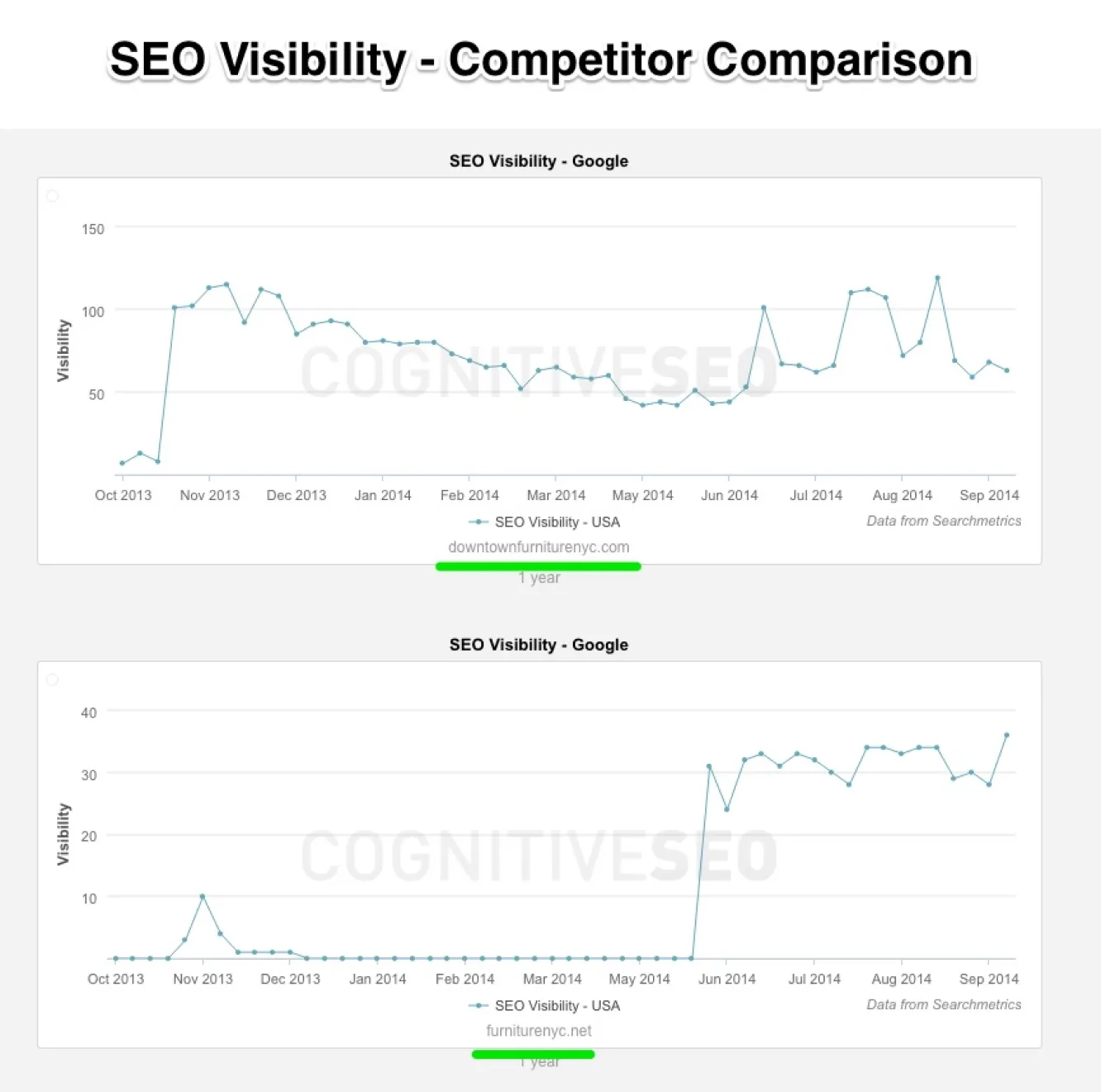
Searchmetrics is now part of the Conductor platform, following Conductor’s acquisition of the company in 2023. Historically known for its in-depth visibility analysis and international SEO capabilities, Searchmetrics brought strong localised keyword databases, market-specific competitive intelligence and content optimisation features for global brands. Today, those strengths are being integrated into Conductor’s unified enterprise SEO and AI visibility suite, enhancing its ability to support multi-country, multilingual search strategies within a single platform.
My Experience
[PERSONAL EXPERIENCE PLACEHOLDER - TOOL: Searchmetrics]
For James to complete in Pass 2:
- When did you use this tool? (Currently using / Used in [year] / Haven't used personally)
- What specific tasks did you use it for?
- What worked well in your workflow?
- What limitations or frustrations did you encounter?
- Any specific results or observations?
If you haven't used this tool: Note "Documentation-based review" and I'll adjust the framing accordingly.
[END PLACEHOLDER]
Key Features
- Research Cloud: Comprehensive competitive intelligence platform covering organic visibility, paid search, content performance and backlink data across 130+ countries.
- Content Experience: End-to-end content workflow from topic research and brief creation to optimisation scoring and performance tracking.
- Market Insights: Compare organic visibility and content performance across multiple markets simultaneously for international strategy planning.
- SEO Visibility Score: Proprietary metric used for benchmarking organic performance over time and against competitors.
Pros
- Strong multi-market and multilingual capabilities support enterprises managing SEO across multiple countries and languages
- Content Experience module provides actionable, data-driven briefs that connect directly to market-specific keyword intelligence
- SEO Visibility Score provides a consistent, comparable metric for benchmarking performance across markets and time periods
Cons
- Custom-only pricing with no publicly available plans makes it difficult to evaluate cost-effectiveness without a sales conversation
- The platform's breadth across markets can come at the expense of depth in individual technical SEO features compared to specialist tools
Verdict
Searchmetrics is ideal for global enterprises managing organic visibility across multiple markets, languages and regional search engines.
Choose Searchmetrics if: Your enterprise operates across multiple countries and needs localised keyword intelligence, competitive analysis and content workflows for each market.
Skip Searchmetrics if: You operate primarily in one market and need deeper technical SEO capabilities rather than global visibility analysis.
How I Chose These Tools
Selecting enterprise SEO tools requires evaluating capabilities that standard tool reviews often overlook. Here's the criteria I used, weighted by importance for enterprise organisations:
Scalability and Data Handling (25%)
Can the platform handle hundreds of thousands of pages, multiple domains and large datasets without performance degradation? Enterprise SEO tools must process data at a fundamentally different scale from mid-market solutions.
Technical SEO Capabilities (20%)
How deep does the platform go with crawling, indexation analysis, JavaScript rendering and site health monitoring? For enterprises, even minor technical issues can cascade across millions of URLs.
Reporting and ROI Attribution (20%)
Can the platform translate SEO performance into business metrics that leadership teams understand? The ability to connect organic visibility to revenue, pipeline and customer acquisition costs is essential at the enterprise level.
Content Optimisation Features (20%)
Does the platform help teams create, optimise and scale content production? Enterprise organisations need tools that bridge the gap between keyword data and actual content creation workflows.
Collaboration and Integration (15%)
Can multiple teams and departments work within the platform effectively? Enterprise SEO involves coordination between SEO practitioners, content teams, developers and leadership, so the platform needs to support those workflows.
How to Choose the Right Enterprise SEO Tool
The right enterprise SEO tool depends entirely on your organisation's specific bottleneck. Here's a decision framework based on common enterprise scenarios:
- If your biggest challenge is technical SEO debt: Botify or seoClarity should be your starting point. Both provide the depth of crawl analysis and automation needed to tackle large-scale technical issues efficiently. Pair either with Screaming Frog for targeted, quick-turnaround audits.
- If you need executive buy-in for SEO investment: BrightEdge is purpose-built for this challenge. Its reporting connects organic performance directly to revenue and pipeline metrics in a language that C-suite stakeholders understand.
- If cross-team alignment is your bottleneck: Conductor excels at bringing SEO, content and marketing teams onto the same page with shared workflows, dashboards and content intelligence.
- If you need an all-in-one platform with the best data: Ahrefs Enterprise or Semrush Enterprise provide the broadest coverage across keyword research, backlink analysis, content optimisation and competitive intelligence. Ahrefs leads on backlink data accuracy while Semrush offers the largest keyword database and more extensive automation.
- If you manage SEO across multiple countries: Searchmetrics is a strong option for international SEO, with robust multi-market visibility reporting and localized keyword data that suits brands operating across many countries and languages.
- Budget considerations: Enterprise SEO platforms range from limited free tools (such as Screaming Frog’s free version) to several thousand dollars per month for full-featured platforms. seoClarity’s enterprise plans are generally in the mid-to-high thousands per month, while BrightEdge uses custom, usage-based pricing typically in a similar range for large brands.
Frequently Asked Questions
What is the best enterprise SEO tool?
The best enterprise SEO tool depends on your specific needs. For all-in-one SEO intelligence with an industry-leading backlink index and robust AI search monitoring, I recommend Ahrefs Enterprise. For maximum automation and the largest keyword database, Semrush Enterprise is the strongest option. Dedicated enterprise platforms like BrightEdge, seoClarity and Conductor each excel in specific areas like reporting, automation and collaboration respectively.
How much do enterprise SEO tools cost?
Enterprise SEO tools range from limited free versions (such as Screaming Frog’s free tier) to several thousand dollars per month for full-featured enterprise platforms. Depending on factors like data volume, number of domains, and level of support.
seoClarity’s enterprise plans are generally reported to cost around $2,500–$4,500 per month.
Platforms like BrightEdge and Conductor use custom, usage-based pricing, typically falling in a similar several-thousand-dollars-per-month range for large, multi-site brands.
What is the difference between enterprise SEO tools and standard SEO tools?
Enterprise SEO tools are designed to handle massive scale, typically supporting hundreds of thousands of pages, multiple domains, cross-team collaboration and executive-level reporting. Standard SEO tools work well for small to mid-sized sites but struggle with the data volumes, automation requirements and organisational complexity that enterprise SEO demands. Enterprise platforms also typically offer API access, SSO, role-based permissions and dedicated account management.
Do you need an enterprise SEO platform?
You likely need an enterprise SEO platform if you manage websites with more than 50,000 pages, operate across multiple domains or regions, have multiple teams involved in SEO execution or need to prove ROI to C-suite stakeholders with revenue-connected reporting. If your site is smaller and managed by a lean team, standard platforms like Ahrefs Standard or Semrush Business may be more cost-effective.
Is Ahrefs or Semrush better for enterprise?
Both are excellent choices for enterprise SEO, but they excel in different areas. Ahrefs Enterprise offers an industry-leading backlink index, a cleaner interface and strong AI search monitoring through Brand Radar. Semrush Enterprise provides the largest keyword database, more extensive automation capabilities and a broader feature set including PPC and social media tools. Many enterprise teams use both platforms together, leveraging Ahrefs for backlink research and competitive analysis while using Semrush for keyword research and content workflows.
Can enterprise SEO tools track AI search visibility?
Yes, several enterprise SEO tools now track visibility across AI platforms. Ahrefs' Brand Radar monitors how your brand appears across seven AI platforms, including ChatGPT, Perplexity, Google AI Overviews and Claude. Semrush's AI Visibility Toolkit tracks brand mentions across ChatGPT, Perplexity and Gemini. BrightEdge's AI Catalyst and Lumar's GEO Toolkit also provide AI search tracking capabilities. This is becoming essential as AI search reshapes how users discover brands online.
The Right Stack Beats the Right Tool
There's no single enterprise SEO tool that does everything perfectly. The organisations I've seen get the best results use a focused stack of two or three complementary platforms rather than trying to find one tool that covers every need.
My top recommendation is Ahrefs Enterprise for its combination of data accuracy, backlink intelligence, AI search monitoring and a clean interface that doesn't require months of training. It's the strongest all-in-one foundation for enterprise SEO campaigns.
For the best alternative with maximum automation, Semrush Enterprise provides unmatched data depth and AI-powered workflows that can dramatically reduce manual SEO work at scale.
For the best value option, Screaming Frog SEO Spider at £199/year delivers technical auditing capabilities that complement any enterprise platform, making it an essential part of every enterprise SEO toolkit regardless of budget.
The best enterprise SEO tool is the one that solves your team's specific bottleneck. Start there, build around it and invest in the platforms that directly connect to your business outcomes.
About the Author
Want Insights Like This Fortnightly?

Our AI SEO strategies and tactics delivered fortnightly, including bonus trade secrets not shared anywhere else. No fluff. Just what's working right now. 5-minute read.


